Kumano Brushes: Inside Hiroshima's Town of Fude Masters
On this page
The brushes of Kumano are born from necessity turned into art. In a corner of Hiroshima where rice paddies were scarce, hands learned to shape hair and bamboo into tools so refined that today they touch both calligraphy scrolls and the faces of the world's most discerning makeup artists.
From Peddlers' Packs to National Treasure
The story begins in the late Edo period, when Kumano's farmers faced a stubborn truth: their land could not feed them year-round. Many left for seasonal work in the Yoshino and Kishu regions, and on their journeys home they stopped in Nara, Osaka, and Hyogo to buy brushes and ink. What started as peddling became apprenticeship. The travelers watched, learned, and eventually brought the craft back to their own villages.
When the Meiji era arrived and compulsory education spread across Japan, calligraphy became a pillar of schooling. Brush demand soared. Kumano, already familiar with the trade, pivoted from selling others' brushes to making their own. By 1975, the craft had grown distinguished enough to earn designation as Hiroshima's first nationally recognized Traditional Craft (伝統的工芸品, dentō-teki kōgeihin).
Three Worlds in One Workshop
Today, Kumano produces a commanding share of Japan's writing, painting, and makeup brushes. Walk through the town and you'll find workshops where artisans move between three distinct universes of bristle and purpose:
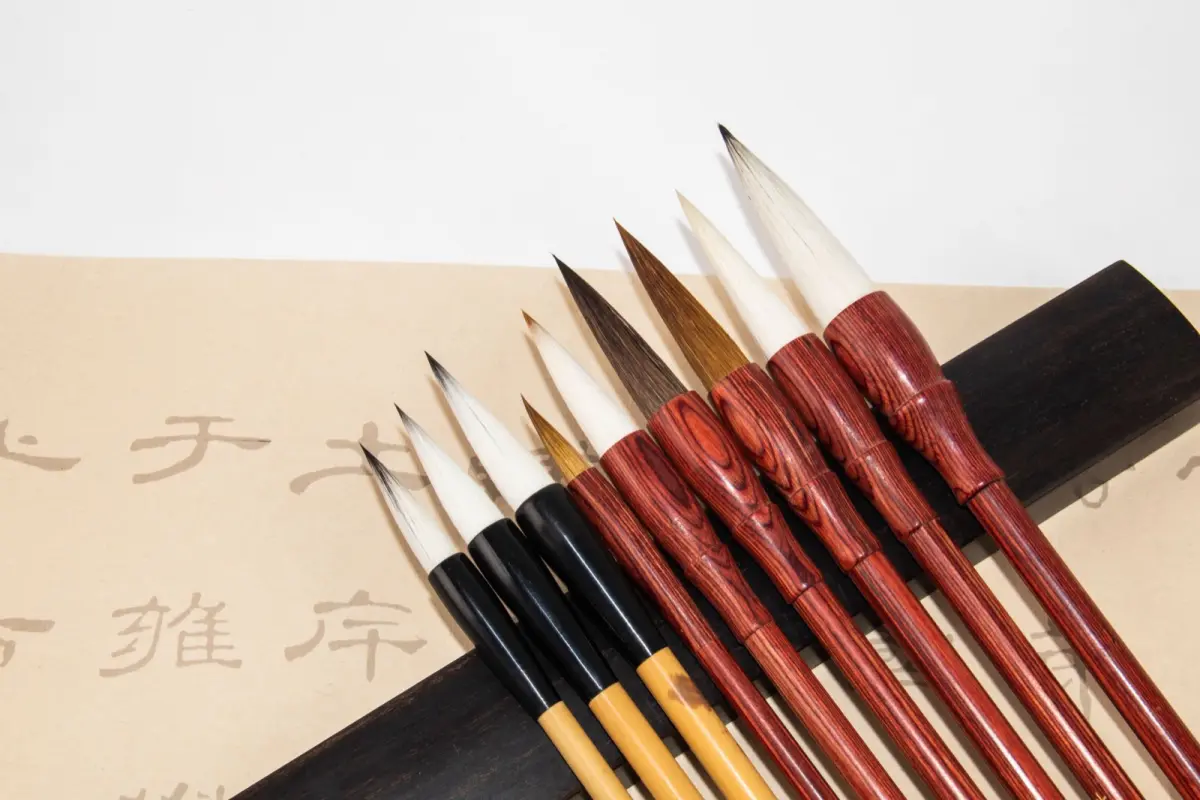
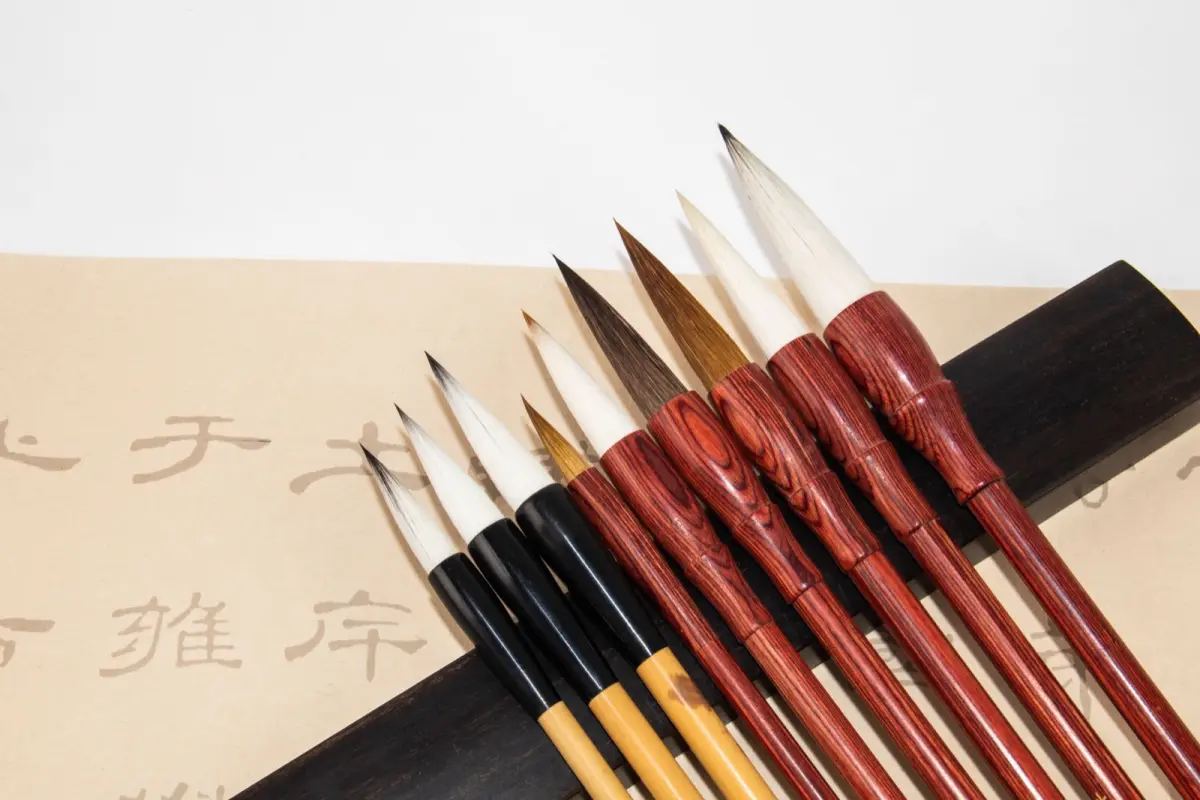
- Calligraphy brushes (書道筆, shodō fude) that hold ink with the perfect balance of spring and flow
- Painting brushes (画筆, gafude) shaped for watercolor, oils, or the delicate washes of nihonga
- Makeup brushes (化粧筆, keshō fude) now coveted by cosmetics professionals worldwide
Each type demands its own geometry, its own marriage of hair types, its own tension between softness and control.
The Hands That Shape Every Hair
Almost every step in making a Kumano brush (熊野筆, Kumano fude) remains a manual act. Artisans sort animal hair by length and quality, align the tips in a process called kegumi so that every hair points the same direction, bind them with thread, and set them into handles of bamboo or wood. The finest brushes may contain hair from goat, horse, weasel, or squirrel—sometimes blended in proportions known only to the maker.
The brush must feel like an extension of thought, not a separate tool.
This philosophy applies whether the brush will write a single kanji or blend eyeshadow on a cheekbone. The precision is the same.

Beauty Beyond Calligraphy
While Kumano's reputation was built on traditional writing and painting brushes, it is the makeup brushes that have carried the town's name across oceans. Their softness, their ability to pick up and deposit powder with unmatched evenness, their durability—these qualities made them favorites among professional makeup artists in Paris, New York, and Seoul long before most consumers knew where Hiroshima was on a map.
The same hands that learned to shape a calligraphy brush for the fluid stroke of gyōsho script adapted that knowledge to the architecture of a cheek, the curve of an eyelid. The transfer was not a compromise but a confirmation: a great brush serves its purpose, whatever that purpose may be.
A Craft That Travels Light
Kumano's brushes began as objects light enough to carry in a peddler's pack, tools born from movement and return. Centuries later, they still travel—no longer in bundles on a farmer's back, but in the cases of artists, calligraphers, and makeup professionals who understand that the best tools are often the quietest. The bristles remember their origins: necessity, patience, and the knowledge that even the smallest instrument can carry a tradition across generations.
FAQ
Chaware curates authentic Japanese crafts — straight from the makers in Japan to your table.
Explore the Chaware collection →
Keep exploring


