Ogatsu Suzuri: The Revered Slate Inkstones of Miyagi
On this page
The black slate of Ogatsu has been carved into inkstones for more than six centuries, its fine grain turning ink stick to liquid with a whisper of friction. In 1615, a warlord was so taken by their quality that he claimed the mountain itself, forbidding all but his chosen craftsmen from entering.
A Mountain Claimed by a Lord
In the Genna era (1615–1624), the powerful feudal lord Date Masamune received a gift of inkstones carved from the black slate of Ogatsu, in what is now Ishinomaki, Miyagi Prefecture. So impressed was he by their quality that he took the stone-carvers into his direct service and declared the quarry mountain an otome-yama—a forbidden mountain, closed to outsiders. This act of patronage secured both the craftsmen's livelihoods and the exclusivity of the stone itself, binding the fate of Ogatsu inkstones to the Sendai domain for generations.
Six Hundred Years of Stone
The quarrying of Ogatsu stone (genshoseki, 玄昌石) began around 1396, making this craft over 600 years old. The stone is a fine black hard slate, prized not only for inkstones but also as roofing material. Its geological properties are remarkable: high compressive and bending strength, low water absorption, and chemical stability. These characteristics make it ideal for the patient work of grinding an ink stick against water, producing the smooth liquid ink essential to East Asian calligraphy and painting.
The Geometry of Grinding
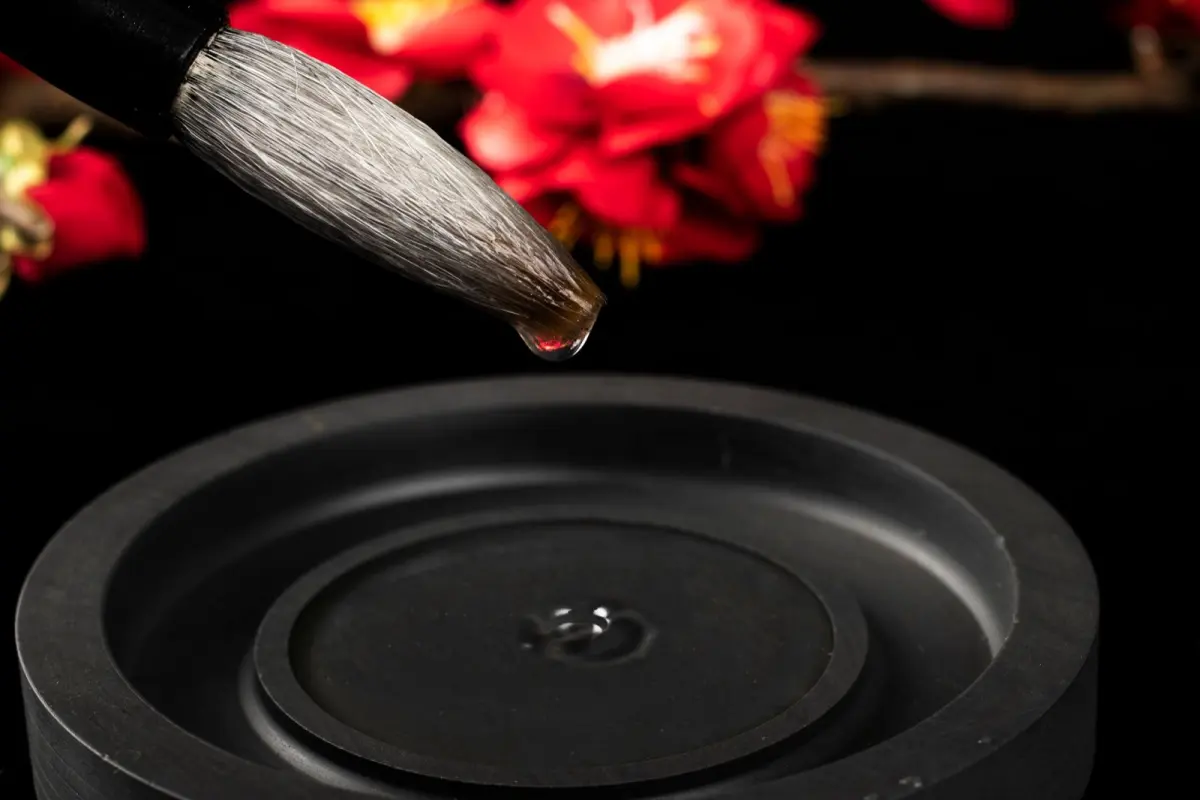
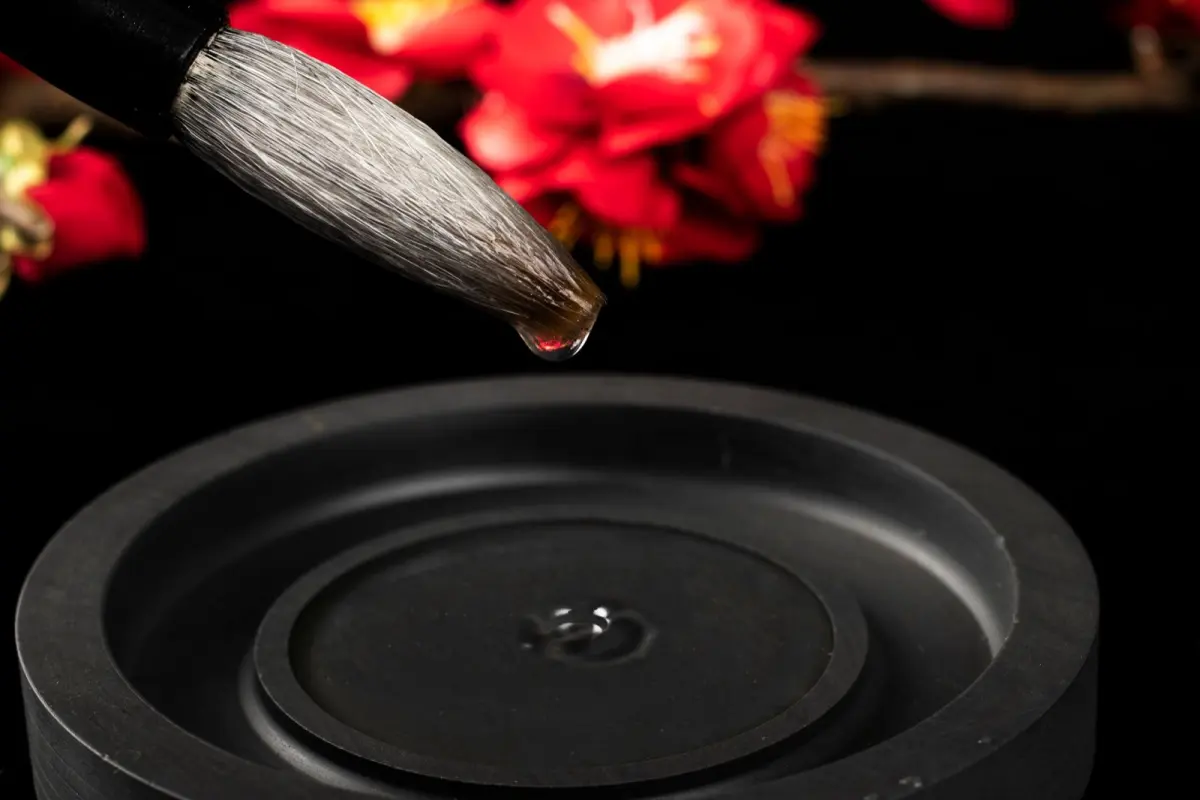
An Ogatsu inkstone (Ogatsu suzuri, 雄勝硯) is more than a vessel; it is a precision tool. The carving must create a surface that releases ink evenly, neither too coarse nor too smooth. The pure black slate, when properly worked, offers just enough friction to grind the ink stick without scratching or wearing unevenly. Craftsmen shape each stone by hand, hollowing the grinding surface and carving a well to collect the liquid ink. The stone's low porosity means it does not drink the ink or stain easily, and its chemical stability ensures it will not react with the carbon and binders in the ink stick.
Before the 2011 tsunami, Ogatsu produced about 90% of Japan's school inkstones.
This near-monopoly reflected both the quality of the stone and the concentration of skilled carvers in this small coastal community.

A Craft Tested by Water
The 2011 tsunami devastated Ishinomaki, and Ogatsu—a small district facing the Pacific—was among the hardest hit. Workshops were swept away, tools and stones lost, and the community scattered. Yet the craft has shown resilience. Carvers have returned, quarries have reopened, and the patient work of shaping black slate continues. The inkstones made today carry the same geological virtues as those presented to Date Masamune four centuries ago, and the same quiet authority on a calligrapher's desk.
The Black Stone's Quiet Presence
An Ogatsu inkstone does not announce itself. It sits, dense and dark, waiting for water and the ink stick's slow circular motion. The stone's strength lies in its restraint—it does not absorb, does not react, does not wear quickly. It simply holds and releases, transforming solid carbon into flowing line. In an age of ballpoint pens and digital brushes, the inkstone remains a link to a slower practice, one measured in breaths and the soft sound of grinding.
The mountain is no longer forbidden, but the stone it yields still commands respect.
FAQ
Chaware curates authentic Japanese crafts — straight from the makers in Japan to your table.
Explore the Chaware collection →
Keep exploring


