Ojiya Chijimi: Niigata's Crinkled Ramie Summer Cloth
On this page
Article Body
In the heart of Japan's snow country, weavers have turned winter's bite into summer's blessing. The secret lies in a paradox: the same deep snows that bury Ojiya each year are what make its legendary crinkled ramie cloth breathe against the skin when July arrives.
The Samurai Who Twisted Thread
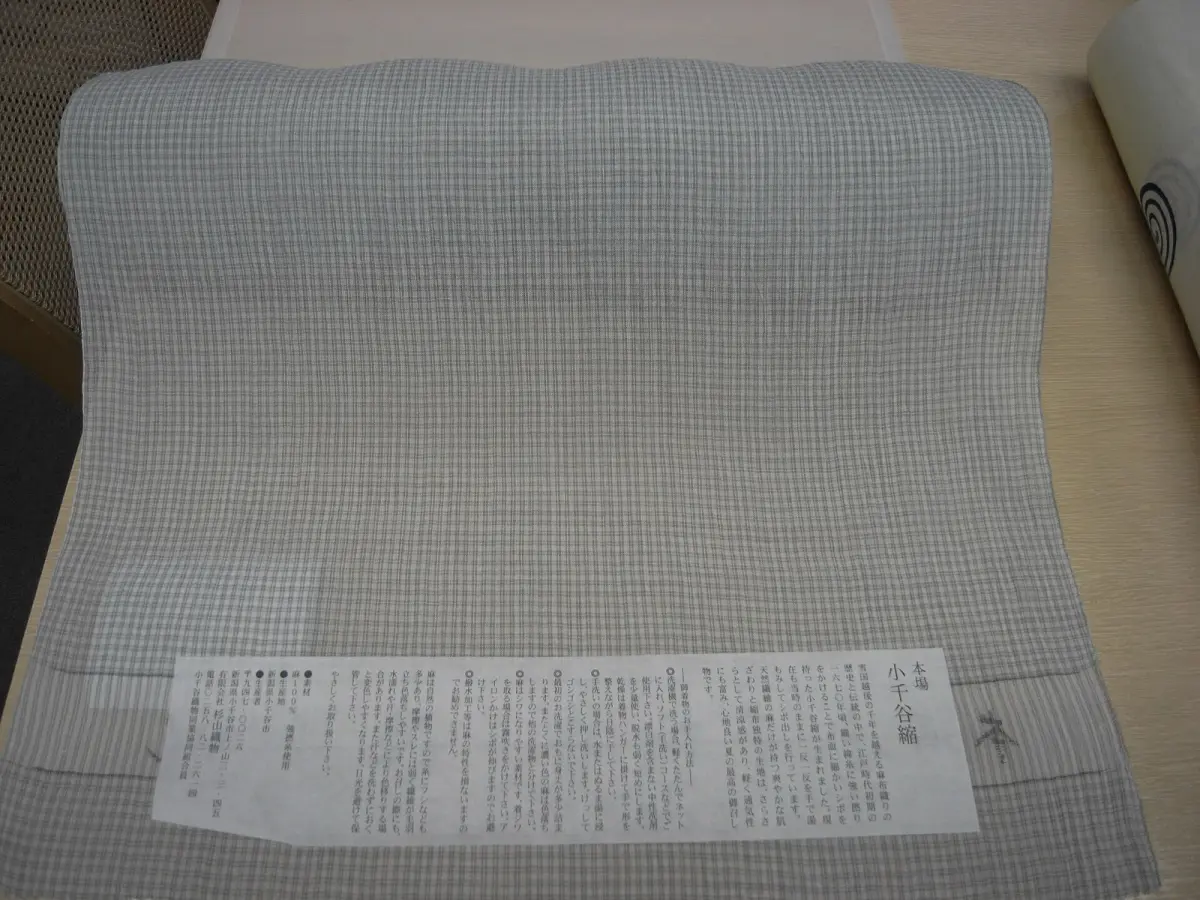
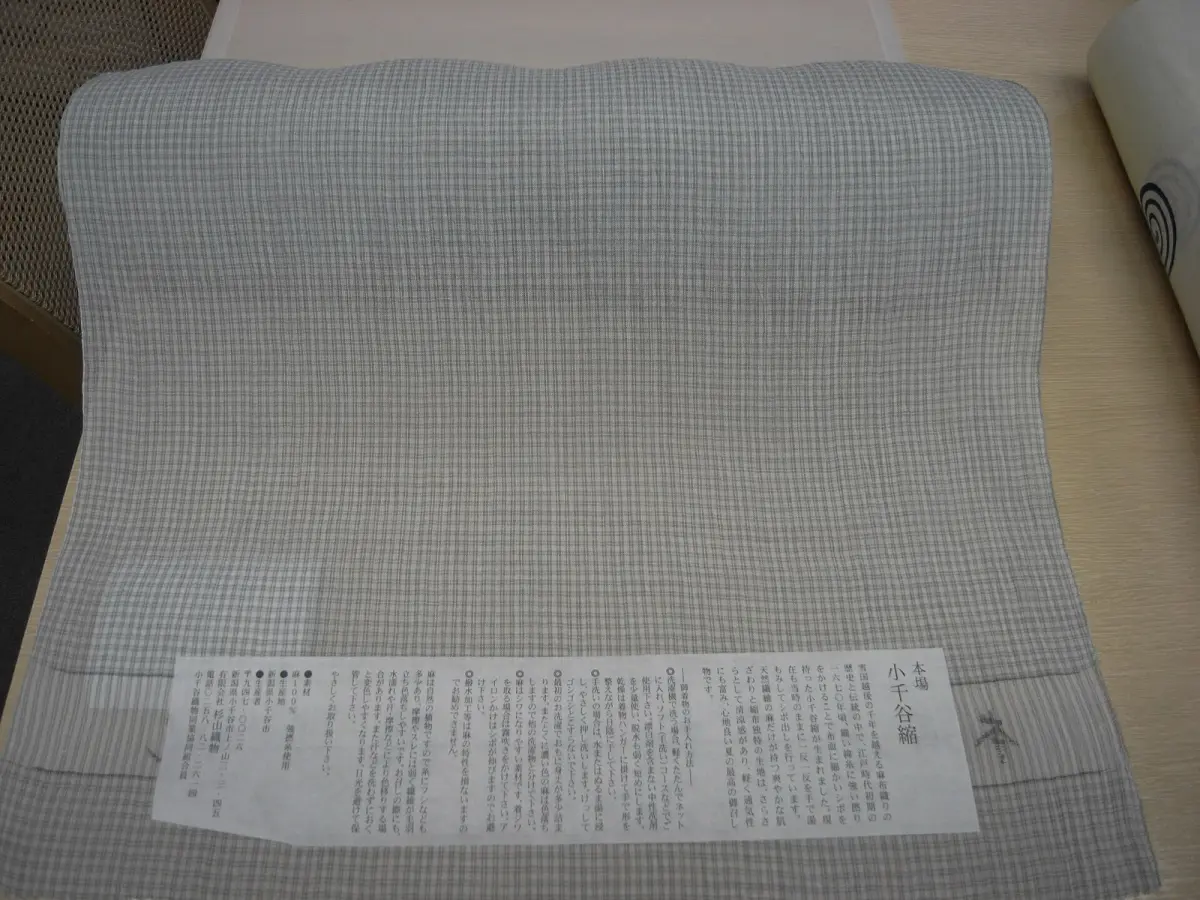
In the early Edo period, a samurai named Hori Jiro Masatoshi of the Akashi domain looked at the local Echigo linen (越後麻) and saw room for refinement. The region had long woven ramie—choma (苧麻), a bast fibre prized for its strength and coolness—but Hori introduced a crucial innovation: a hard twist to the weft threads before weaving. This seemingly small adjustment would transform the cloth entirely. After the fabric came off the loom, weavers kneaded it in hot water, coaxing the twisted fibres to contract and buckle. The result was chijimi (縮), a cloth covered in fine, three-dimensional puckers called shibo (しぼ). These tiny ridges meant the fabric never clung to perspiring skin, allowing air to circulate freely—the ideal textile for humid Japanese summers.
Snow as Bleach
The most striking step in making Ojiya chijimi (小千谷縮) happens not in the workshop but on the snow itself. Each spring, weavers carry bolts of finished cloth to snowy fields for yuki-zarashi (雪晒し)—snow bleaching. Spread across the white expanse, the ramie fibres absorb moisture from the humid air while ozone released by the melting snow gently lightens the fabric to a clean, luminous tone. This designated step of the craft relies entirely on Ojiya's particular climate: winters heavy enough to keep snow on the ground into spring, and air moist enough to prevent the ramie from turning brittle in the cold. The sight of pale cloth laid out against blinding snow has become one of the region's most photographed seasonal rituals.
The Breath of Ramie
Why ramie for summer? The plant's long, lustrous fibres possess a natural stiffness and a remarkable ability to wick moisture away from the body. Unlike cotton, which softens and clings when damp, ramie maintains its crisp hand even in humidity. When woven into the puckered surface of chijimi, these qualities intensify:
- The shibo creates countless tiny air pockets between cloth and skin
- Moisture evaporates rapidly through the open weave
- The fabric's natural coolness is perceptible the moment it touches bare shoulders
A summer kimono (着物) made from Ojiya chijimi feels almost architectural in its structured drape, yet weighs nearly nothing.

Recognition and Continuity
The craft's significance extends beyond regional pride. Ojiya chijimi and the closely related Echigo jofu (越後上布)—a finer, higher-grade ramie weave from the same tradition—were together designated an Important Intangible Cultural Property by the Japanese government. In 2009, UNESCO added the techniques to its Representative List of the Intangible Cultural Heritage of Humanity, recognising not just the cloth itself but the entire ecosystem of knowledge: from thread-making and natural dyeing with plants to the ikat-style kasuri (絣) patterning that adorns some pieces. The designation acknowledges that this is living craft, still practised by artisans in Niigata, still worn, still evolving within its centuries-old parameters.
Wearing Snow Country
To wear Ojiya chijimi is to carry a piece of Niigata's landscape on your back—the memory of snow, the discipline of the loom, the patience required to knead fabric by hand until it blooms into texture. The cloth speaks of a time when every region's textiles bore the stamp of local climate and ingenuity, when summer comfort was engineered not in laboratories but through intimate knowledge of fibre and weather. In an age of synthetic moisture-wicking fabrics, chijimi remains a quiet testament to what human hands and mountain snow can accomplish together.
The crinkle holds the cold; the weave remembers winter even in summer's heat.
Chaware curates authentic Japanese crafts — straight from the makers in Japan to your table.
Explore the Chaware collection →
Keep exploring


