What Does Chado Mean? Understanding the Japanese Way of Tea
On this page
You bow. You kneel. You lift a bowl with both hands and turn it twice before drinking. What looks like a simple cup of tea is, in fact, a lifetime's study.
The way that cannot be walked in a day
Chadō (茶道) translates literally as "the way of tea," but the word "way" here doesn't mean a path you walk once and finish. It means dō — the same character in judo, kendo, aikido. A discipline. A practice you refine across decades, knowing you'll never master it completely.
The term itself emerged during Japan's Muromachi period, when Zen monks and tea practitioners began formalizing what had been a casual social ritual into something closer to meditation. Before chadō, people simply drank tea. After chadō, every gesture became deliberate.
Some still use the older word chanoyu (茶の湯), "hot water for tea." It's more humble, less philosophical. Both terms describe the same practice, but chadō carries the weight of intention — the understanding that you're not just brewing leaves, but training your mind.
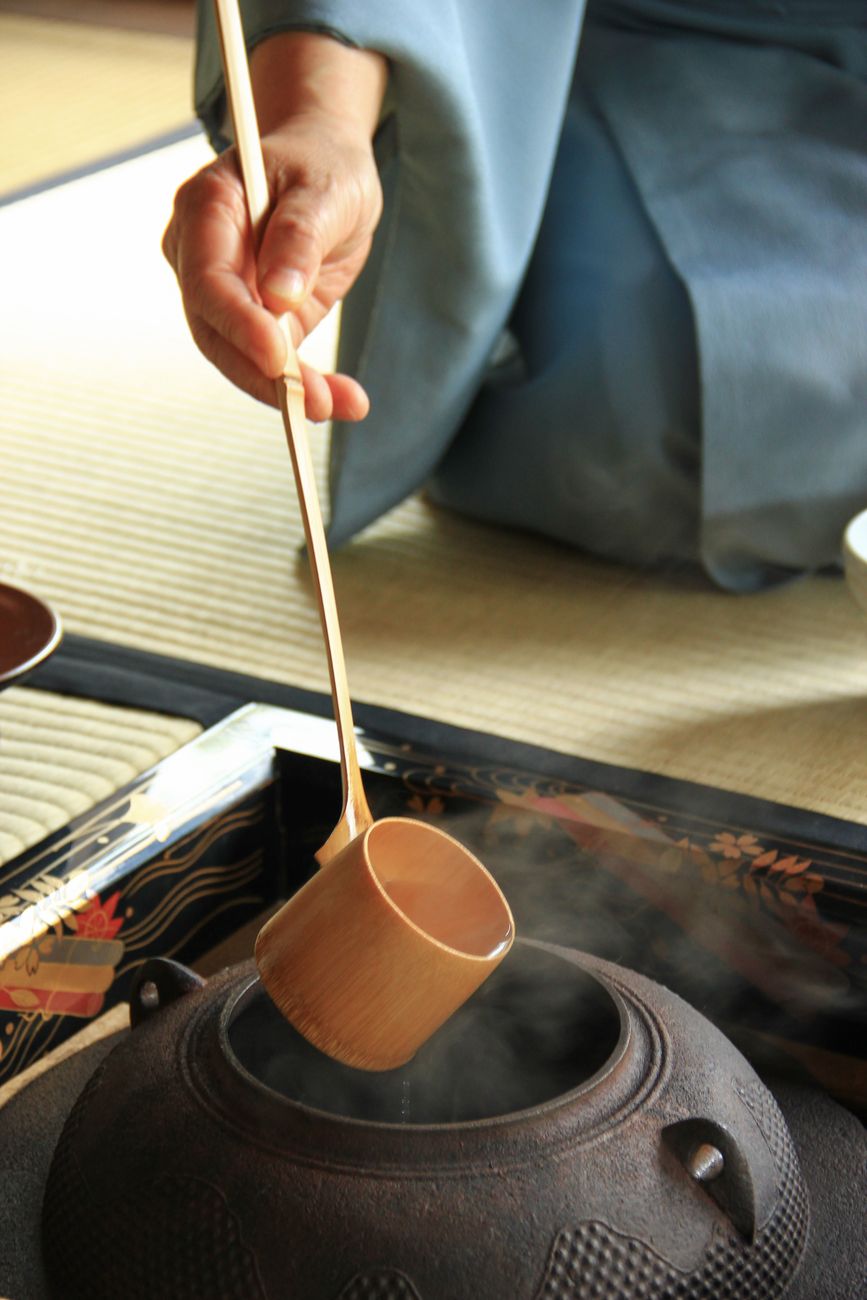
Four principles in a quiet room
At the heart of chadō are four guiding concepts, attributed to the 16th-century tea master Sen no Rikyū:
- Wa (harmony) — with the season, the guest, the bowl in your hands
- Kei (respect) — for every object, every person, every moment
- Sei (purity) — of space, of gesture, of intent
- Jaku (tranquility) — the stillness that remains when everything else falls away
These aren't abstract ideals. They show up in how you enter the tearoom (crouched low, ego left outside), how you cradle the bowl (both palms, fingertips supporting the base), even how you place the tea scoop on the lid of the tea container (angled just so, never careless).
In chadō, there are no small gestures — only gestures you haven't yet learned to see.
A ceremony with no script
Westerners often call it the "Japanese tea ceremony," which makes it sound like a performance you watch. But chadō is participatory. You don't observe it. You inhabit it.
The host prepares. The guest receives. Both are equally active. The host whisks matcha in precise, practiced motions — not for show, but because each angle of the whisk, each rotation of the bowl, has been considered. The guest bows, lifts, sips, admires the bowl's glaze, its weight, the way it fits the season.
Nothing is random. The scroll hanging in the alcove was chosen for you. The flower arrangement reflects what's blooming outside. Even silence is choreographed.
And yet it's not rigid. A true practitioner adapts. The weather changes, a guest arrives late, the charcoal shifts in the brazier. Chadō teaches you to hold form and flexibility at once.

What you take with you
You might spend an hour in a tearoom and leave with nothing but the memory of warm ceramic against your palms and the slight bitterness of matcha on your tongue. Or you might leave understanding that the way you hold a bowl is the way you hold your life — with attention, with care, with both hands.
Chadō doesn't ask you to abandon the modern world. It asks you to move through it differently. To notice the texture of things. To make space for stillness even when everything accelerates around you.
The way of tea is long, winding, and has no end point.
But every bowl is a beginning.
FAQ
Chaware curates authentic Japanese crafts — straight from the makers in Japan to your table.
Explore the Chaware collection →