The Roji Tea Garden: Walking the Dewy Path to the Tea Room
On this page
You step through the gate, and the city vanishes. The path at your feet is damp, deliberate, and entirely designed to make you forget where you came from.
This is the roji — the "dewy path" — and it is not a garden in any conventional sense. It is a passage. A threshold. A psychological journey compressed into perhaps twenty footsteps, each one calibrated to strip away the noise of the world before you enter the tea room. In the Japanese tea ceremony, the roji is where transformation begins.
The path that teaches you to arrive
The word roji (露地) translates literally as "dewy ground" or "dewy path," though its older meaning — a place exposed to the elements — carries a Buddhist resonance. It suggests humility, impermanence, the dissolution of ego. You are meant to feel small here, present, aware of moisture on stone and the scent of moss.
The path itself is asymmetrical, often laid with stepping stones (tobi-ishi) spaced just irregularly enough that you must look down, slow down, pay attention. This is intentional. The roji forces you into the body, into the moment, away from distraction. By the time you reach the tea room, you have already begun the ceremony.

Water, stone, and the architecture of humility
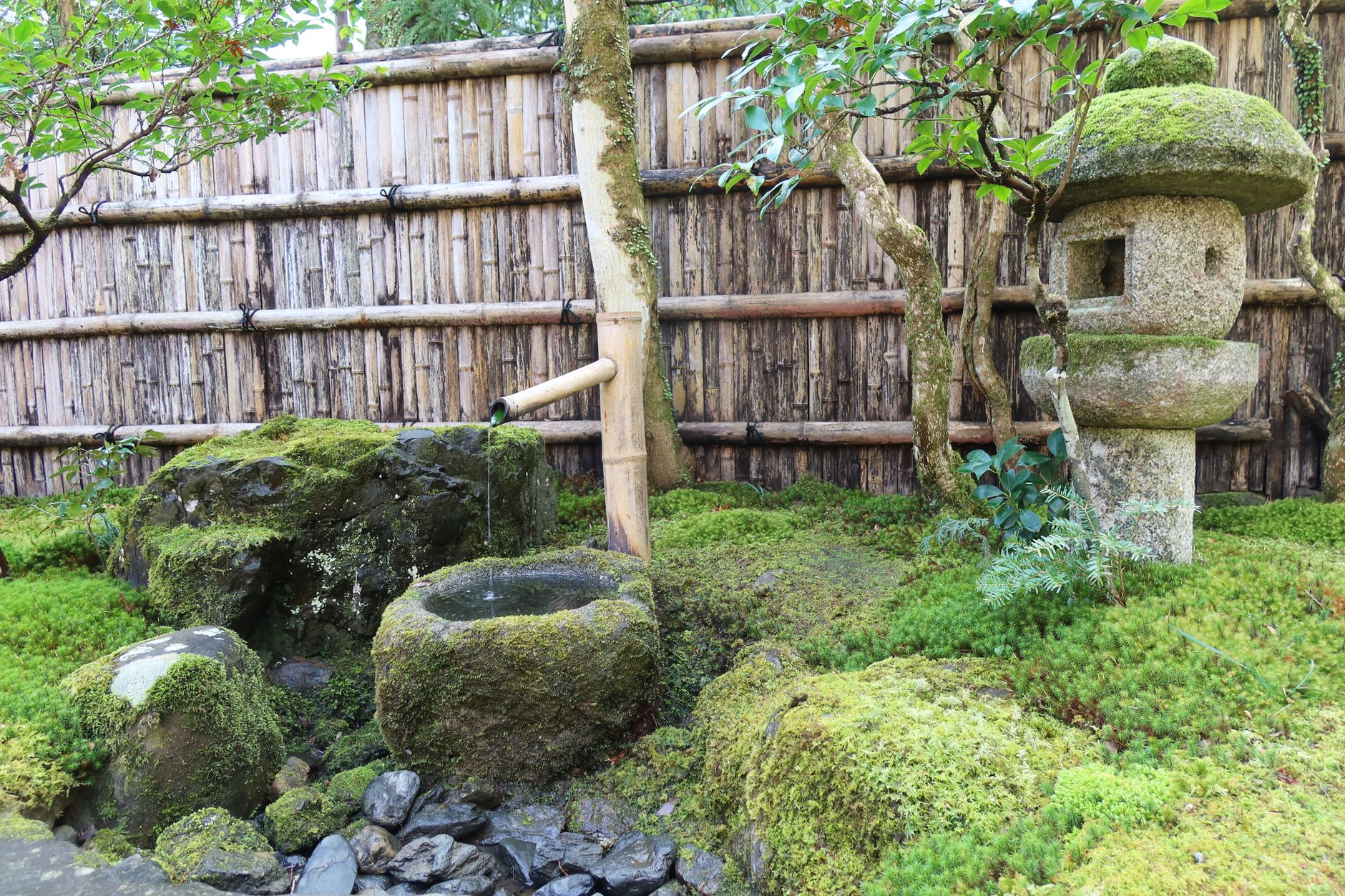
Along the way, you encounter a tsukubai — a low stone water basin where you rinse your hands and mouth. You must crouch to use it. There is no convenience here, no ergonomic comfort. The gesture is a physical reminder: you are purifying yourself, lowering yourself, preparing to enter a space that values presence over status.
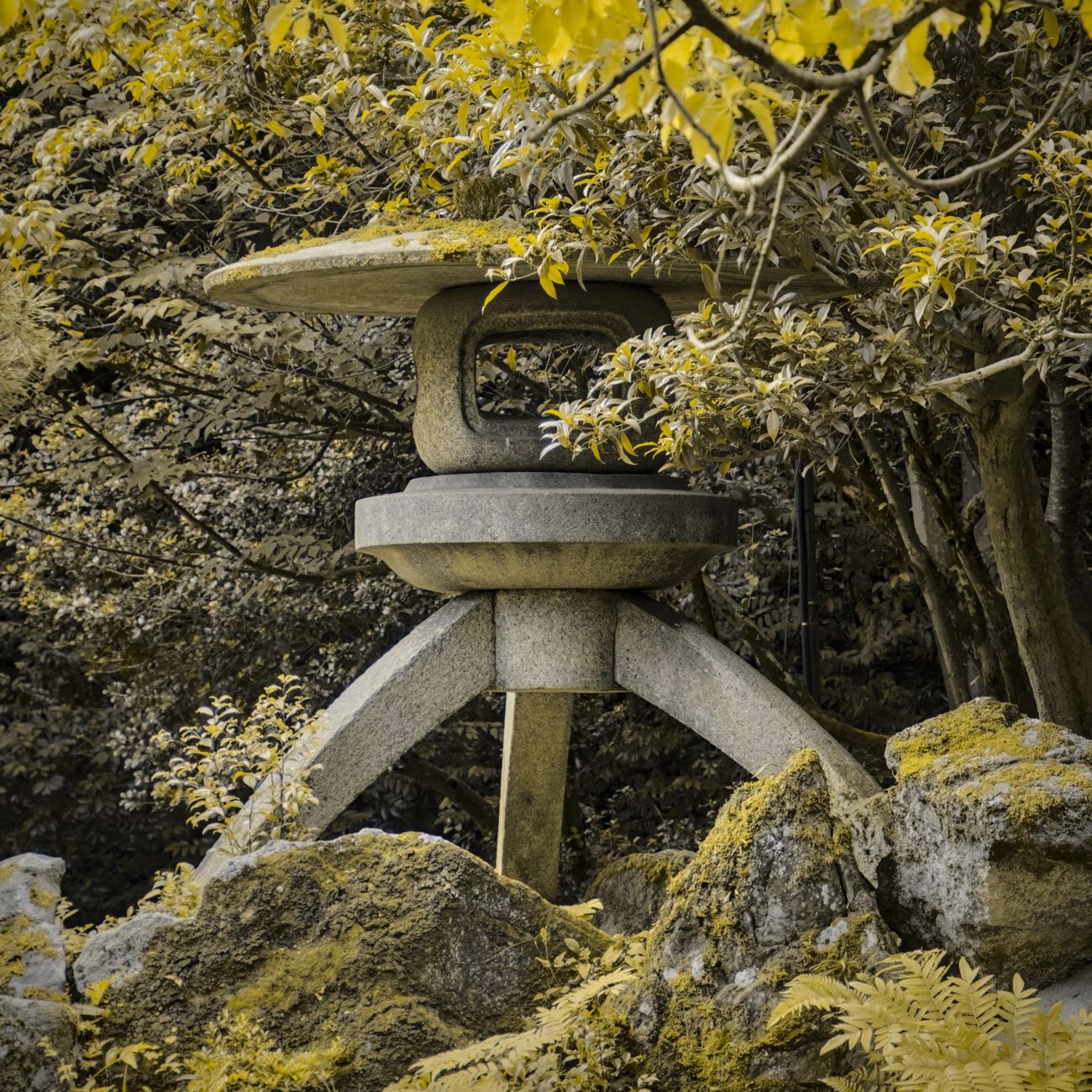
The garden is spare. A stone lantern. Evergreen shrubs. Perhaps a single flowering tree timed to the season. Nothing shouts. Everything whispers. The roji is not about abundance or display — it's about editing the world down to what matters.
The roji does not showcase nature; it frames your attention until you notice what was already there.
A landscape shaped by philosophy
The aesthetic of the roji was codified in the 16th century by tea master Sen no Rikyū, who elevated the tea ceremony from aristocratic pastime to spiritual practice. Rikyū's vision of wabi-sabi — beauty in imperfection, simplicity, transience — is embedded in every element. The stones are weathered. The path is uneven. The gate (roji-mon) is rustic, often bamboo or weathered wood, never grand.
This is a landscape built to dissolve the boundary between inside and outside, self and world. The roji is neither fully wild nor fully tamed. It exists in between, just as the tea ceremony exists between ritual and spontaneity, host and guest, silence and speech.

Not decoration — preparation
Western gardens often invite lingering. The roji does the opposite. It is a passage with a purpose, and that purpose is not aesthetic pleasure but psychological preparation. You are meant to leave behind your social mask, your daily concerns, the weight of who you think you are.
By the time you duck through the low entrance of the tea room — the nijiriguchi, barely two feet high — you have already been undone by the garden. You enter on your knees, humbled, awake, ready.
The roji teaches without speaking. It asks you to notice the damp earth, the cool stone, the quiet. It asks you to arrive not just in body, but in spirit — stripped of pretense, open to what comes next.
And then, only then, the tea.
FAQ
Chaware curates authentic Japanese crafts — straight from the makers in Japan to your table.
Explore the Chaware collection →