Reading the Sushi Counter: Understanding Etiquette in Japan's Most Intimate Dining Theater
On this page
You sit down, and suddenly you're not just hungry—you're on stage.
The sushi counter isn't a regular table. It's a performance space with invisible rules, unspoken cues, and a chef who's watching you as carefully as you're watching him. Miss the rhythm, and you're not just dining awkwardly—you're disrupting a centuries-old dance between maker and eater that turns raw fish into theater.
The counter is a conversation, not a conveyor belt
At an omakase counter, the chef isn't just preparing your meal. He's reading you—your pace, your preferences, the way you handle your chopsticks, whether you're drowning everything in soy sauce or eating it as presented. Every piece he serves is a question. Your response—how you eat it, how quickly, whether you finish it—is your answer.
This isn't about rules for rules' sake. It's about tempo. A good sushi chef orchestrates the meal like a conductor, building from lighter, delicate flavors to richer, fattier ones. When you linger too long over one piece while the next sits waiting, you're throwing off the entire composition. The fish is at its perfect temperature for maybe thirty seconds. After that, the rice cools, the neta (topping) warms, and the balance the chef calibrated disappears.
Your hands are the original utensils
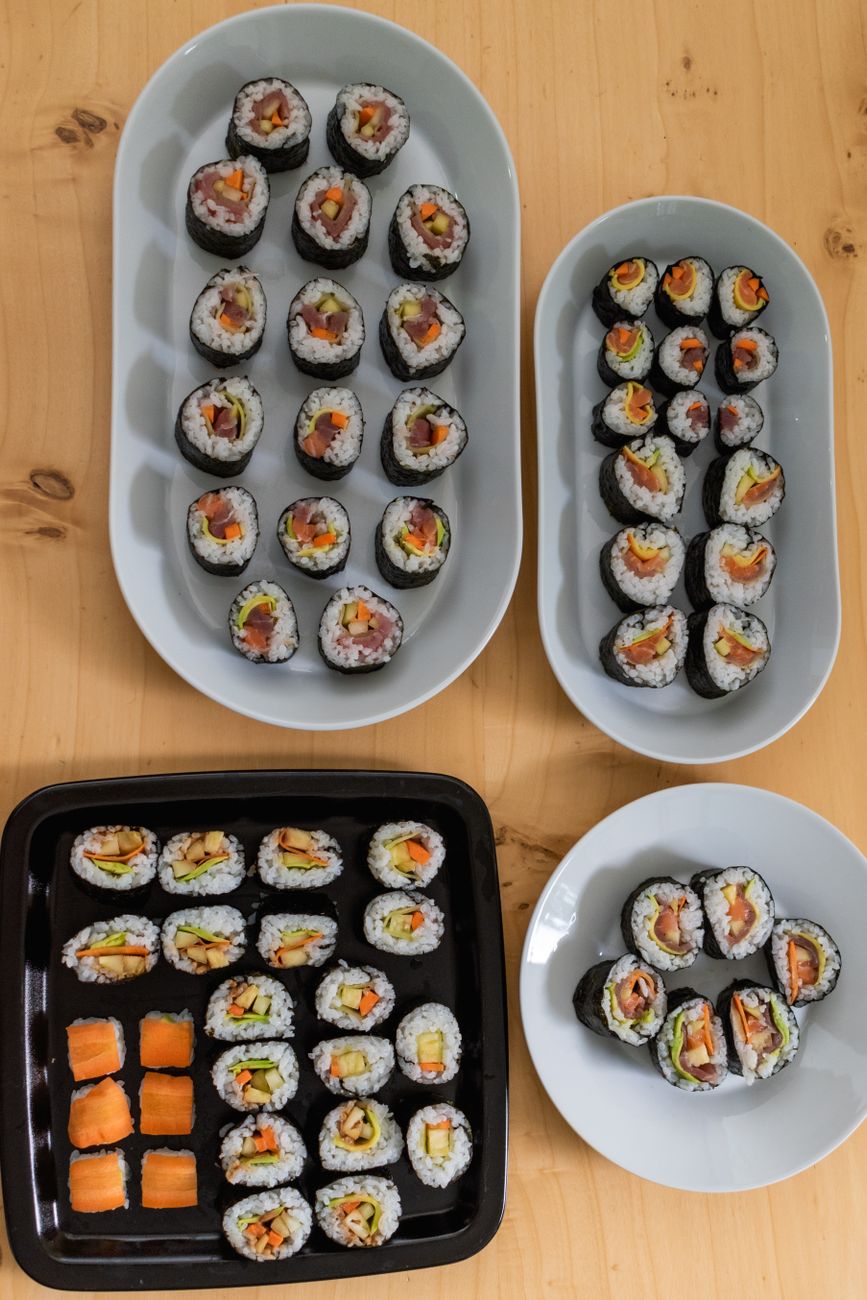
Chopsticks are fine. But if you're at a traditional counter, fingers are not just allowed—they're often preferred. Edomae sushi was born as street food, eaten standing up with your hands. The chef forms each piece so it holds together just barely, a structural miracle that collapses perfectly on your tongue.
When you use your hands, flip the sushi upside down so the fish—not the rice—touches your tongue first. This isn't pretension. It's physics. The neta carries the flavor; the rice is the supporting actor. Dip fish-side into soy sauce (lightly, and only if the chef hasn't already brushed it with nikiri or tsume), then eat it in one bite. Two bites breaks the architecture.
The counter reveals what menus hide: the chef's hands are the real ingredient.
Silence isn't rude; distraction is
You don't need to narrate your experience or compliment every piece. A small nod, a quiet oishii (delicious), or just attentive presence speaks louder than effusive praise. The chef knows whether you're tasting or performing for your dinner companion.
What breaks the spell? Phones on the counter. Heavy perfume that drowns the delicate scent of ocean and vinegar. Asking the chef to remake something because you "don't like" an ingredient you chose to order. The counter demands a kind of focused respect—not stiffness, but presence. You're in the shokunin's workspace, close enough to see the knife work, the way he wipes the blade between cuts, the slight adjustment of angle that makes fat glisten.
The real luxury is trust
The word omakase means "I leave it up to you." It's a transaction built entirely on trust—you trust the chef's judgment, the morning's market, the season's offerings. In return, the chef trusts you to meet him halfway: to eat at the pace he sets, to try what he offers, to understand that when he says a piece needs no soy sauce, it's not a suggestion.
This isn't about submission. It's about two people, separated by a wooden counter and joined by a shared understanding that the fish, the rice, the moment are all temporary. The performance ends when the meal does.
And when you stand to leave, you realize: you weren't just fed. You were seen.
FAQ
Chaware curates authentic Japanese crafts — straight from the makers in Japan to your table.
Explore the Chaware collection →