The Geometry of Sashimi Plating: Ancient Principles Behind Japanese Raw Fish Arrangement
On this page
A slice of salmon lies on a white plate at an angle you didn't consciously notice—until you realize you can't look away.
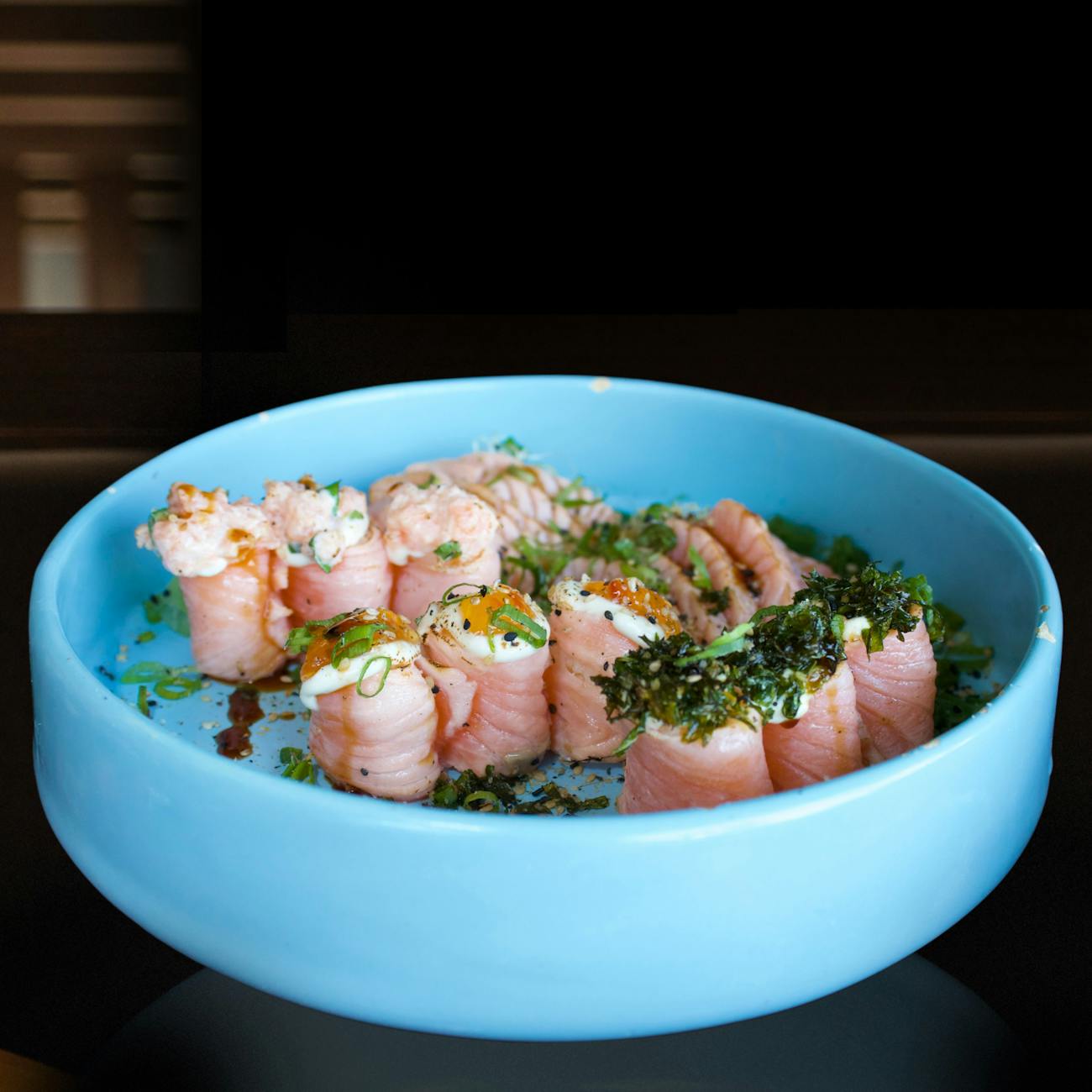
The geometry of sashimi arrangement isn't decoration. It's a visual language older than the Edo period, built on principles borrowed from ikebana, calligraphy, and the asymmetrical balance the Japanese call yohaku no bi—the beauty of empty space. What looks effortless is deeply intentional. What appears random follows rules stricter than most Western plating systems.
The triangle you're supposed to feel, not see
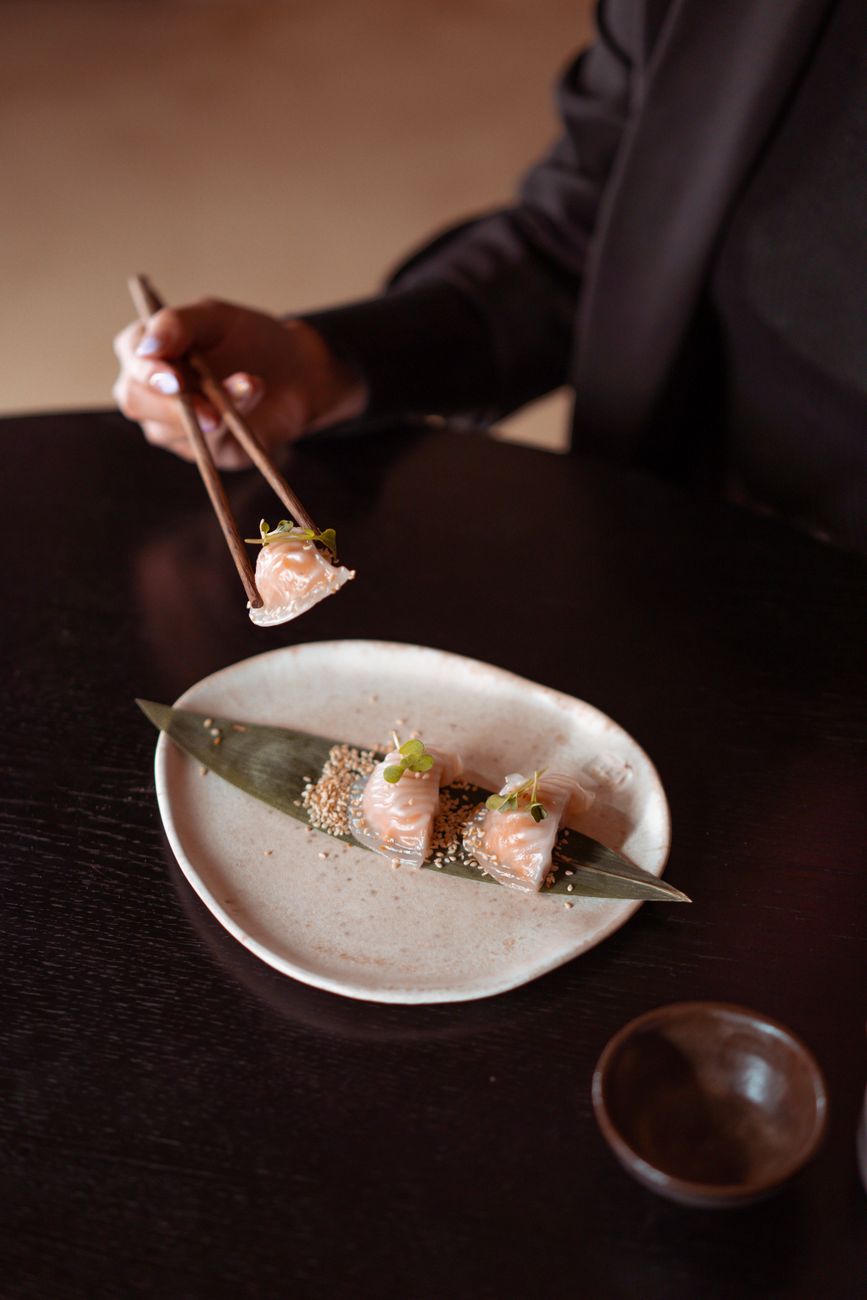
Walk into any traditional sushiya, and the sashimi arrives on a long rectangular plate. Three varieties, maybe five. Never four—unlucky number. And almost always arranged in a loose triangle.
This isn't about symmetry. It's about sankai, the three-point structure that guides the eye without trapping it. The tallest element—often a shiso leaf standing upright, or a mound of daikon—anchors one corner. The protein follows descending heights. Your gaze moves, rests, moves again. The plate breathes.
In Japanese plating, empty space isn't leftover—it's the pause between notes that makes the melody.
The triangle is felt, not measured. No protractor involved. The chef's hand has internalized the rhythm through years of repetition, the same way a calligrapher knows when the brushstroke is complete.
Odd numbers, slanted cuts, and the refusal to be boring
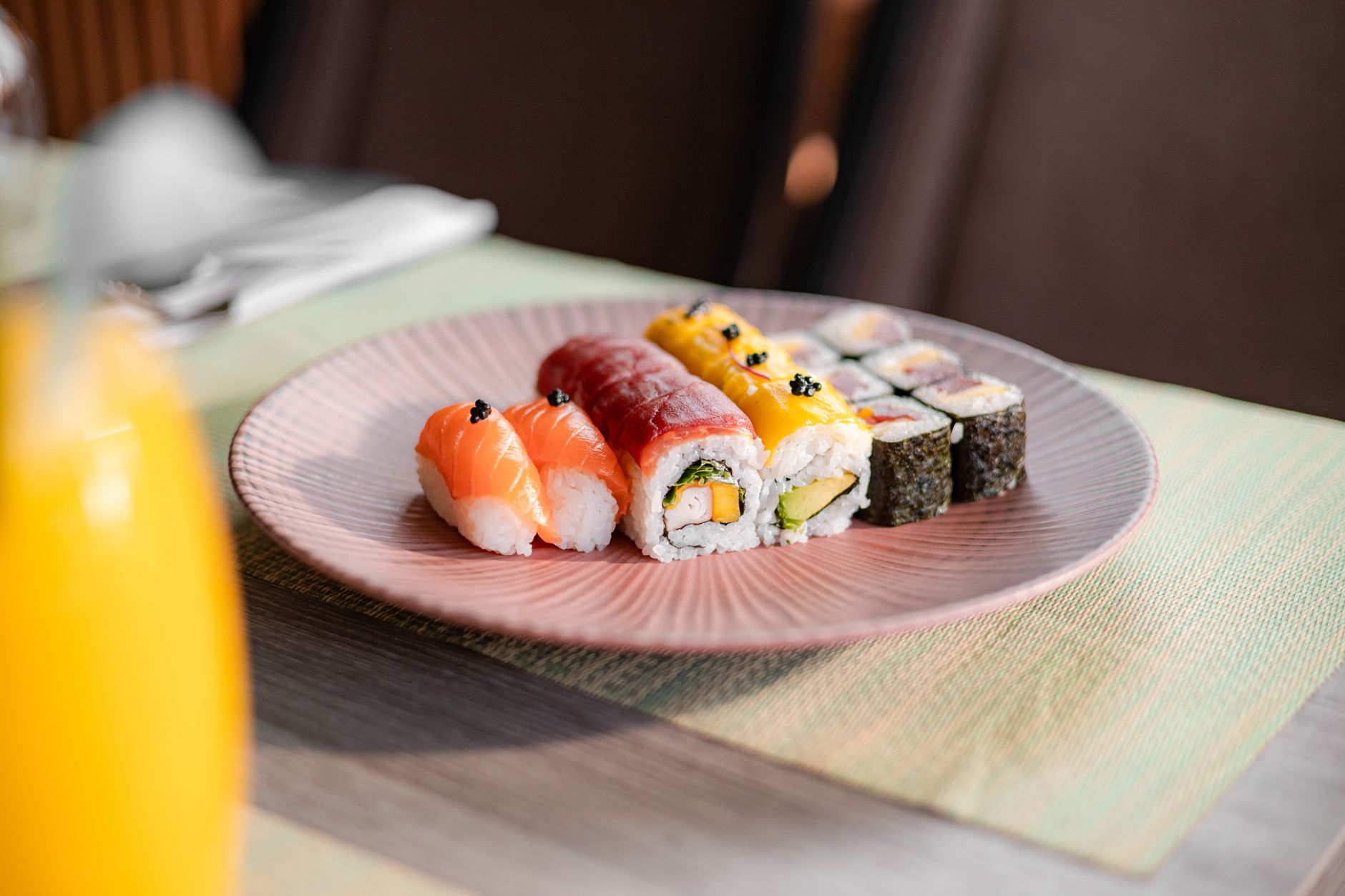
You'll rarely see an even number of slices on a traditional sashimi plate. Three pieces of tuna. Five of tai. Seven if it's a celebration. Odd numbers create visual tension—your brain can't split them down the middle, so it stays engaged.
Then there's the angle. Sashimi slices aren't laid flat like fallen dominoes. They're propped at a slant, leaning against garnish or each other, creating shadows and depth. The cut itself—sogi-giri for thin slant cuts, hira-zukuri for thick rectangles—determines how the fish catches light, how the texture reads before you taste it.
And the color blocking. Chefs don't scatter. They cluster. White-fleshed fish on one side, red tuna opposite, salmon or mackerel between. The contrast isn't just aesthetic—it's a visual menu, helping you pace the progression from delicate to rich.
What the garnish is actually doing
That shredded daikon isn't filler. The shiso leaf isn't parsley. In moritsuke—the art of arrangement—garnish serves three roles: height, contrast, and palate reset.
- Tsuma (the base, usually daikon): creates elevation and absorbs excess moisture
- Ken (the accent, like shiso or myoga): adds color and aromatic punctuation
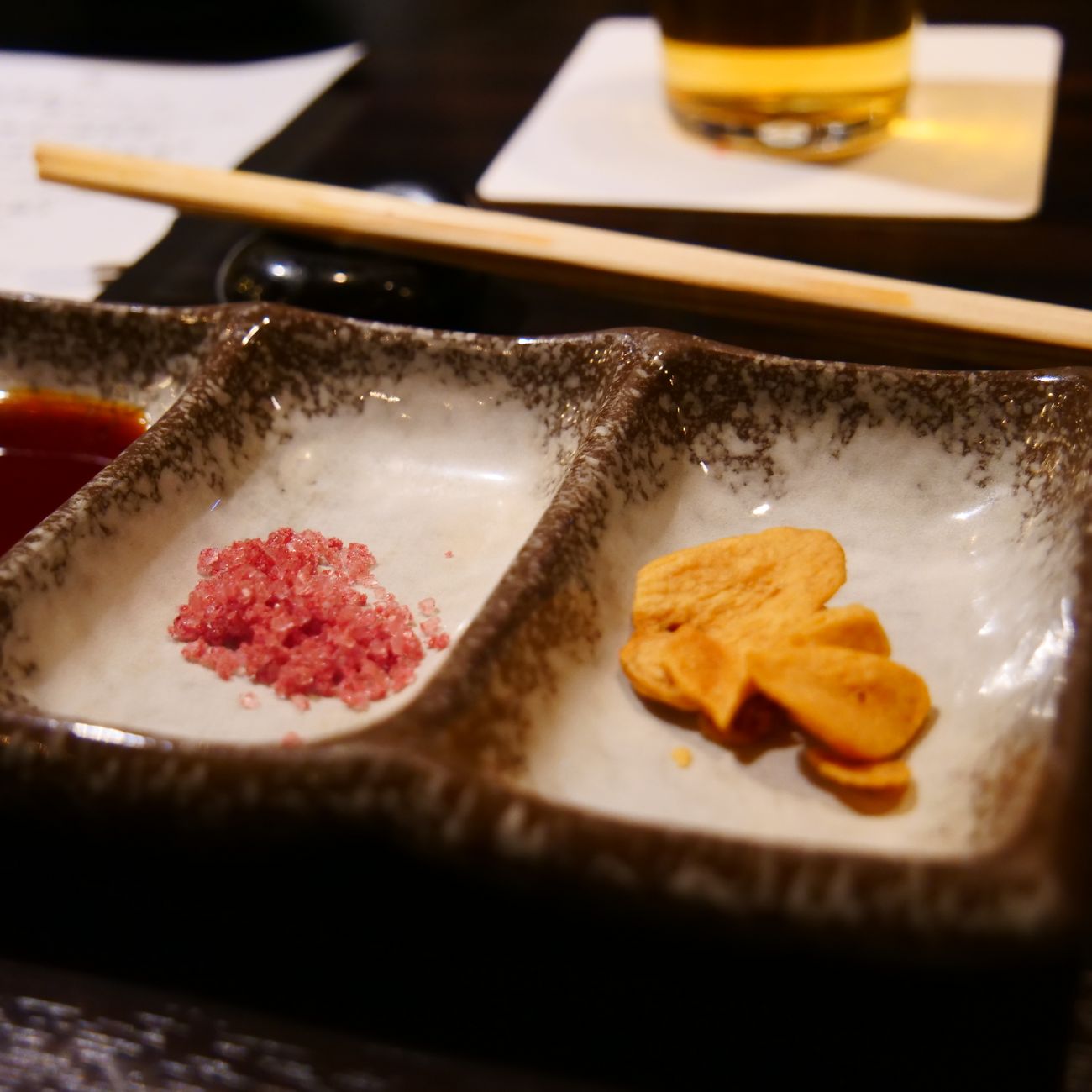
- Karami (the heat, wasabi or ginger): cleanses between bites
The garnish is architecture. It holds the fish at the angle the chef wants. It separates varieties so oils don't bleed. It gives your eye a place to rest before the next piece.
The plate is the sky, the fish is the landscape
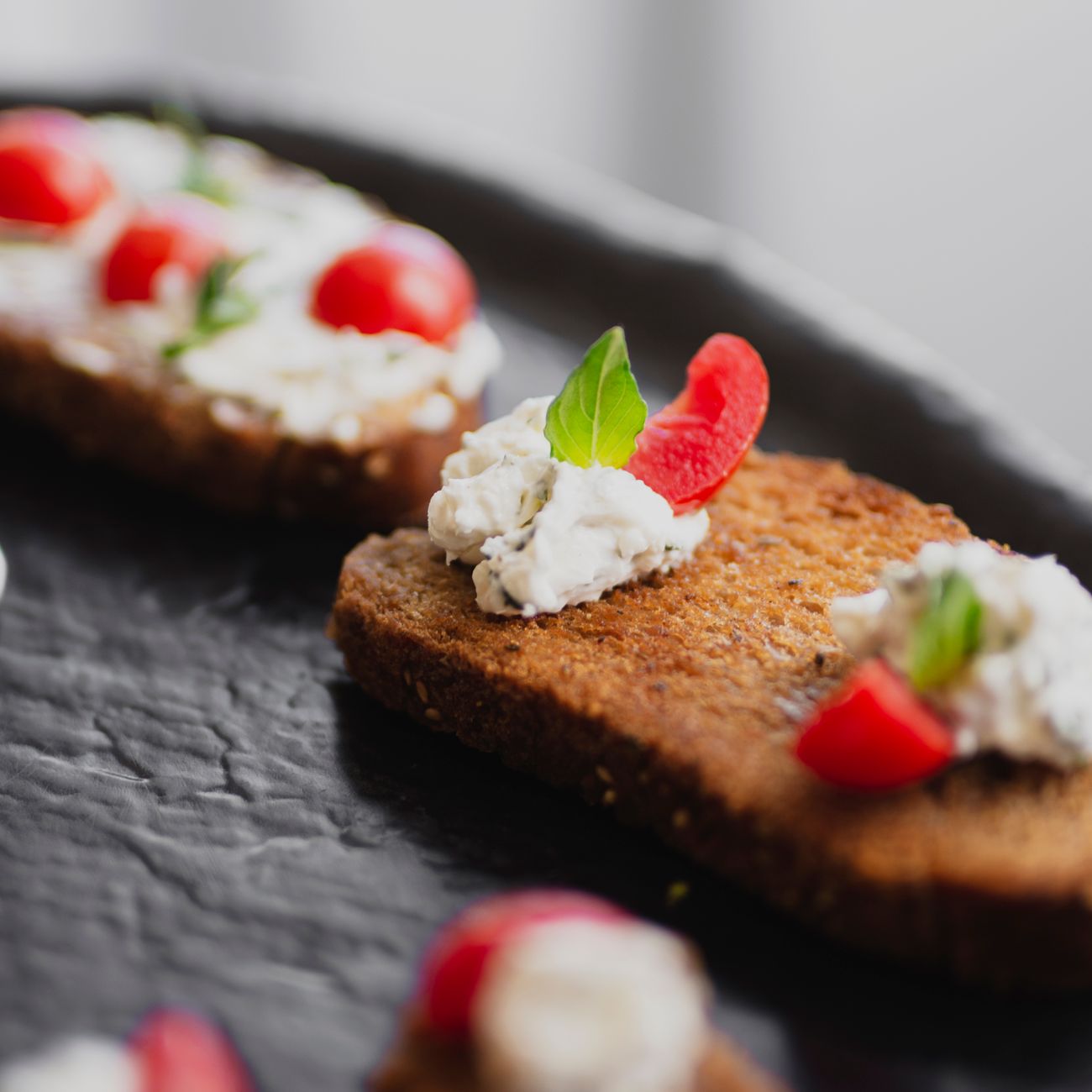
Traditional Japanese plating treats the vessel as negative space—a canvas, a sky, an expanse. The food is a landscape painted across it. Too much, and the sky disappears. Too centered, and the tension dies.
This is why sashimi rarely sits in the middle of the plate. It's pushed to one side, asymmetrical, leaving a sweep of emptiness that feels intentional. The Western instinct is to fill, to center, to balance left and right. The Japanese instinct is to imbalance on purpose, to let the void speak.
You learn to read a plate the way you'd read a scroll—right to left, light to dark, beginning at the most delicate and ending at the most robust. The geometry isn't just visual. It's temporal.
A perfectly arranged plate is a brushstroke that took thirty years to make look accidental.
FAQ
Chaware curates authentic Japanese crafts — straight from the makers in Japan to your table.
Explore the Chaware collection →