How to Make Matcha at Home: A Beginner's Guide to Traditional Japanese Tea
On this page
The first sip tastes like concentrated forest—grassy, almost sweet, with a lingering bitterness that wakes up your mouth. You've just made matcha the way it was meant to be made.
The powder that refuses to dissolve
Unlike coffee or loose-leaf tea, matcha doesn't steep. It suspends. You're not extracting flavor from leaves—you're drinking the entire leaf, stone-ground into a powder so fine it feels like silk between your fingers. This is why whisking matters. This is why shortcuts fail.
The Japanese call the preparation method chanoyu when performed ceremonially, but at home, you're simply following the same logic: turn powder and water into a unified, frothy cloud. No clumps. No grit at the bottom.
It sounds simple. It is simple. But simple doesn't mean careless.
What you actually need
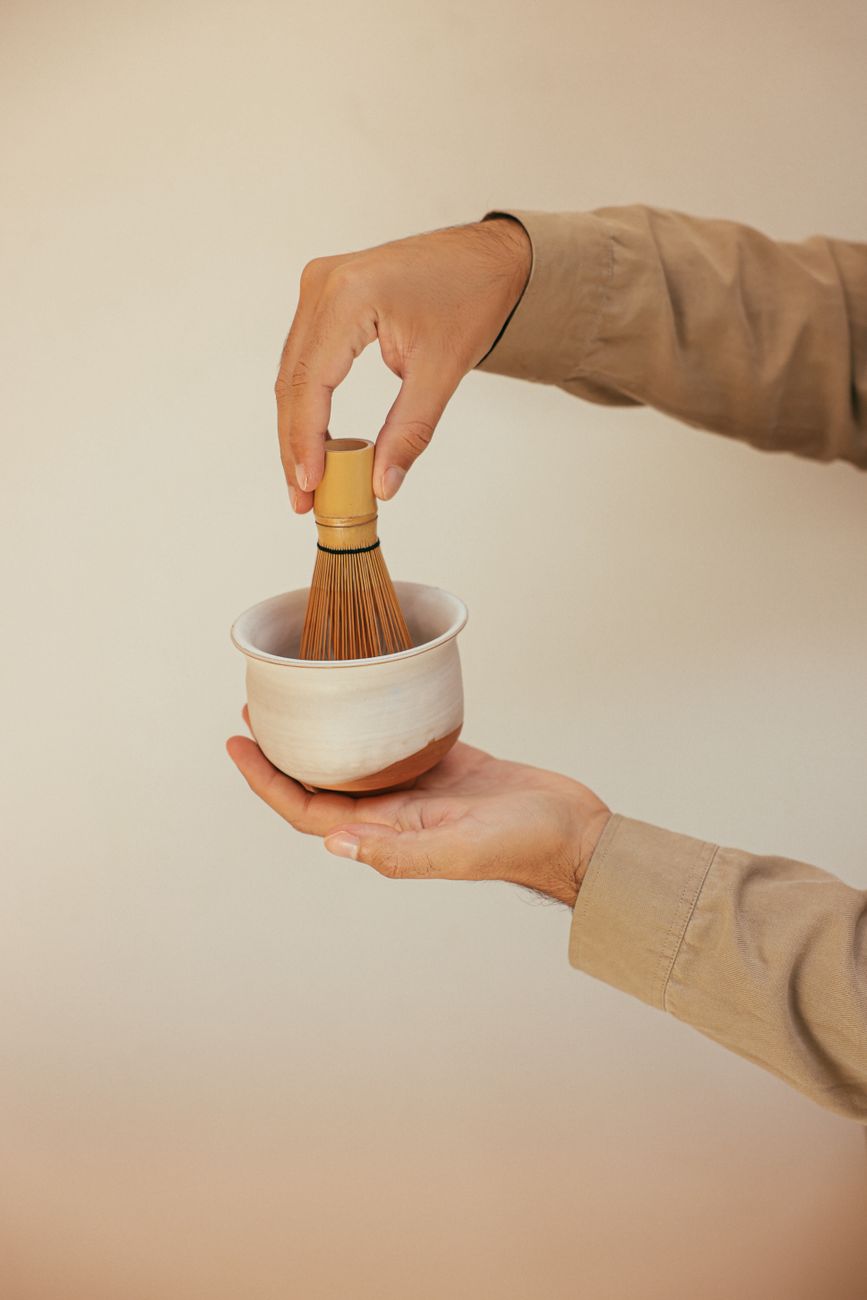
Start with three things: a wide bowl, a bamboo whisk, and matcha powder that hasn't been sitting in a clear jar on a sunny shelf for six months.
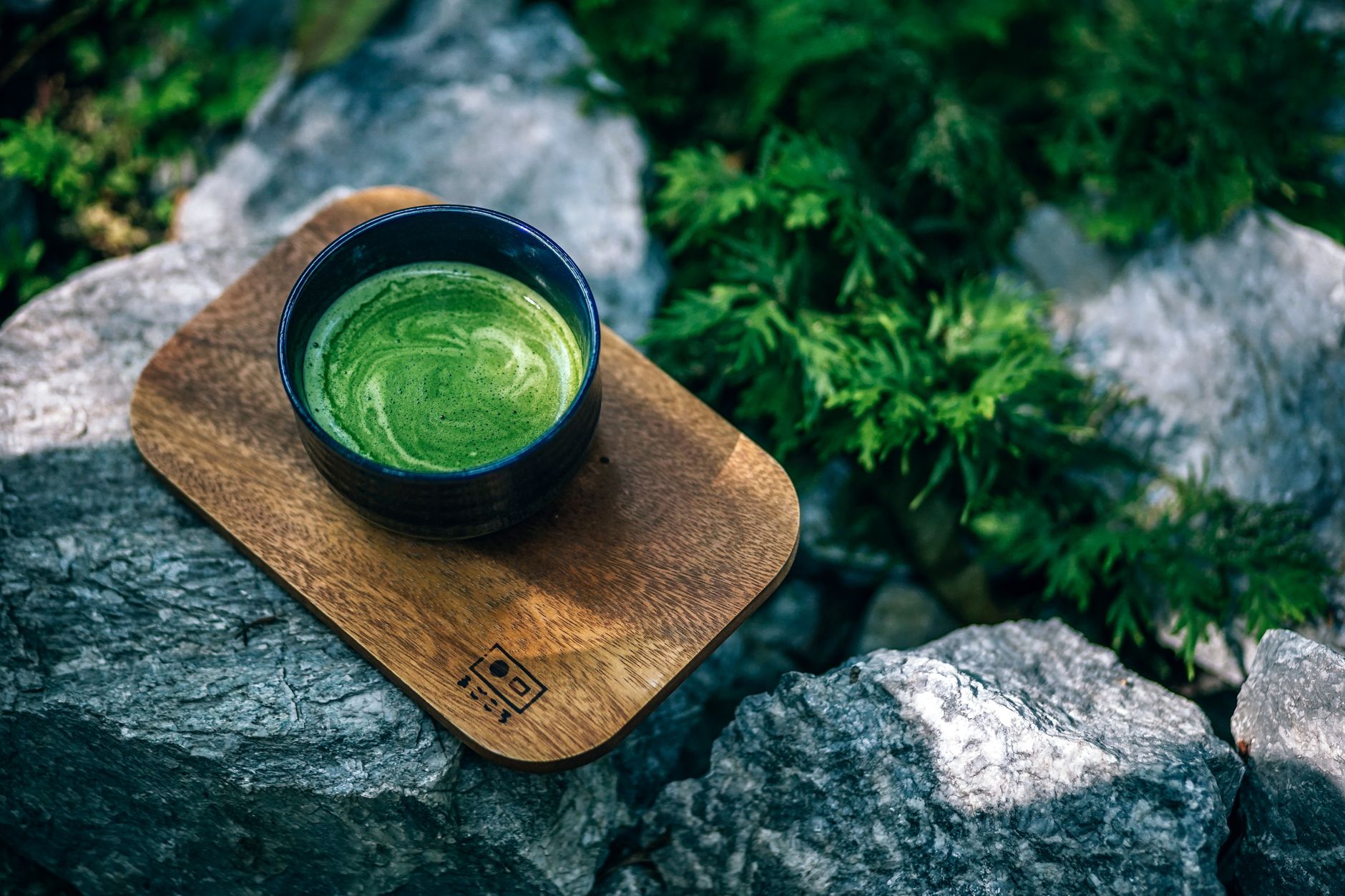
The bowl—called a chawan—should be wide enough to give your whisk room to move. A regular cereal bowl works, though it won't have the foot ring that lets you cradle it with both hands. The whisk, or chasen, has dozens of delicate tines that aerate the tea. A fork or metal whisk will clump the powder, not suspend it. You can find a chasen for less than the cost of two lattes, and it will last years if you treat it gently.
The matcha itself should be vibrant green, not olive or khaki. Store it in the fridge, sealed tight. Oxidation is the enemy.
The motion that makes it work
Sift a teaspoon of matcha through a small strainer into your bowl. This breaks up clumps before water ever touches the powder.
Add about two ounces of water—not boiling, around 175°F (80°C). Boiling water scorches matcha, turning it bitter and dull.
Now the whisk. Hold it like a paintbrush, not a hammer. Move your wrist in a fast zigzag—back and forth, not circular—scraping the bottom of the bowl with each pass. You're building foam, not stirring soup. Ten seconds of vigorous whisking should give you a thin layer of fine bubbles across the surface.
The goal isn't perfection—it's presence.
Stop when the tea looks unified, pale green, slightly frothy. Drink it while it's still warm, while the foam still clings to the sides of the bowl.

Why it matters that you slow down
Matcha preparation is forgiving in technique but unforgiving in attention. You can't make it while scrolling. You can't microwave water and call it done. The few minutes it takes become a small ritual, a reset, a moment when your hands are busy and your mind goes quiet.
This is what the tea ceremony formalized centuries ago—not as religion, but as structured mindfulness. At home, without rules or guests or silk cushions, the same principle applies. You measure. You sift. You whisk. The tea rewards you for being there.
And when you lift the bowl with both hands, feeling its warmth, tasting that first bright, vegetal sip—you understand why this powder has survived a thousand years of trends.
The forest is in the cup. You put it there.
FAQ
Chaware curates authentic Japanese crafts — straight from the makers in Japan to your table.
Explore the Chaware collection →