Why Guests Bow in the Tea Ceremony: The Language of Respect in Chanoyu
On this page
You enter the tea room and immediately lower your head. Before tea touches your lips, before a word is spoken, the bow has already begun the conversation.
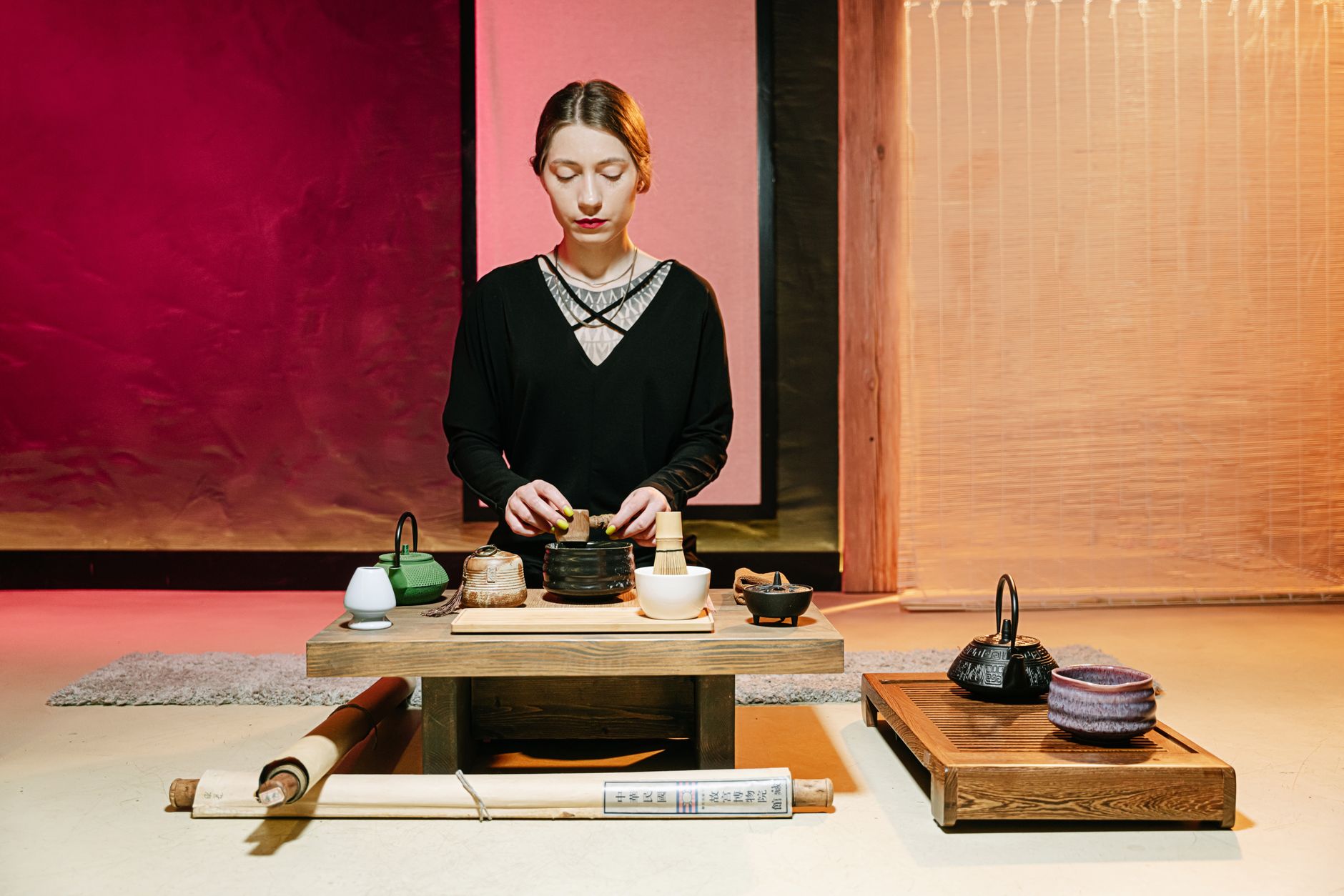
In the Japanese tea ceremony—chanoyu—bowing isn't politeness tacked on. It's the architecture of the entire experience, the silent grammar that holds everything else together. Every incline of the head, every angle of the spine, carries meaning older than the teahouses themselves.
The bow that says "I see you"
When you bow to your host in the tea room, you're not just acknowledging their presence. You're recognizing the hours they spent selecting the scroll, arranging a single branch, cleaning each utensil until it gleamed. The bow says: I notice what you've prepared for me.
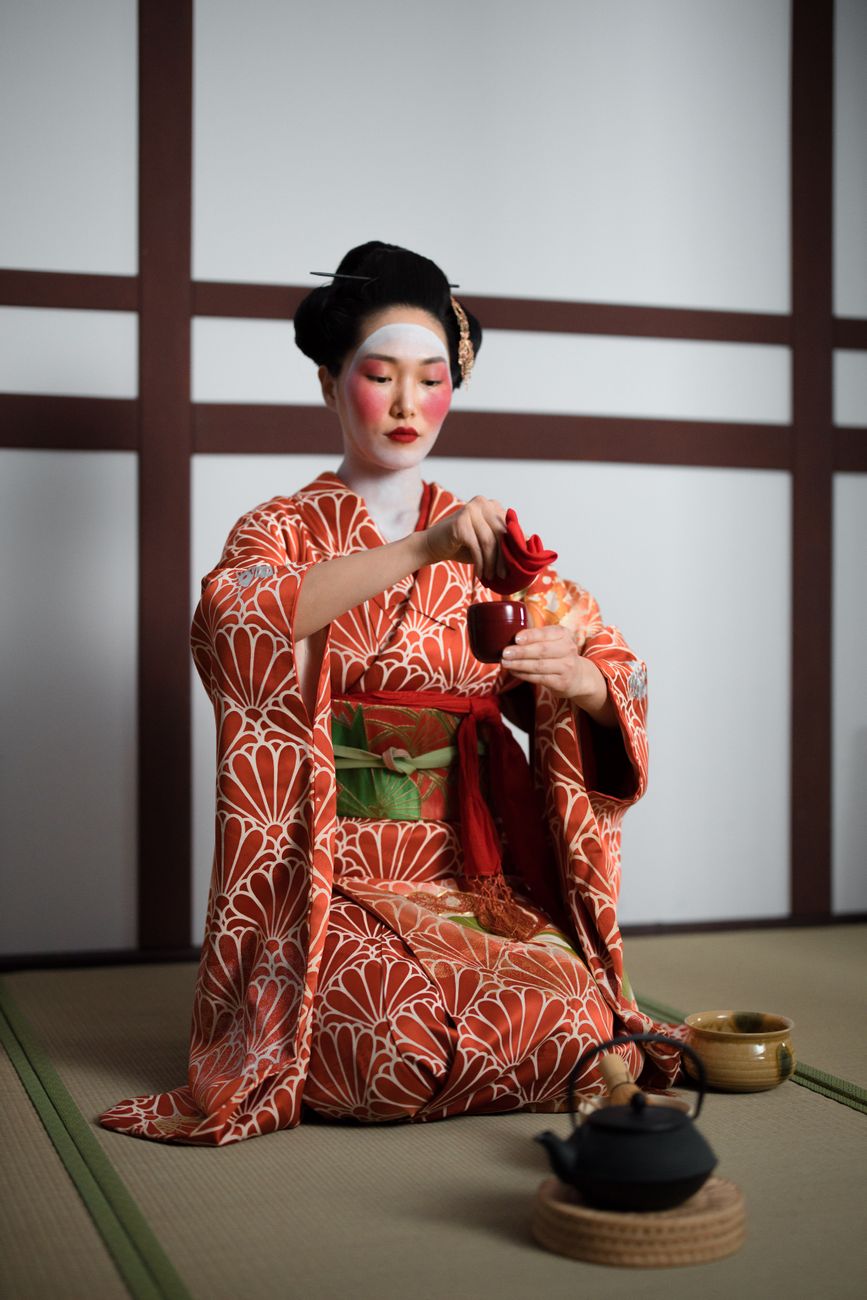
The guest bows upon entering through the nijiri-guchi, that impossibly small doorway that forces even samurai to crawl. Once inside, another bow—this time to the tokonoma, the alcove holding the scroll and flowers. You're bowing to beauty itself, to the season captured in a vase, to the calligraphy chosen specifically for this gathering that will never happen again.
Erasing hierarchy, one bow at a time
Here's what's radical: in the tea room, everyone bows the same way. The CEO and the student. The potter and the merchant. When you lower your forehead toward the tatami, you're temporarily setting aside everything that separates you from the person across the mat.
The tea ceremony transforms the bow from social lubricant into spiritual practice—a physical reminder that here, now, we meet as equals.
This isn't about false modesty. It's about creating a pocket of space where status dissolves and only presence remains. The depth of your bow isn't determined by the other person's title, but by the sincerity of your attention.
The angles matter
Not all bows in the tea ceremony are identical. A shallow bow—eshaku—might accompany receiving your tea bowl. A deeper bow—keirei—when entering or thanking your host. The deepest bow, saikeirei, forehead nearly touching the mat, reserved for moments of profound gratitude or when the host presents an especially treasured piece.
Your hands rest on the tatami, forming a triangle. Your back stays straight. You descend from the hips, not the neck. These aren't arbitrary rules—they're the distilled wisdom of centuries spent asking: how do we make respect visible?

Before words, the body speaks
What makes bowing so essential to tea ceremony manners is its honesty. Words can flatter or deceive. The body, moving with intention through space, tells a different kind of truth.
When you bow to receive your tea bowl, turning it carefully in your hands before drinking, you're participating in a choreography of care. The potter shaped this clay. The host chose it for you. You honor both with the deliberateness of your movements. The bow is simply where that honoring begins—and where it returns, again and again, like breath.
The tea cools. The charcoal dims. But the bow remains, a hinge between one moment and the next, holding open a space where attention becomes devotion.
FAQ
Chaware curates authentic Japanese crafts — straight from the makers in Japan to your table.
Explore the Chaware collection →