Why Matcha Is Stone Ground: The Ancient Craft Behind the Powder
On this page
The finest matcha doesn't just taste different. It sounds different.
If you've ever wondered why traditional matcha is stone-ground rather than processed by modern machinery, the answer lies in physics, temperature, and a grinding speed so slow it borders on meditation. The granite mills that produce ceremonial-grade matcha turn at roughly 30 revolutions per minute—about half the speed of a second hand on a clock. At that pace, it takes an entire hour to grind just 30 grams of powder.
This isn't romance. It's precision.
Heat is the enemy
Matcha leaves—known as tencha before grinding—are fragile in ways most tea isn't. Because they're shade-grown for weeks before harvest, they develop unusually high concentrations of chlorophyll and amino acids, particularly L-theanine. These compounds give matcha its signature jade color and umami sweetness, but they're also volatile. Expose them to heat, and they degrade rapidly.
Metal blade grinders spin at thousands of RPM, generating friction heat that can exceed 50°C. Stone mills, by contrast, barely warm the tea. The slow rotation and the thermal mass of granite absorb and dissipate what little heat emerges. The result is powder that retains its vivid green and delicate aromatics—qualities that would burn away in seconds under industrial blades.
Particle size you can taste
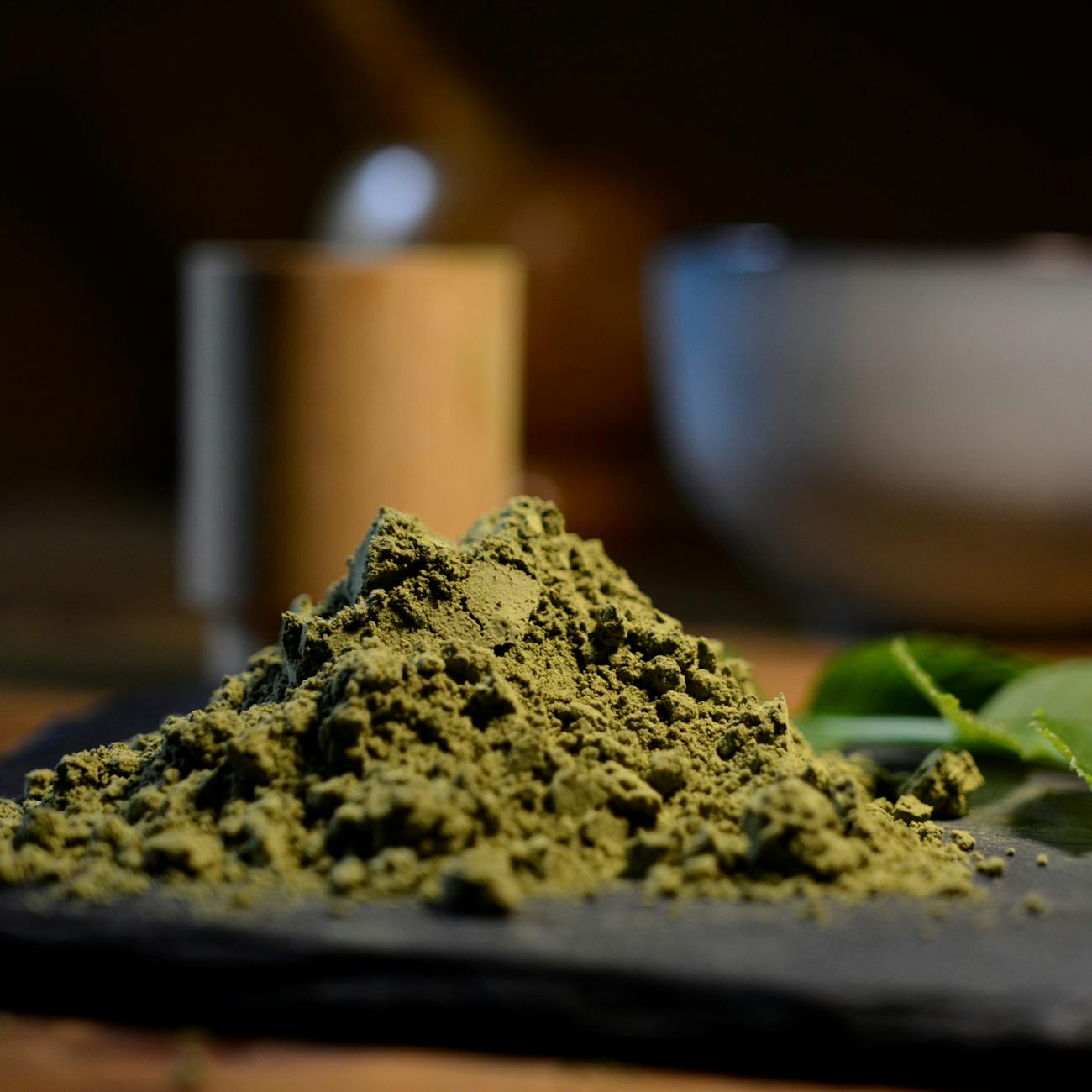
The texture of matcha matters more than you might expect. Stone grinding produces particles between 5 and 20 microns—finer than flour, finer than cocoa powder, approaching the threshold of what your tongue can detect as grit.
When matcha is ground properly, it doesn't dissolve in water—it suspends, creating a colloid that feels almost creamy.
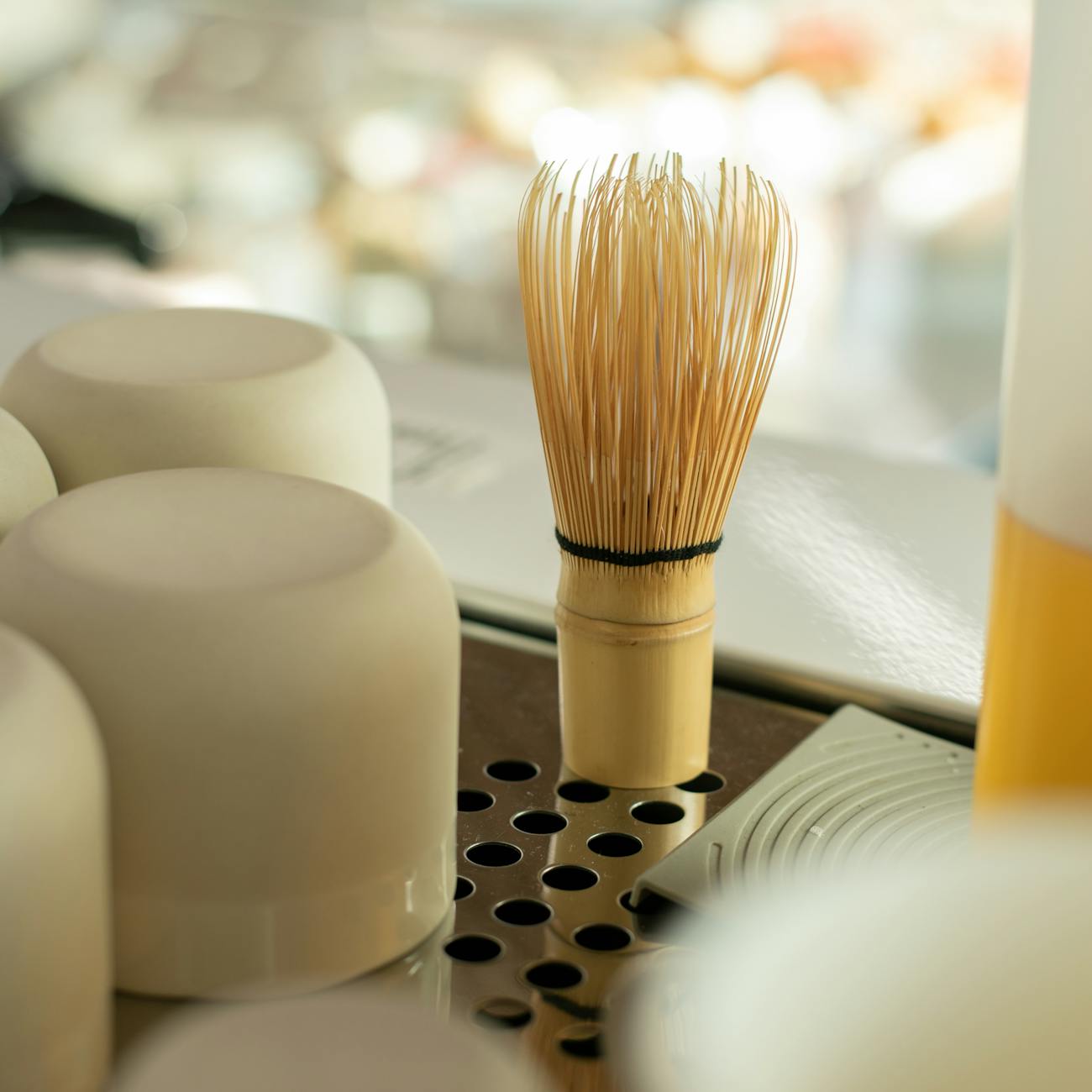
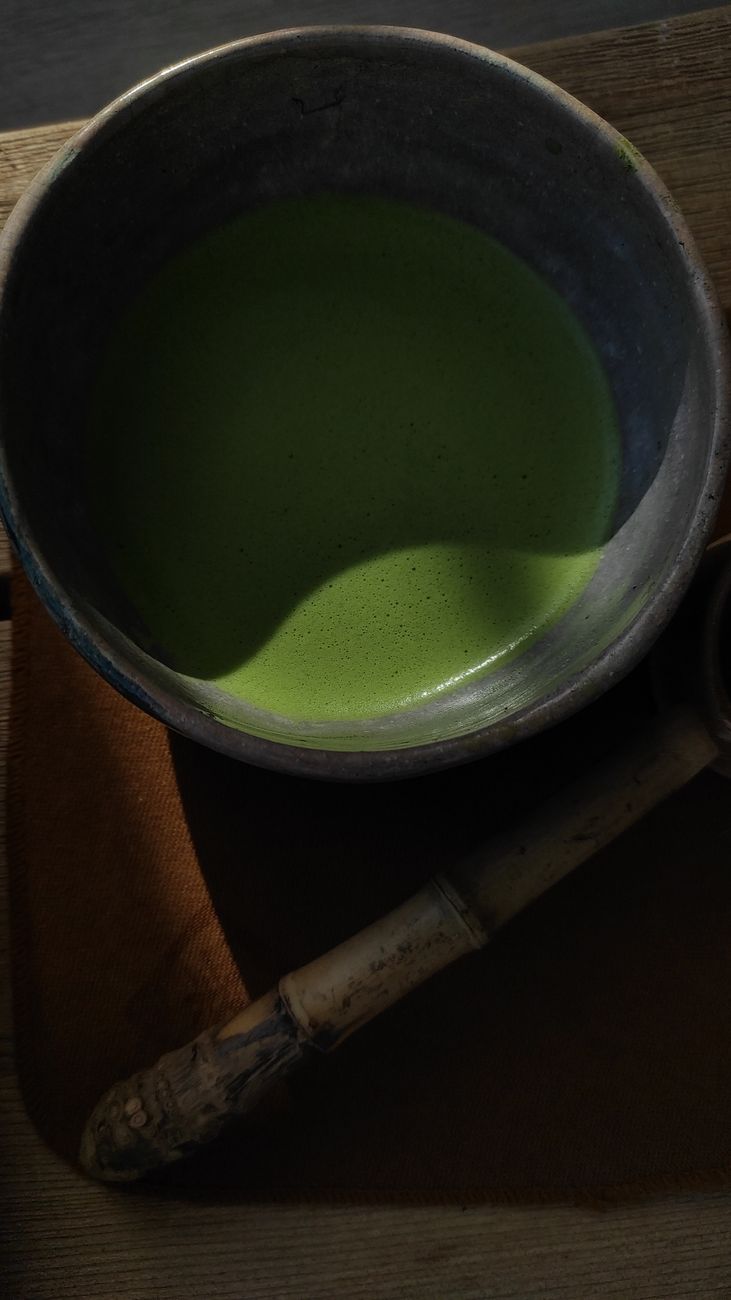
This fineness affects everything: how the powder whisks, how it clings to the chasen bamboo whisk, how it coats your palate. Machine-ground alternatives often feel chalky or settle quickly at the bottom of the bowl. Stone-ground matcha stays integrated, creating that signature froth and mouthfeel that defines the tea ceremony experience.
The granite itself
Not just any stone will do. Traditional matcha mills use granite quarried specifically for its hardness and pore structure—often from regions like Kyoto or Aichi Prefecture. The grinding surface is hand-carved with shallow grooves that guide the tencha leaves toward the center, where upper and lower stones meet with exacting tolerance.
These grooves wear down over time and must be re-cut by skilled craftspeople, sometimes annually depending on production volume. A single millstone set can cost thousands of dollars and requires regular maintenance. It's the opposite of efficiency. It's also irreplaceable.
Modern alternatives exist: jet mills, ball mills, high-speed pulverizers. They're faster, cheaper, and produce consistent results. But they can't replicate the specific combination of low heat, precise particle distribution, and gentle handling that stone provides. For everyday culinary matcha, they're perfectly adequate. For ceremonial grade—the kind whisked in chanoyu tea rooms—there's still no substitute for granite turning in near-silence.
What you're really tasting
When you prepare a bowl of stone-ground matcha, you're not just tasting tea. You're tasting a decision to preserve quality over speed, craft over scale. The vibrant green, the lack of bitterness, the way the foam holds—these aren't accidents. They're the visible evidence of friction managed, heat controlled, and time honored.
The grinding stone doesn't hurry. Neither should you.
FAQ
Chaware curates authentic Japanese crafts — straight from the makers in Japan to your table.
Explore the Chaware collection →