The Painted Branches Hiding in This 18th-Century Tea Bowl's Black Glaze
On this page
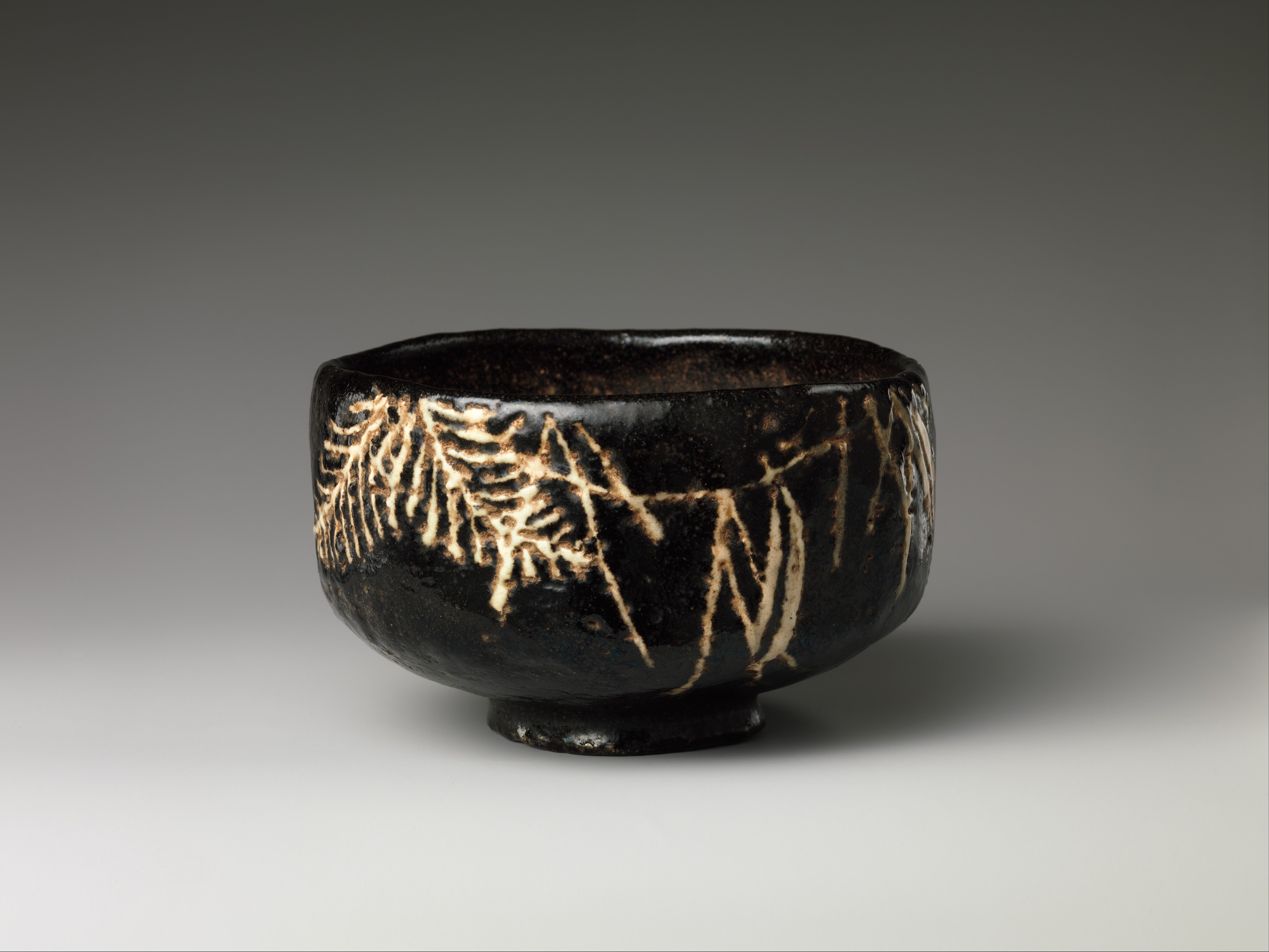
Most of this bowl is silence. A deep, near-black glaze covers nearly the whole surface, giving nothing away. Then, on one side only, a branch-like motif breaks through — pale cream lines zigzagging up through the dark.
Decoration that refuses to repeat
If you expect patterns to wrap evenly around a vessel, this bowl will surprise you. The painted motif clusters on one side and stops. The rest of the bowl stays plain black, uninterrupted. That's not an accident of production — it's a long-standing preference in Japanese tea ceramics for a single point of visual interest rather than symmetrical, all-over decoration.
The effect only reveals itself through use. Turned in the hands during tea preparation, the bowl shows first its plain face, then its painted one. You don't see the whole design at once; you discover it.
What the lines are made of
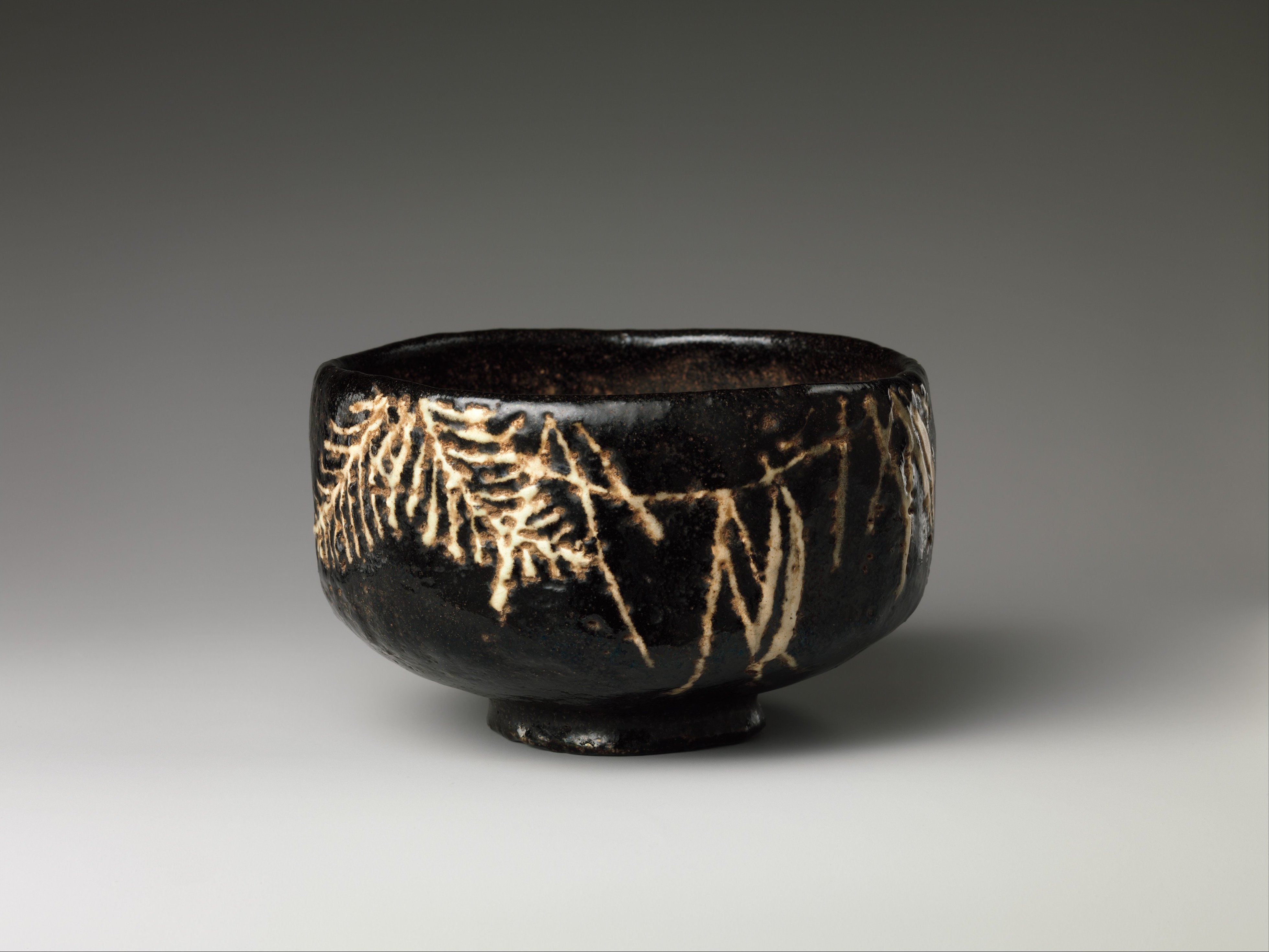
The pale motif is painted in a simple iron or ash-based slip, applied directly onto the glaze surface before the final firing. Unlike overglaze enamels added after firing, this kind of decoration becomes fused into the surface permanently during the same firing that sets the glaze — which is part of why, after roughly 250 years, the lines are still sharp enough to read as individual brushstrokes rather than a blur.
One firing. One chance to get the line right. No second coat to fix a mistake.
Why so little decoration is enough
A bowl covered edge to edge in pattern announces itself immediately and has nowhere left to surprise you. A bowl like this one holds most of its surface in reserve, so the one decorated area carries more weight than it would anywhere else. It's restraint used as a design tool, not an absence of one.
Still legible, centuries later
Ceramic slip decoration like this is remarkably durable — more durable, in some cases, than paper or textile records from the same period. What you're looking at is close to exactly what a potter's brush produced in the 18th century, fired permanently into place before anyone alive today was born.
Chaware curates authentic Japanese crafts — straight from the makers in Japan to your table.
Explore the Chaware collection →
Keep exploring