Matsue & Izumo, Go Deeper
The San'in coast is the land of the old gods. Here stands Izumo Taisha, where the myths of Japan begin and where the deities are said to gather each autumn, and Matsue, a castle town of black keep and moat set between a lake and the sea. Between them lie a world-famous garden, sunset over Lake Shinji, and hot springs written of thirteen centuries ago.
- Tap Open in Google Maps on any place for live directions, transit, hours & reviews.
- Get an ICOCA / Suica IC card — tap on/off trains, subways & buses, no ticket needed.
- Carry some cash (¥) — many small shops, shrines & old streets are cash-only.
- Go early: the famous spots are calm and beautiful before ~9am.

Izumo Taisha
One of Japan's oldest and greatest shrines, dedicated to Okuninushi, the god of marriage and good fortune, and hung with a colossal rice-straw rope. In the old tenth month, called 'Kamiarizuki' here, the gods of all Japan are said to gather at Izumo.

Matsue Castle
Built in 1611 by Horio Yoshiharu, Matsue is one of just twelve surviving original wooden keeps in Japan and was named a National Treasure in 2015. Its black tower still broods over the moat at the heart of the old castle town.

Adachi Museum of Art
A museum at Yasugi famous less for its walls than its windows: its meticulous Japanese garden, framed like living paintings, has topped a national ranking of gardens for years. Inside hang masterpieces by Yokoyama Taikan.
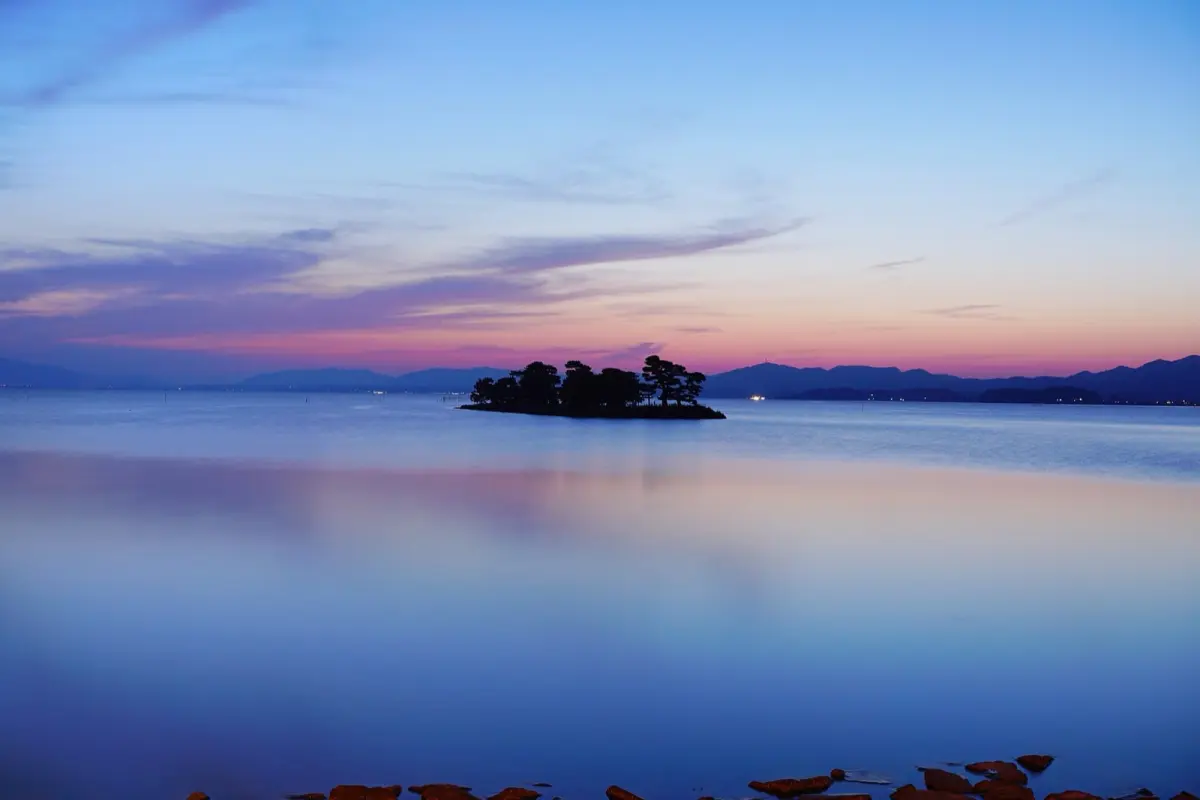
Lake Shinji
A wide brackish lake beside Matsue, celebrated for some of Japan's finest sunsets, when the sky and water turn to fire and the little islet of Yomegashima floats in silhouette. Its waters give the local speciality of seven delicacies.

Hinomisaki
A rugged cape beyond Izumo, crowned by Japan's tallest stone lighthouse, white against the blue Sea of Japan. Nearby, the vermilion Hinomisaki Shrine guards the coast where the sun was said to set on the land of the gods.
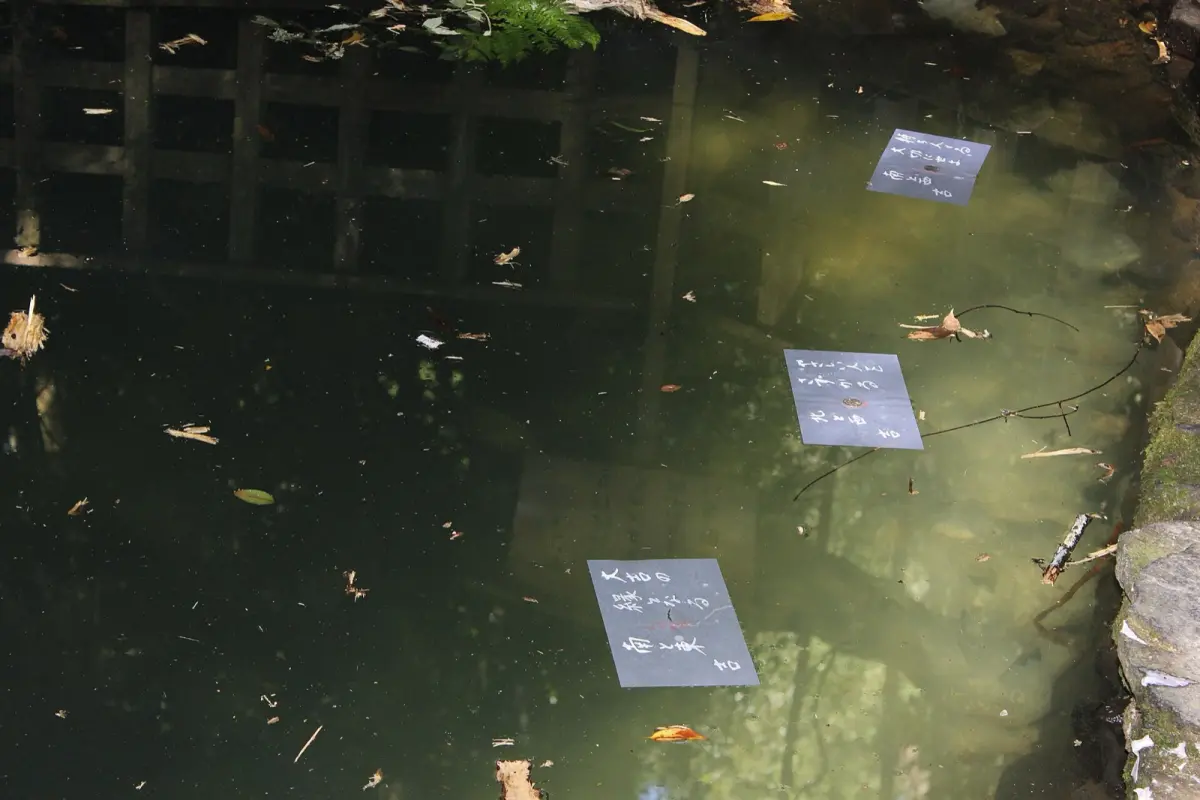
Yaegaki Shrine
A shrine to the storm god Susanoo and the princess Inata-hime he rescued, and one of Japan's great shrines for love. In the forest behind, visitors float a coin on paper on the 'mirror pond' to read their fortune in marriage.
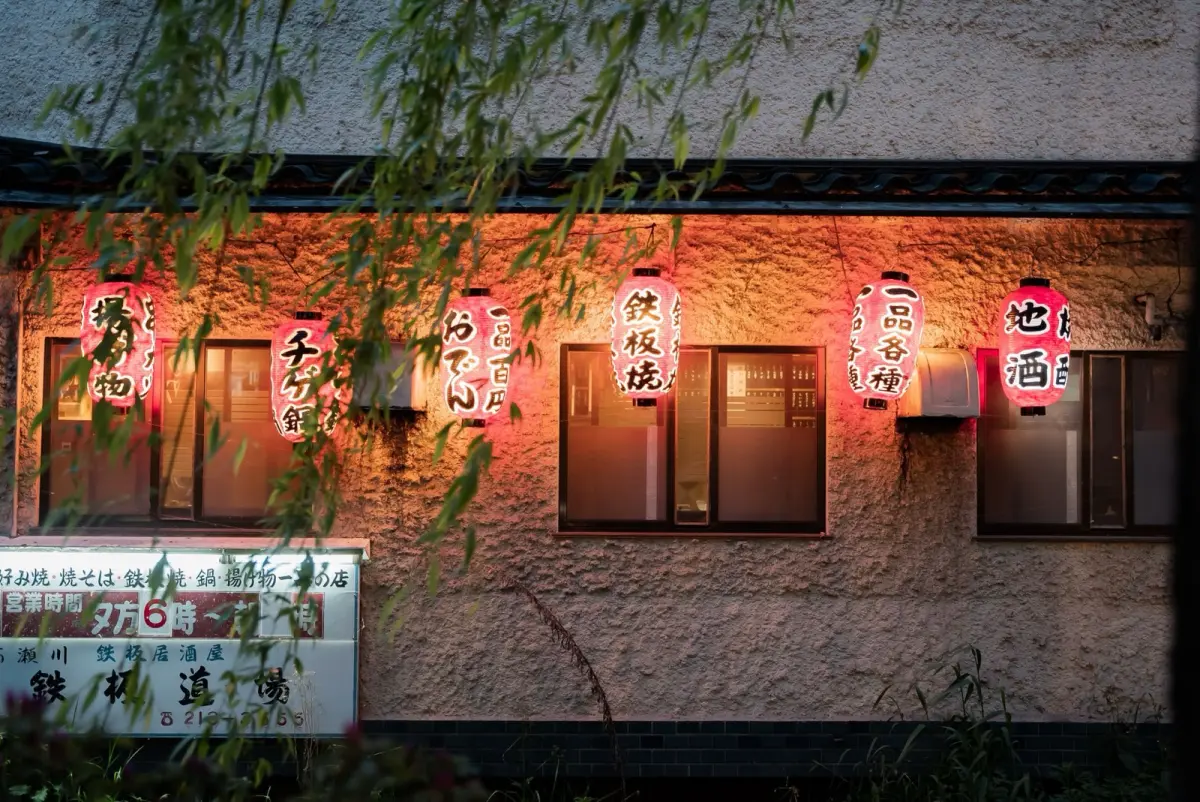
Tamatsukuri Onsen
A hot spring of some 1,300 years, praised in the ancient 'Izumo Fudoki' as a water of beauty. Its inns line a willow-shaded river, and the town was once the source of the sacred 'magatama' curved jewels.
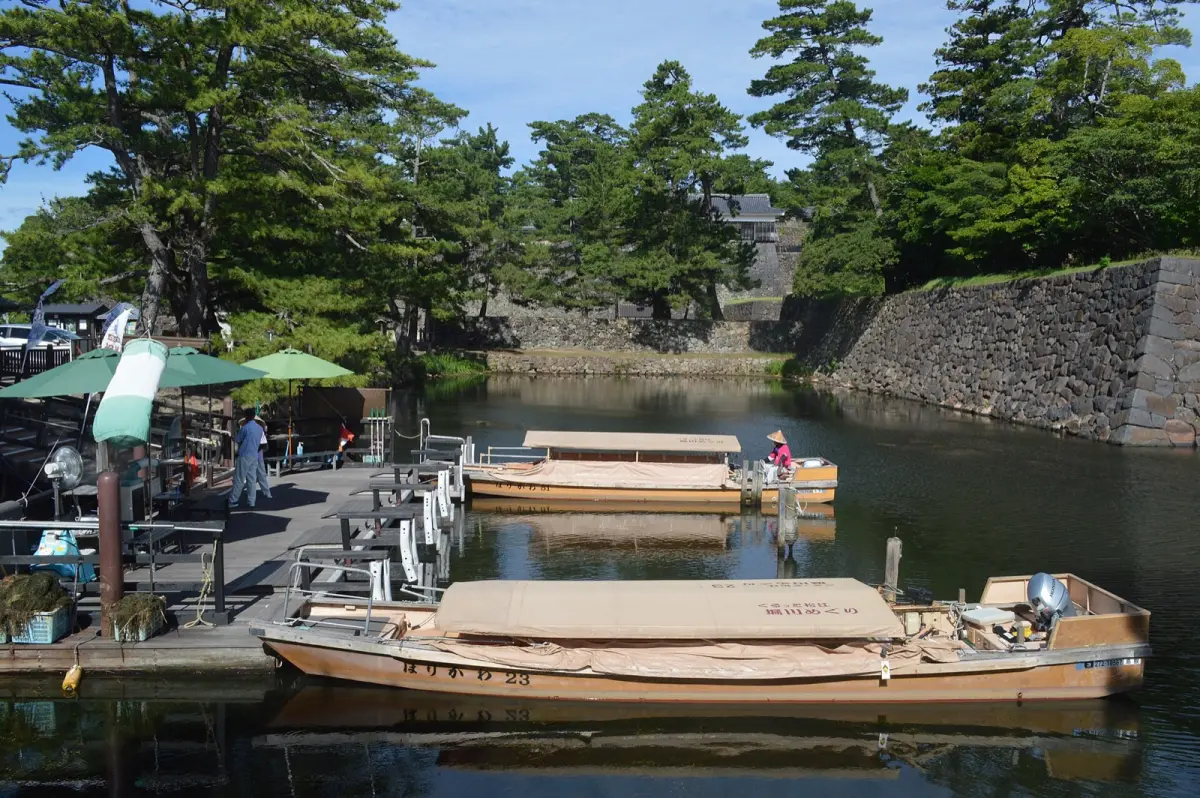
Horikawa Moat Boat
A small covered boat that circles the old moats around Matsue Castle, past willow banks, samurai walls and low bridges the boatmen duck the roof beneath. A slow, lovely way to read the shape of the castle town.
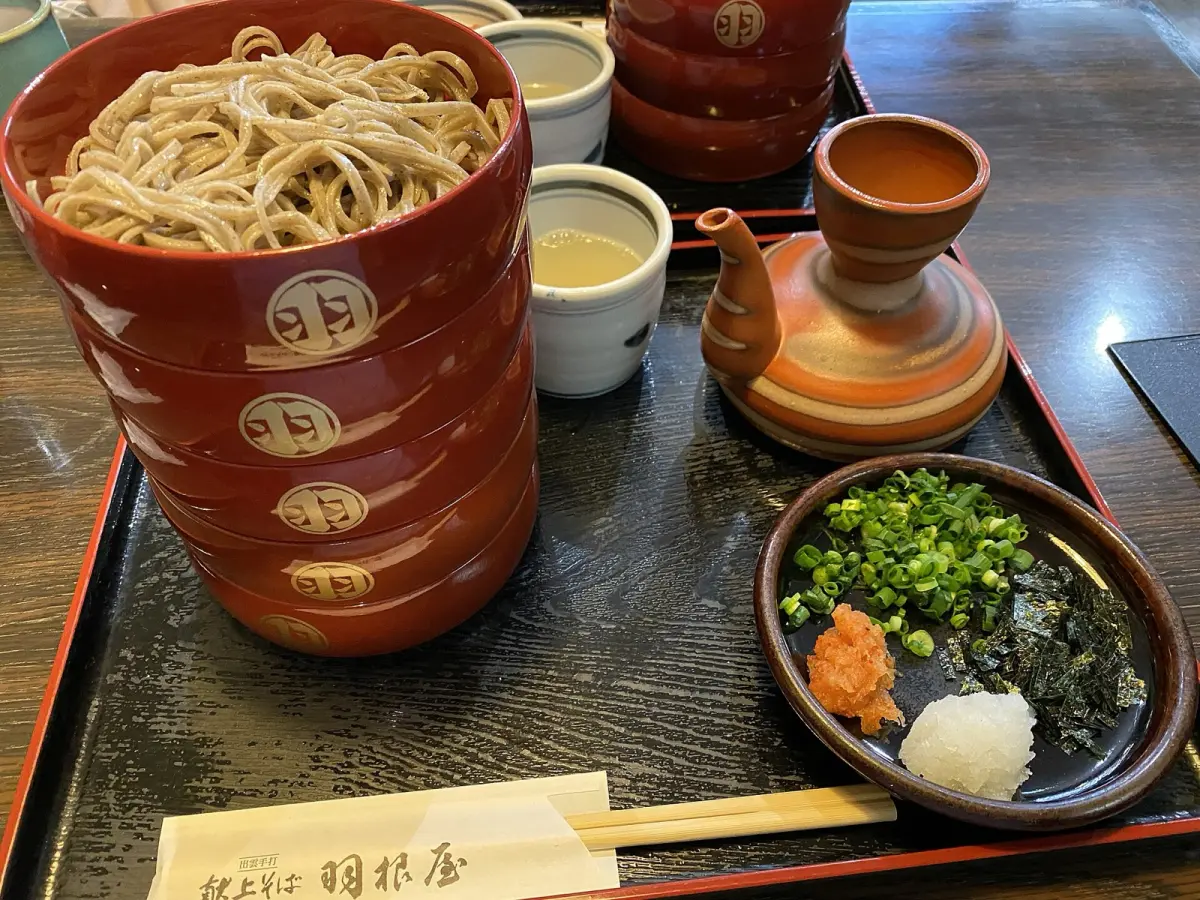
Izumo Soba
Dark, nutty buckwheat noodles ground with the husk, served in the local 'warigo' style of stacked round lacquer boxes over which you pour the dipping broth. One of Japan's three great soba traditions.
Crafts of this region
Authentic pieces made near here — learn the story, then bring one home.
 Bizen Ware
備前焼 · Bizen, Okayama
Bizen Ware
備前焼 · Bizen, Okayama
 Hagi Ware
萩焼 · Hagi, Yamaguchi
Hagi Ware
萩焼 · Hagi, Yamaguchi
 Kumano Brushes
熊野筆 · Kumano, Hiroshima
Kumano Brushes
熊野筆 · Kumano, Hiroshima
 Sekishu Washi
石州和紙 · Hamada, Shimane
Sekishu Washi
石州和紙 · Hamada, Shimane