Hagi Ware: The Living Tea Bowls That Transform With Every Use
On this page
The soft clay of Hagi holds memory. Pour tea into a bowl, and over months — years — the vessel drinks it in, darkening along hairline fissures no thicker than a whisper. What begins as pale straw becomes amber, rust, shadow. This is the patient art of western Honshu.
A Kiln Born of Exile and War
Hagi ware (萩焼, Hagi-yaki) emerged in 1604 in the castle town of Hagi, Yamaguchi Prefecture, under circumstances both political and accidental. After the Battle of Sekigahara stripped him of vast holdings, the warlord Mori Terumoto relocated his diminished domain to this remote coastal settlement. With him came two Korean potters — Yi Sukkwang (known in Japan as Ri Shakko) and Yi Kyong (Ri Kei) — captured during Hideyoshi's brutal campaigns on the Korean peninsula. They established the first kiln at Matsumoto, bringing with them the refined Goryeo tea-bowl tradition that would shape Hagi's character for centuries.
The Mori clan designated it their official kiln, and what began as spoils of war became one of Japan's most contemplative ceramic traditions.
The Quiet Hierarchy of Tea
In the coded language of Japanese tea ceramics, a saying persists: "first Raku, second Hagi, third Karatsu." This ranking places Hagi ware in exalted company — just behind Kyoto's hand-shaped Raku bowls, ahead of the robust Karatsu pieces from neighbouring Kyushu. The distinction speaks to Hagi's particular suitability for chanoyu, the formal tea ceremony where every texture and colour carries weight.
What earns Hagi this position is not flash or ornament but a quality of receptive plainness. The clay is porous, the glazes understated — often pale whites, soft pinks, or straw yellows. The bowls sit lightly in the hand, their walls thin enough to suggest fragility without succumbing to it.
The Web Beneath the Surface
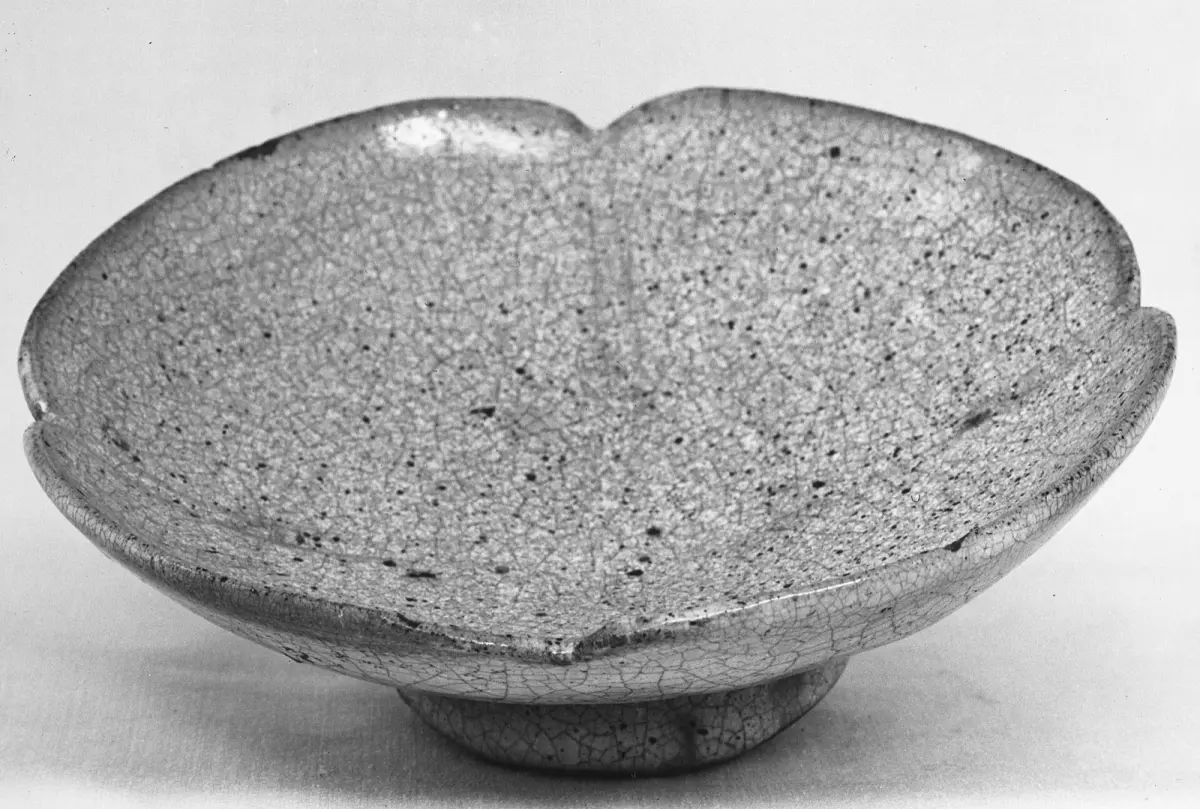
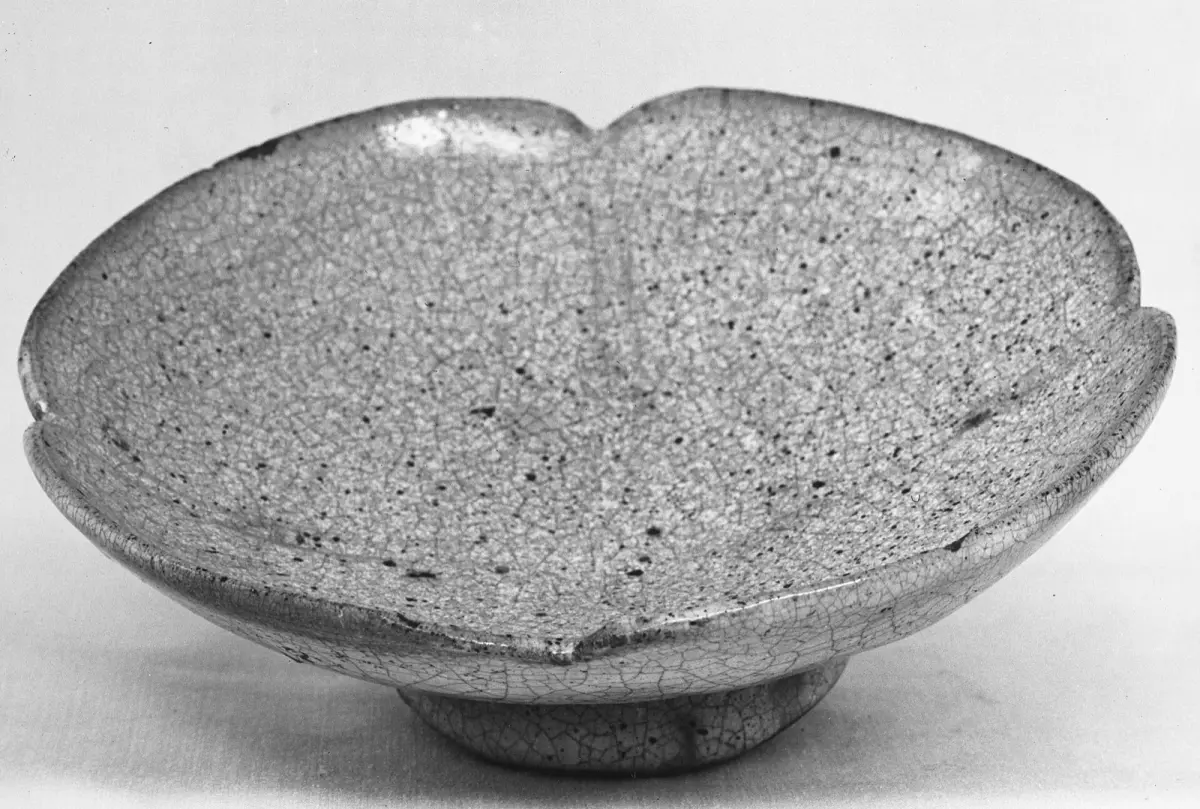
Hagi's defining feature is kannyu — the fine network of crackles that maps itself across the glaze. These are not flaws but intentional fractures, born from the different rates at which clay body and glaze contract as they cool. On a new Hagi bowl, the kannyu appears as a delicate web, barely visible, like frost on a window.
But these crackles are pathways. Over time, liquid seeps into them — tea, mostly, with its tannins and oils. The fissures drink it in, and the bowl begins its slow transformation.

Seven Changes, Infinite Patience
The phenomenon is called Hagi no nanabake — "the seven changes of Hagi." The number seven is more poetic than literal; what it describes is the gradual, unpredictable deepening of colour as a bowl absorbs years of use. A pale celadon might develop veins of amber. A cream-white surface might bloom with rust-coloured clouds. Each bowl changes differently, shaped by the tea poured into it, the hands that hold it, the decades that pass.
Tea practitioners prize this metamorphosis as a form of collaboration between maker and user, a partnership that unfolds across a lifetime.
The bowl becomes a record — not of a single moment of creation, but of accumulated ritual, of morning after morning, guest after guest.
Holding Time in Your Hands
To use Hagi ware is to accept impermanence as a virtue. The bowls are not inert objects but living participants in the tea ceremony, changing as their owners change, darkening as years accumulate. This is why collectors speak of "raising" a Hagi bowl the way one might raise a child — with attention, patience, and the understanding that the final form is unknown.
In Hagi today, kilns still fire clay dug from local hills, still glaze bowls in the pale tones that will, given time and tea, become something richer. The transformation cannot be rushed, cannot be faked. You simply use the bowl, and wait.
FAQ
Chaware curates authentic Japanese crafts — straight from the makers in Japan to your table.
Explore the Chaware collection →
Keep exploring


