Hakata Ori: Fukuoka's Firm Silk Obi Weave
On this page
The rustle of a Hakata obi is unmistakable—a whisper of silk so tightly woven it holds its shape like armour. In Fukuoka, weavers still thread looms with fifteen thousand strands, each one positioned by hand, to create cloth that has dressed samurai, merchants, and modern kimono wearers for more than four centuries.
The Weave That Travelled from Temple to Court
Hakata ori (博多織) emerged in Fukuoka during the late Muromachi period, when the city's port connected Japan to continental trade routes. The technique distinguished itself through an unusual structural logic: instead of balancing warp and weft in equal measure, Hakata weavers packed the vertical warp threads so densely that the horizontal weft, beaten down with force, created subtle ridges across the cloth's surface. This inversion gave the fabric its characteristic firmness—a textile that could hold a knot without slipping, ideal for the obi sash that secures a kimono.
Kenjo Hakata: The Cloth of Tribute
When the Kuroda lords assumed control of Fukuoka domain in the early Edo period, they recognised Hakata ori as a resource worth protecting. Each year, they sent bolts of the finest obi cloth to the Tokugawa shogunate in Edo as official tribute. This practice gave rise to the term kenjo Hakata (献上博多)—'presentation Hakata'—a designation that elevated the weave from regional craft to symbol of political allegiance. The shogun's household used these obi, and their quality became a measure of Fukuoka's standing.
The Pattern Born from Ritual
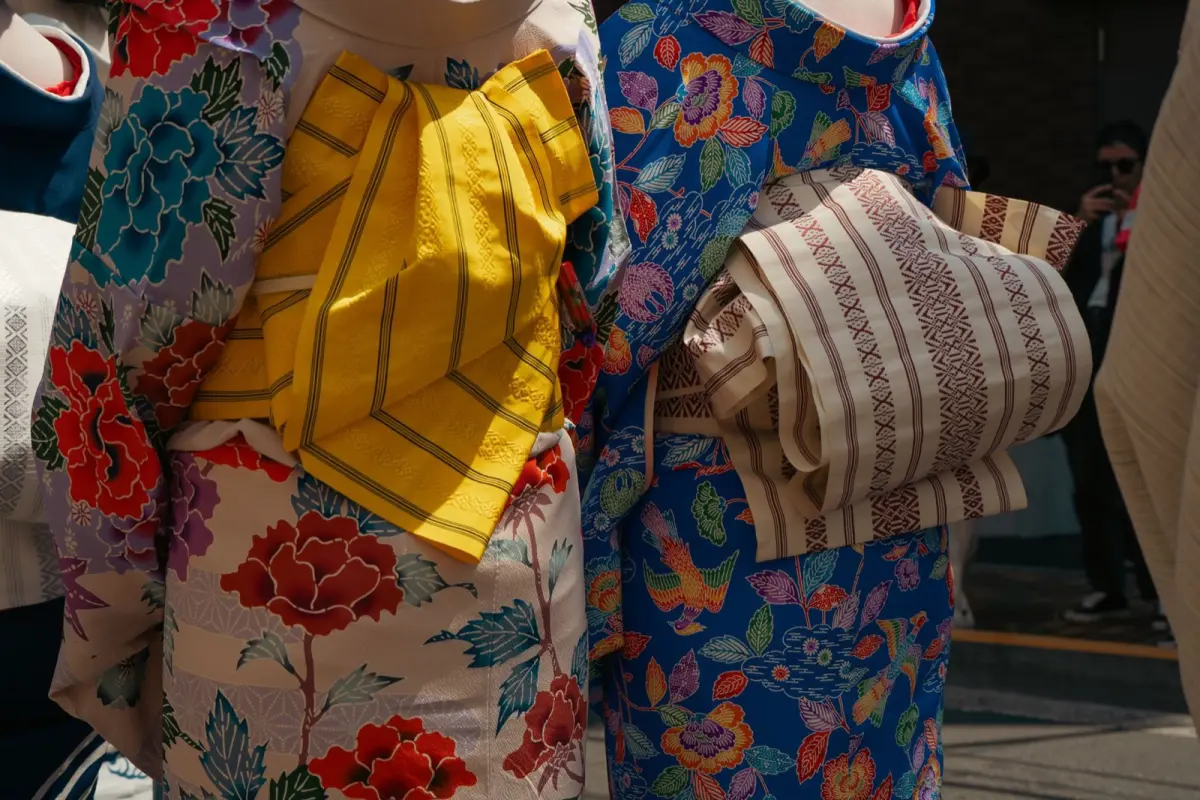
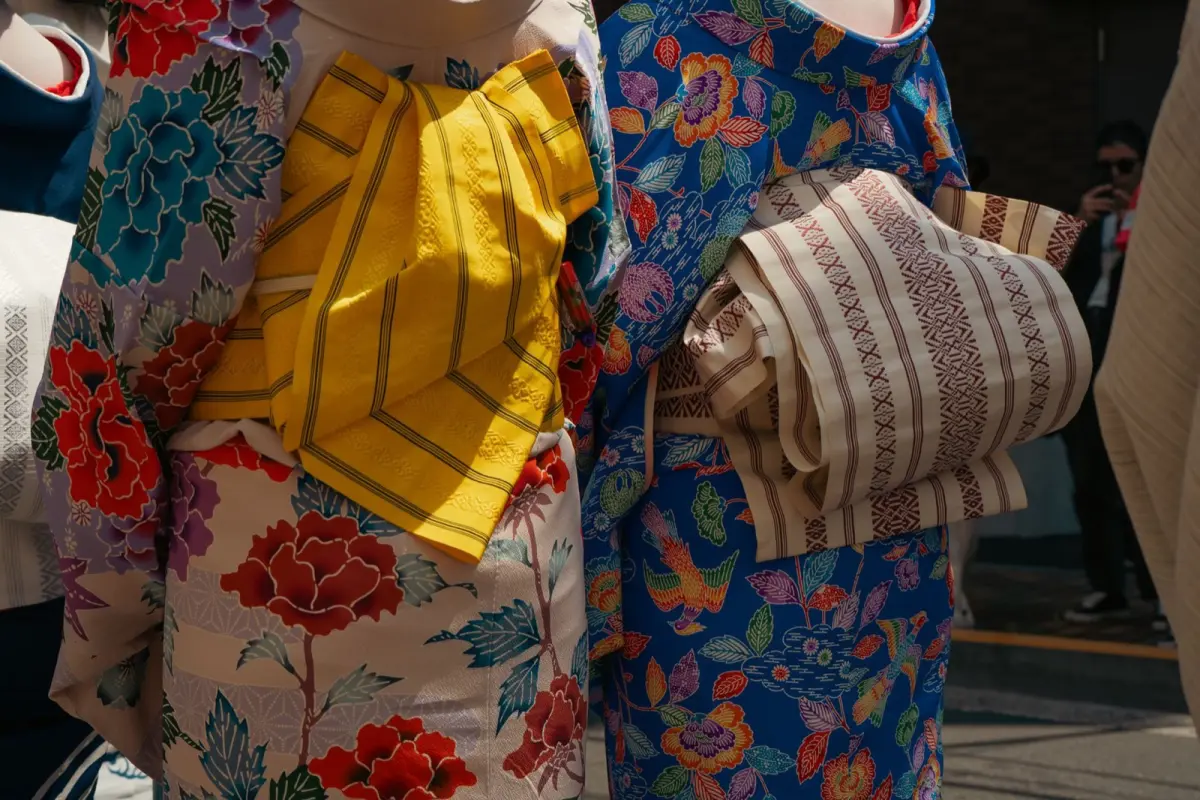
The distinctive striped pattern of kenjo Hakata carries a quiet spiritual lineage. Credited to Mitsuta Yazaemon, a founding figure in the weave's development, the design stylises two Buddhist ritual implements: the dokko vajra, a symbolic weapon representing indestructible truth, and the hana-zara, an offering plate for flowers or incense. Rendered as geometric stripes, these motifs repeat across the cloth in rhythms that suggest both devotion and restraint. The pattern's formality made it especially suitable for ceremonial dress, though its appeal has long since spread beyond temple and court.

Fifteen Thousand Threads, One by One
The technical demands of Hakata ori begin before the shuttle ever moves. Weavers must set thousands of warp threads—sometimes exceeding fifteen thousand—onto the loom individually, a process that requires days of meticulous preparation. Once the warp is tensioned, the weaver uses a thick weft thread and beats it down with exceptional force, compressing the structure until the warp dominates and the weft nearly disappears. This creates the cloth's signature body: dense, crisp, with a faint sheen that catches light along the ridges. The fabric resists creasing and holds its form so well that an obi tied in the morning will remain secure through a full day's wear.
A Living Tradition in Modern Fukuoka
Hakata ori continues in Fukuoka today, sustained by workshops that honour the Edo-period methods while exploring contemporary applications. The weave's durability has found new life in bags, neckties, and interior textiles, though the obi remains its highest expression. Weavers still prepare their looms by hand, still beat the weft with the same deliberate force, still produce cloth that rustles when it moves—a sound that carries centuries of refinement in every fold.
The best Hakata ori asks nothing of its wearer but attention: to the way it holds a knot, to the way light travels across its surface, to the quiet discipline woven into every thread.
Chaware curates authentic Japanese crafts — straight from the makers in Japan to your table.
Explore the Chaware collection →
Keep exploring


