Why This 18th-Century Tea Bowl's Black Glaze Turns Blue and Gold
On this page
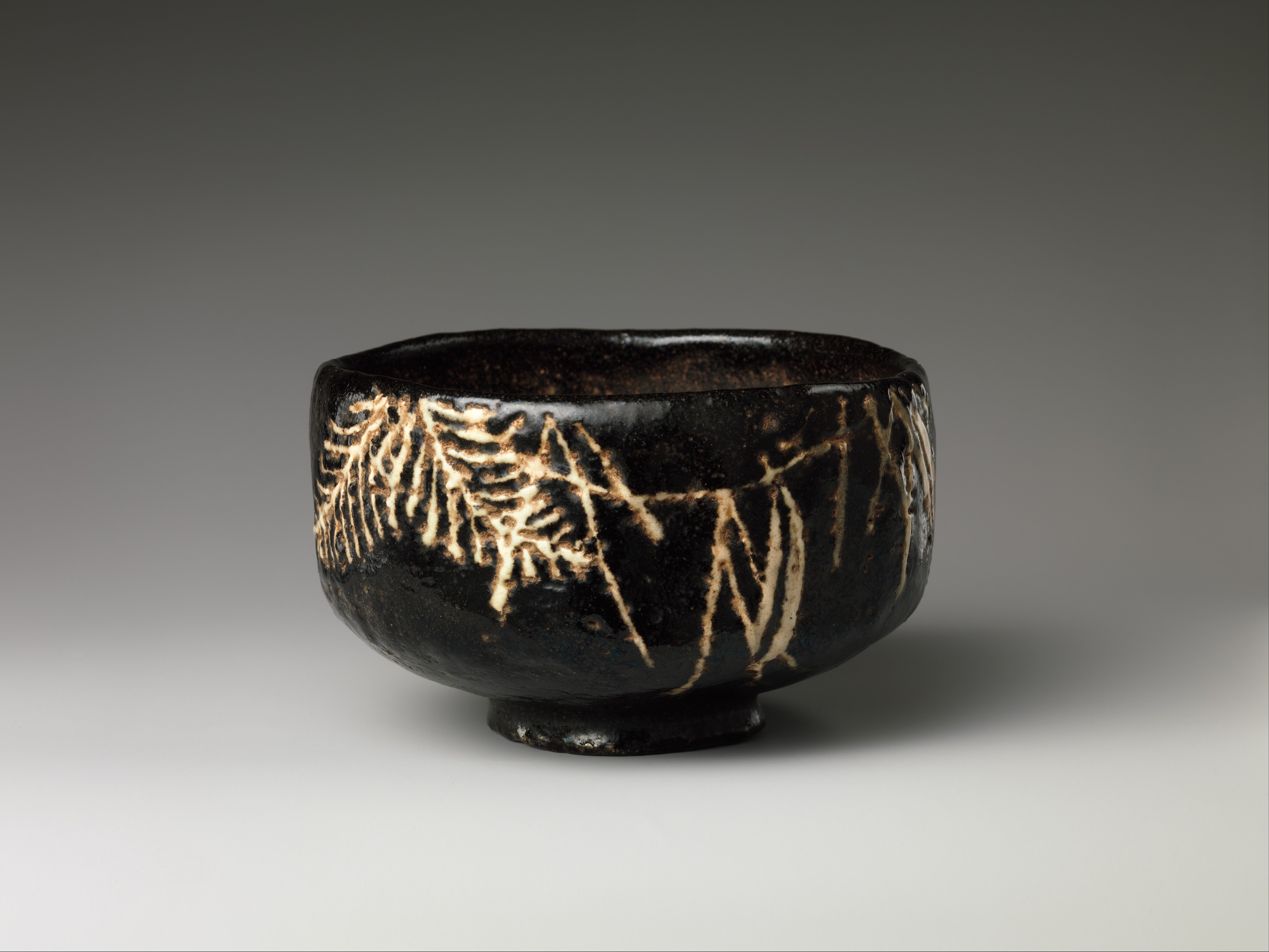
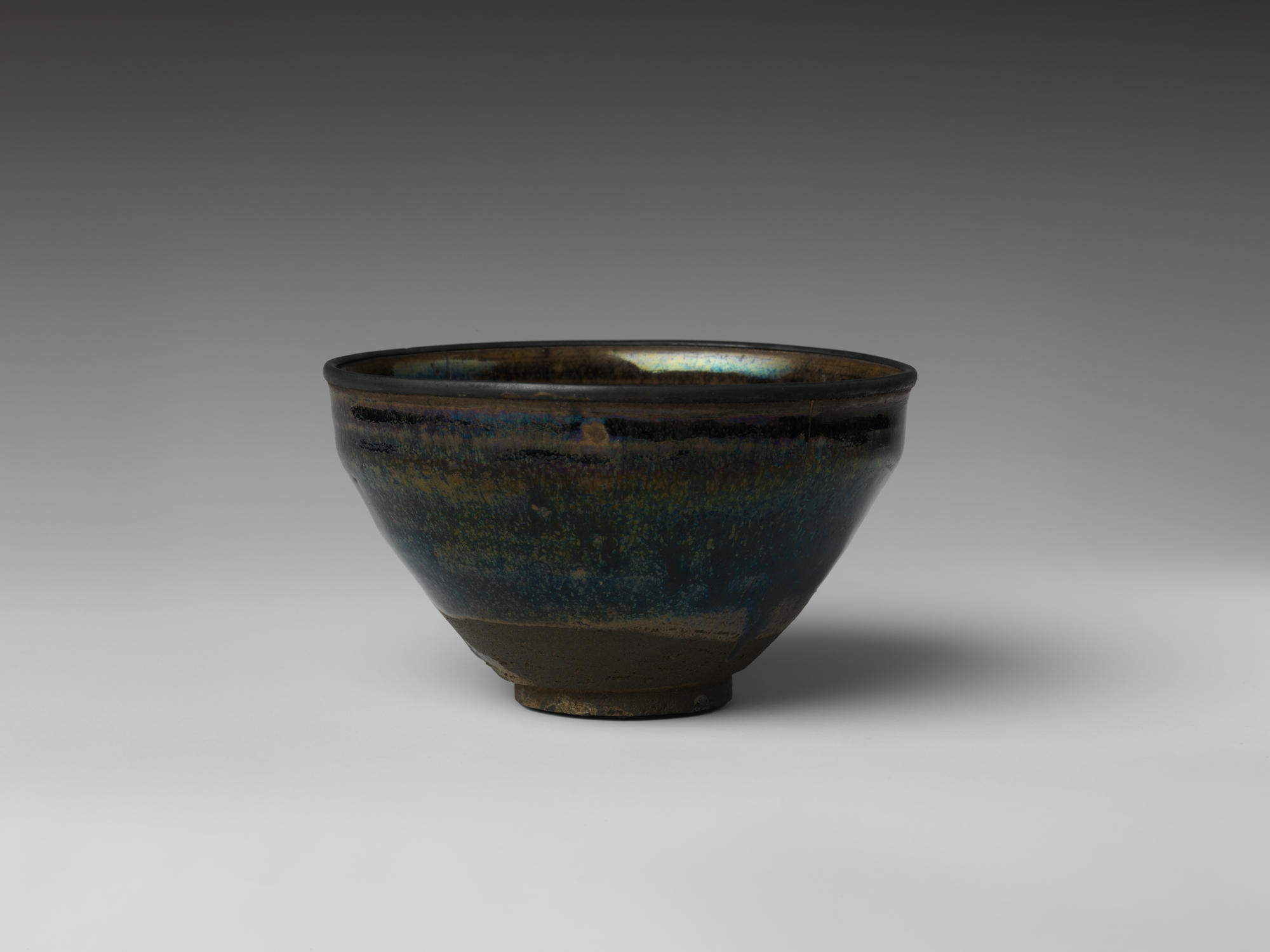
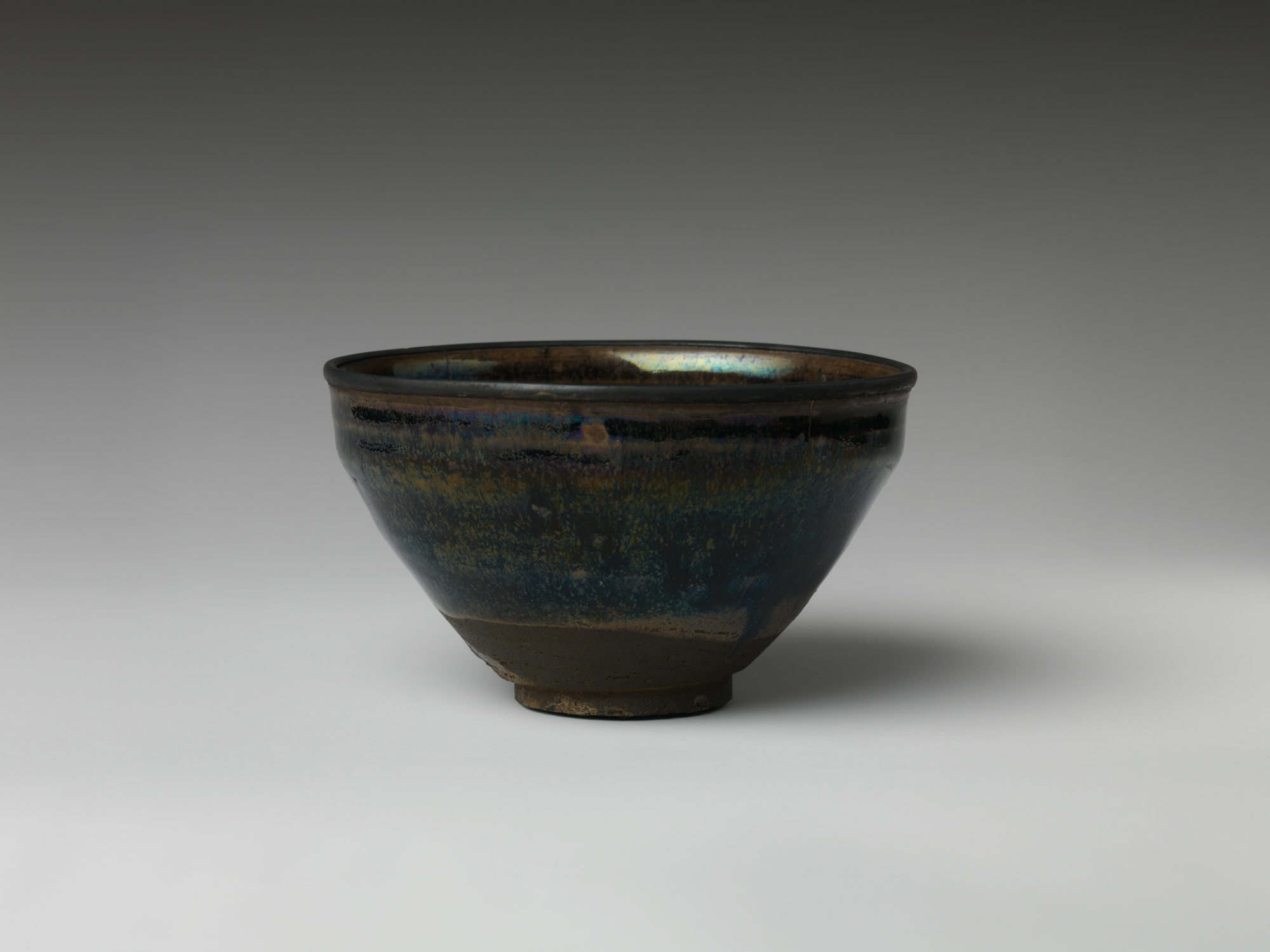
At first glance, this 18th-century tea bowl is simply black. Dark, glossy, unremarkable from a distance. Then the light catches it at a different angle, and the surface ripples with blue and gold, like oil on water.
An iron glaze that does more than one thing
This bowl comes from the Seto tradition, one of Japan's oldest and most prolific pottery regions, dating back nearly a thousand years. Its glaze is iron-oxide based — a common, unglamorous-sounding ingredient that, under the right firing conditions, does something uncommon: iron migrates toward the surface during firing and settles into an extremely thin metallic film.
That film is thin enough to interact with light the way a soap bubble or an oil slick does — through interference, not pigment. Different wavelengths of light reflect at different angles, which is why the same glaze can look flat black in one light and faintly blue or gold in another.
Why this effect resists photography
Because the color comes from how light interacts with the surface rather than from a fixed pigment, this bowl never looks quite the same twice. A straight-on photo under even lighting may show almost nothing. Tilt the bowl, or move the light source, and the iridescence appears.
The glaze isn't hiding a color. It's revealing one that was never fixed in place to begin with.
A glaze older than it looks
Iron-oxide glazes have been part of Japanese ceramics for centuries, often valued for exactly this kind of subtlety rather than for bold, obvious decoration. Where a brightly colored glaze announces itself immediately, a glaze like this asks you to look twice — to move around the piece before you understand what you're looking at.
What eighteenth-century hands couldn't control
The degree of iridescence on any single piece depends on firing temperature, atmosphere, and even where the piece sat in the kiln — variables an 18th-century potter could influence but never fully dictate. That unpredictability is part of why bowls like this one are kept and studied: each one is a slightly different record of the same glaze doing something slightly different.
Part of the Chaware Library — practical guides and terms, not just stories. Visit the Library →
Chaware curates authentic Japanese crafts — straight from the makers in Japan to your table.
Explore the Chaware collection →
Keep exploring