Nagasaki, Go Deeper
Nagasaki wears its history on its sleeve like no other Japanese city. A rare open port during centuries of seclusion, it became a crossroads where Dutch merchants, Chinese traders, and hidden Christians shaped a singular culture. Then came August 1945, and a second atomic bomb. Today, Nagasaki invites you to trace these layers—from Dejima's reconstructed warehouses to Gunkanjima's haunting concrete ruins offshore—each site a portal into Japan's most complex relationship with the outside world.
- Tap Open in Google Maps on any place for live directions, transit, hours & reviews.
- Get an ICOCA / Suica IC card — tap on/off trains, subways & buses, no ticket needed.
- Carry some cash (¥) — many small shops, shrines & old streets are cash-only.
- Go early: the famous spots are calm and beautiful before ~9am.

Glover Garden
This hillside open-air museum gathers Meiji-era Western houses around the former Glover Residence, Japan's oldest surviving Western-style wooden dwelling. Wander the terraced gardens and verandas where Scottish merchants once gazed over the harbour, and feel the optimism of a nation opening its doors after two centuries of isolation.

Ōura Church
Japan's oldest surviving Christian church, this Gothic cathedral was consecrated in 1865 and became the stage for the 'discovery of the hidden Christians'—descendants of converts who had practised in secret for over two centuries. A National Treasure and UNESCO site, its white spire still watches over the harbour below.
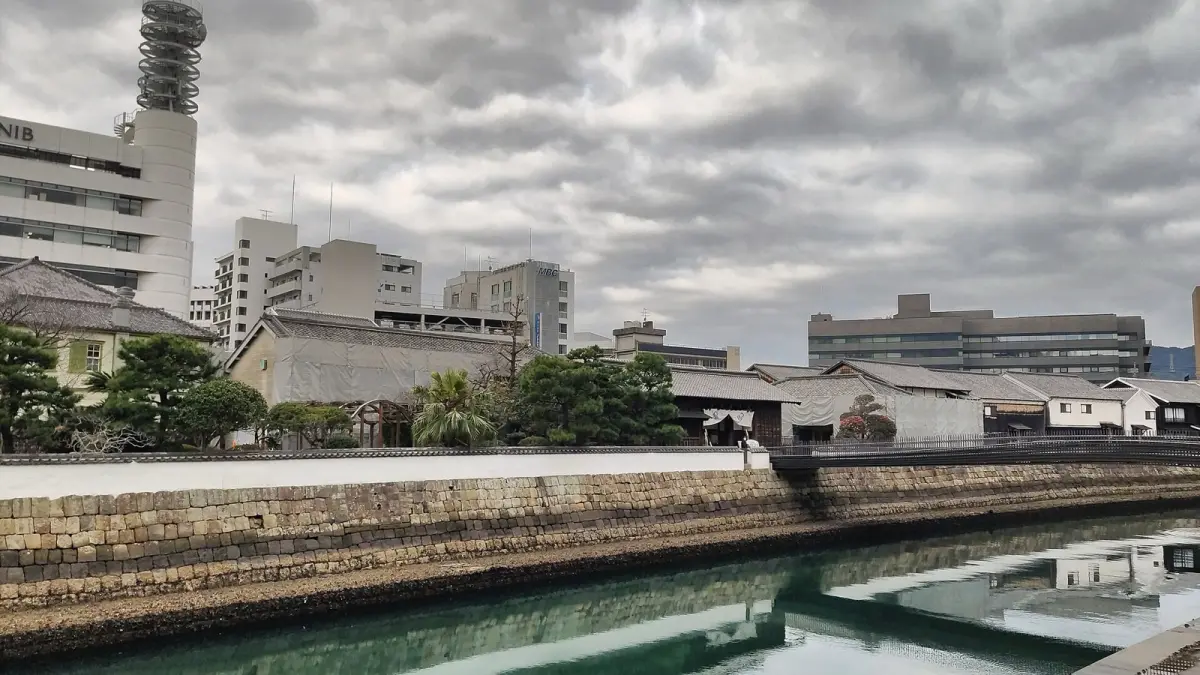
Dejima
The fan-shaped artificial island that served as the Dutch trading post during Japan's Edo-period seclusion has been partly reconstructed, letting you walk the narrow lanes where European knowledge trickled into a closed country. It was Japan's sole official window to the West for over two hundred years.

Shinchi Chinatown
Shinchi Chinatown, one of Japan's three great Chinatowns, is the birthplace of champon and sara-udon, those hearty noodle dishes born from the fusion of Chinese and Japanese tastes. The lantern-hung streets buzz with the legacy of Nagasaki's long Chinese merchant community.
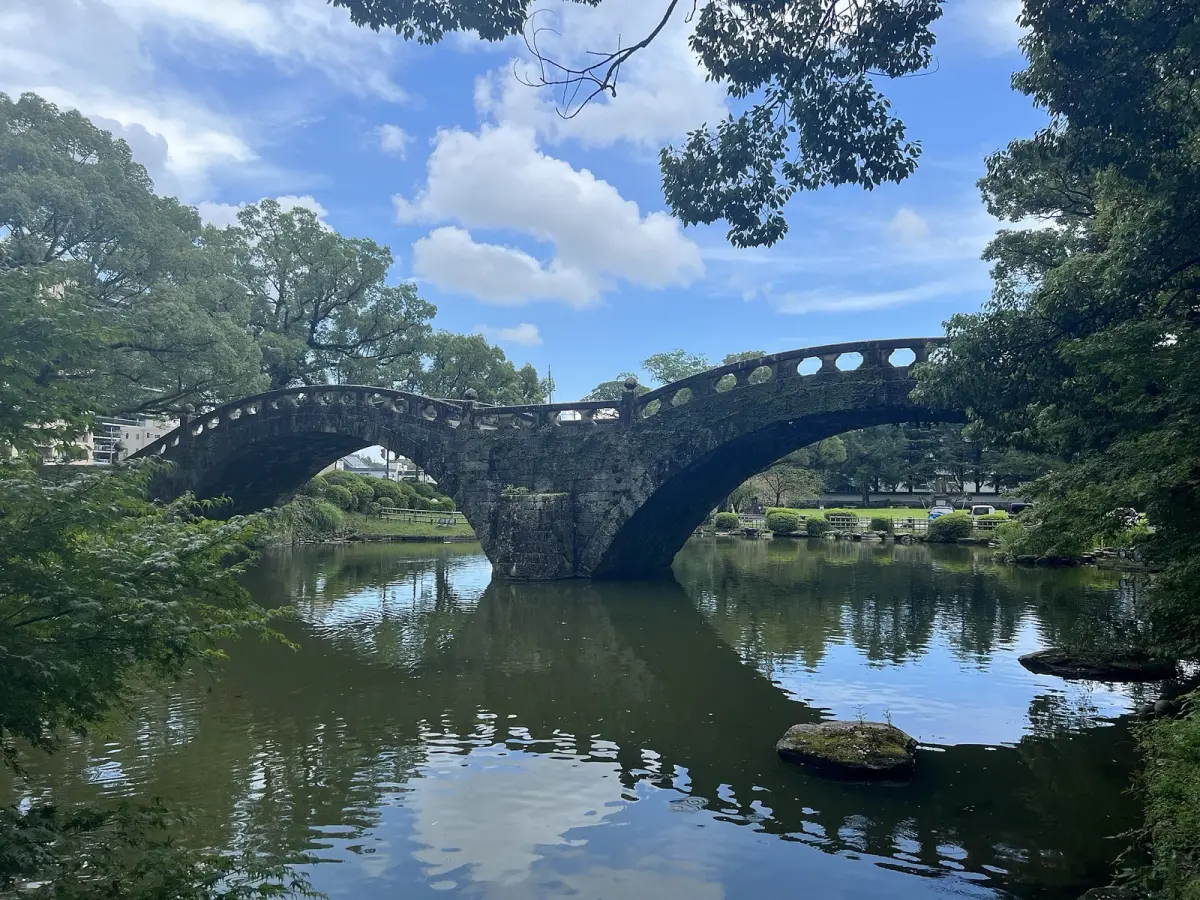
Meganebashi (Spectacles Bridge)
The double arches of this 1634 stone bridge cast a reflection in the Nakashima River that forms a perfect pair of spectacles, giving Meganebashi its name. Said to be Japan's oldest arched stone bridge, it remains a quiet marvel of Edo-period engineering amid the modern city.
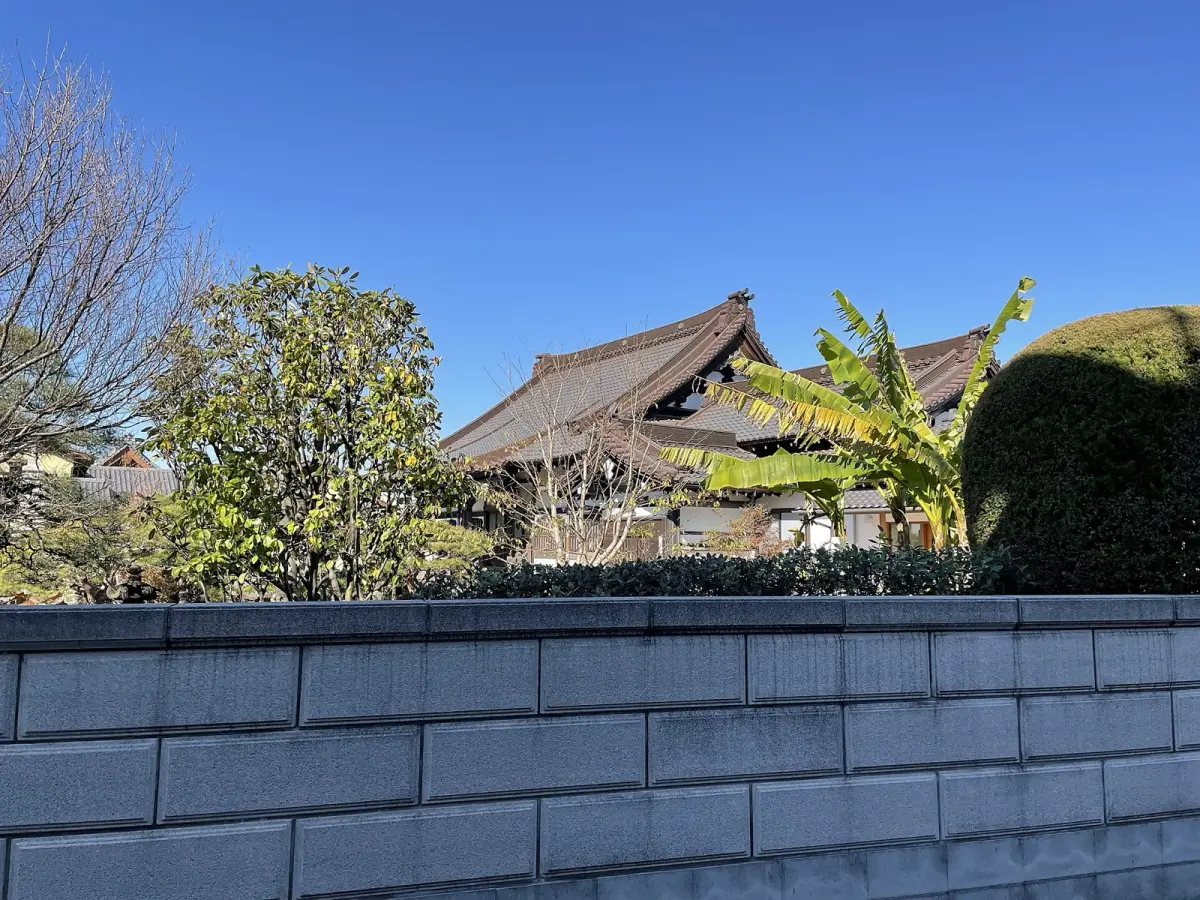
Sōfuku-ji
Founded in 1629 by Nagasaki's Chinese community, this Obaku Zen temple preserves Ming-dynasty architectural forms rare in Japan. Two of its gates are designated National Treasures, their vermilion beams and sweeping rooflines a testament to the city's deep ties across the East China Sea.

Peace Park & Hypocenter
The Peace Park and its towering statue mark the hypocenter of the atomic bomb dropped on 9 August 1945. It is a place of pilgrimage and reflection, where the city's commitment to peace is made concrete in stone and water.

Mount Inasa Night View
The summit of Mount Inasa offers one of Japan's most celebrated night views, a glittering amphitheatre of lights spilling down hillsides and tracing the harbour's dark curves. It is Nagasaki seen whole, a city cradled by geography and history alike.
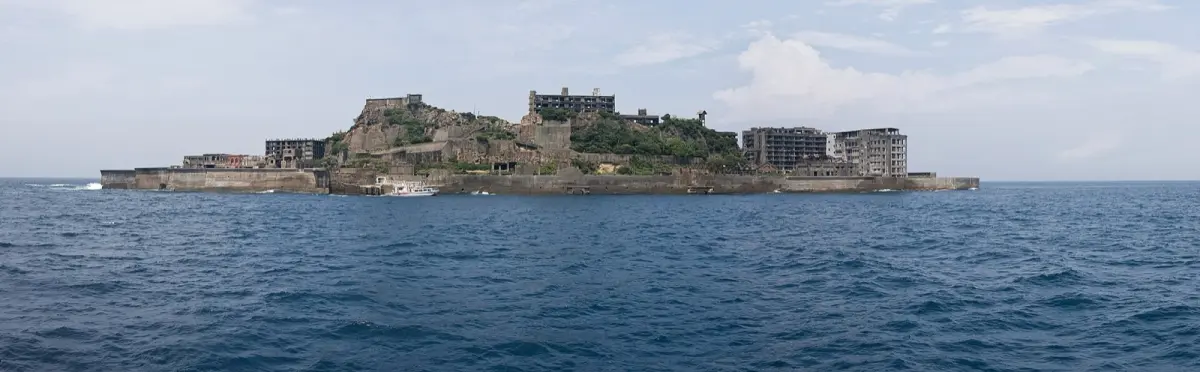
Gunkanjima (Hashima Island)
Hashima, known as 'Battleship Island' for its silhouette, is a former undersea coal-mining island crowded with concrete apartment blocks now left to the elements. Abandoned in 1974 and reachable only by boat, this UNESCO site is a haunting monument to Japan's industrial past.
Crafts of this region
Authentic pieces made near here — learn the story, then bring one home.
 Arita Ware
有田焼 · Arita, Saga
Arita Ware
有田焼 · Arita, Saga
 Hasami Ware
波佐見焼 · Hasami, Nagasaki
Hasami Ware
波佐見焼 · Hasami, Nagasaki
 Satsuma Kiriko
薩摩切子 · Kagoshima
Satsuma Kiriko
薩摩切子 · Kagoshima
 Yame Gyokuro
八女茶 · Yame, Fukuoka
Yame Gyokuro
八女茶 · Yame, Fukuoka
 Karatsu Ware
唐津焼 · Karatsu, Saga
Karatsu Ware
唐津焼 · Karatsu, Saga
 Kurume Kasuri
久留米絣 · Kurume, Fukuoka
Kurume Kasuri
久留米絣 · Kurume, Fukuoka
 Onta Ware
小鹿田焼 · Hita, Ōita
Onta Ware
小鹿田焼 · Hita, Ōita
 Ōshima Tsumugi
大島紬 · Amami, Kagoshima
Ōshima Tsumugi
大島紬 · Amami, Kagoshima