Arita: The Birthplace of Japanese Porcelain and the Legacy of Arita Ware
On this page
The white clay that changed Japan's ceramic destiny lay hidden beneath a hillside in northern Kyushu for millennia, waiting for a Korean potter's trained eye to recognize its promise.
The Discovery That Launched an Industry
In the early 1610s, a potter named Yi Sam-pyeong (李参平, known in Japanese as Kanagae Sanbei 金ヶ江三兵衛) made a discovery that would transform Japanese craft history. Brought to Japan during Hideyoshi's invasions of Korea, Yi found porcelain stone at the Izumiyama quarry (泉山磁石場) near Arita, Saga Prefecture. This was Japan's first true porcelain clay—a material that could be fired to translucent hardness, something earthenware could never achieve. The quarry, now a nationally designated Historic Site as of 1980, still bears the scars of centuries of extraction, its white face a monument to the birth of Japanese porcelain.
Three Faces of Arita Beauty
Arita ware evolved through three distinct aesthetic phases, each a response to changing tastes and technical mastery. The earliest pieces, from the 1610s through the 1650s, are known as Early Imari—simple vessels decorated only with underglaze cobalt blue, their bodies still relatively thick as potters learned to work the new material.
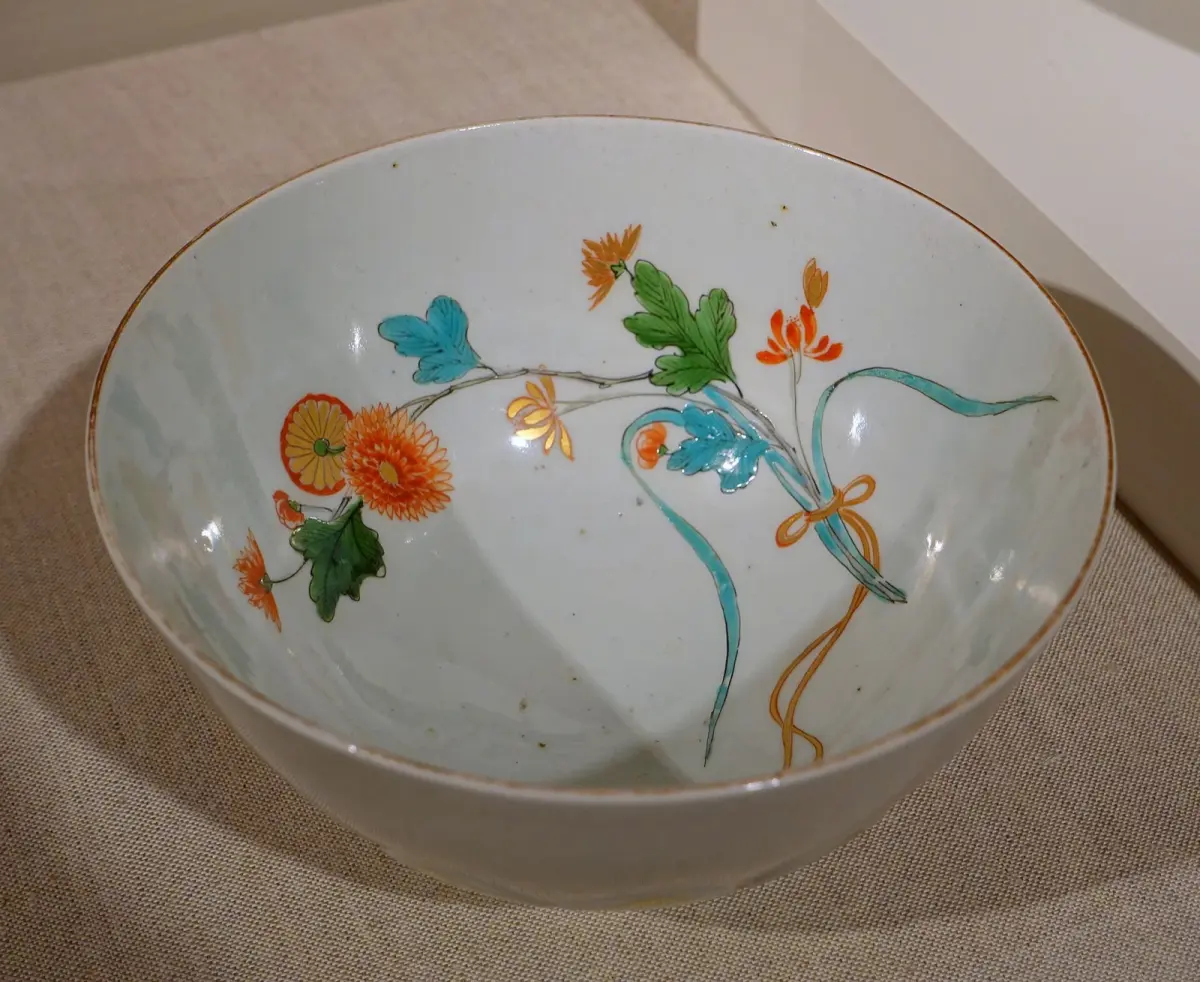
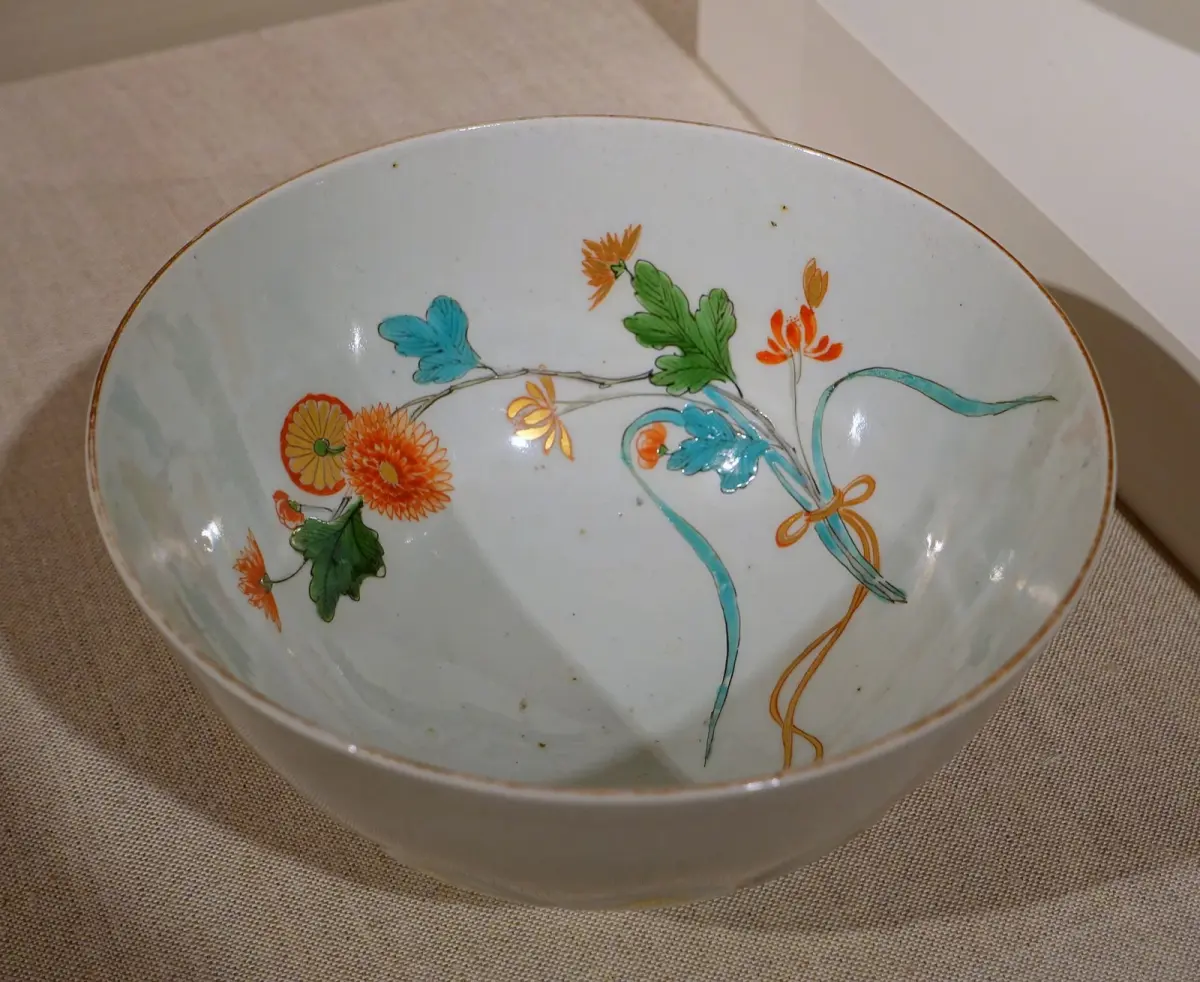
By the 1670s, a revolution in delicacy arrived with the Kakiemon style (柿右衛門). These pieces featured a distinctive milky-white ground called nigoshide (濁手), achieved through careful clay refinement. The decoration became picture-like, asymmetric, leaving generous empty space—a compositional philosophy that would captivate European collectors.
The Genroku era (1688–1704) brought opulence in the form of kinrande (金襴手), or gold-brocade style: deep cobalt blue layered with lavish red overglaze and gold detailing, a maximalist aesthetic that spoke to the confidence of the age.
The Port That Named a Style
Arita's porcelain traveled to the world through the nearby port of Imari, and so European buyers came to know these wares as "Imari ware"—a geographic confusion that persists in antique markets today. The distinction matters: Imari was the shipping point, Arita the place of creation. These exports dazzled European courts in the late 17th and early 18th centuries, arriving at a moment when porcelain-making remained a closely guarded Chinese secret. Arita pieces inspired imitations at Meissen, Delft, and beyond, their asymmetric compositions and bold color combinations reshaping European decorative taste.

A Market Centuries in the Making
Every Golden Week, the town of Arita transforms into a sprawling open-air gallery. The Arita Pottery Market has run officially since 1916, though ceramics fairs in the area date back to 1896. For several days each spring, over a million visitors walk the streets, browsing stalls that stretch for kilometers, handling everything from museum-quality reproductions to everyday rice bowls. It's a living reminder that Arita's tradition never fossilized into mere heritage—it adapted, survived, and continues.
Continuity in Clay
What makes Arita ware endure is not nostalgia but utility married to beauty. Contemporary Arita potters still draw clay from deposits related to that original Izumiyama find, still paint cobalt blue under clear glaze, still fire to porcelain hardness. Yet they also experiment—creating minimalist forms for modern tables, collaborating with designers, proving that a 400-year-old tradition can remain urgent. The white ground that Yi Sam-pyeong recognized in the 1610s still holds infinite possibility.
Walk through Arita today and you'll see kilns smoking, workshops humming, the same essential transformation happening: stone to clay to fire to glass-hard beauty.
FAQ
Chaware curates authentic Japanese crafts — straight from the makers in Japan to your table.
Explore the Chaware collection →
Keep exploring


