Yamagata Ironware: The North's Thin-Cast Kettles
On this page
Article Body
The sand of a river can shape a craft for centuries. In Yamagata, it was the fine grains of the Mamigasaki River—discovered by travelling metalworkers nearly nine hundred years ago—that anchored one of Japan's most refined casting traditions, known today for an almost impossibly thin and precise touch.
A Warrior's Journey and a River's Gift
The story begins in the late Heian period, when itinerant casters accompanied the warrior Minamoto no Yoriyoshi on campaign. Along the banks of the Mamigasaki River in what is now Yamagata, they found something rare: sand and soil with just the right composition for casting moulds. The discovery was compelling enough that some chose to settle, laying the foundations for Yamagata imono (山形鋳物)—Yamagata cast metalwork—a tradition now approaching its thousandth year.
The Copper Town and Edo Consolidation
By the early Edo period, the craft had grown from scattered workshops into an organised trade. Mogami Yoshiaki, the local daimyō, restructured Yamagata's castle town and gathered the metalcasters into a dedicated quarter known as Dō-machi (銅町), literally "copper town." This early industrial clustering allowed knowledge to concentrate and techniques to refine through proximity and competition. The quarter became a humming centre of moulds, furnaces and the particular alchemy of molten metal meeting river sand.
From Temple Bells to Tea Ceremony Elegance
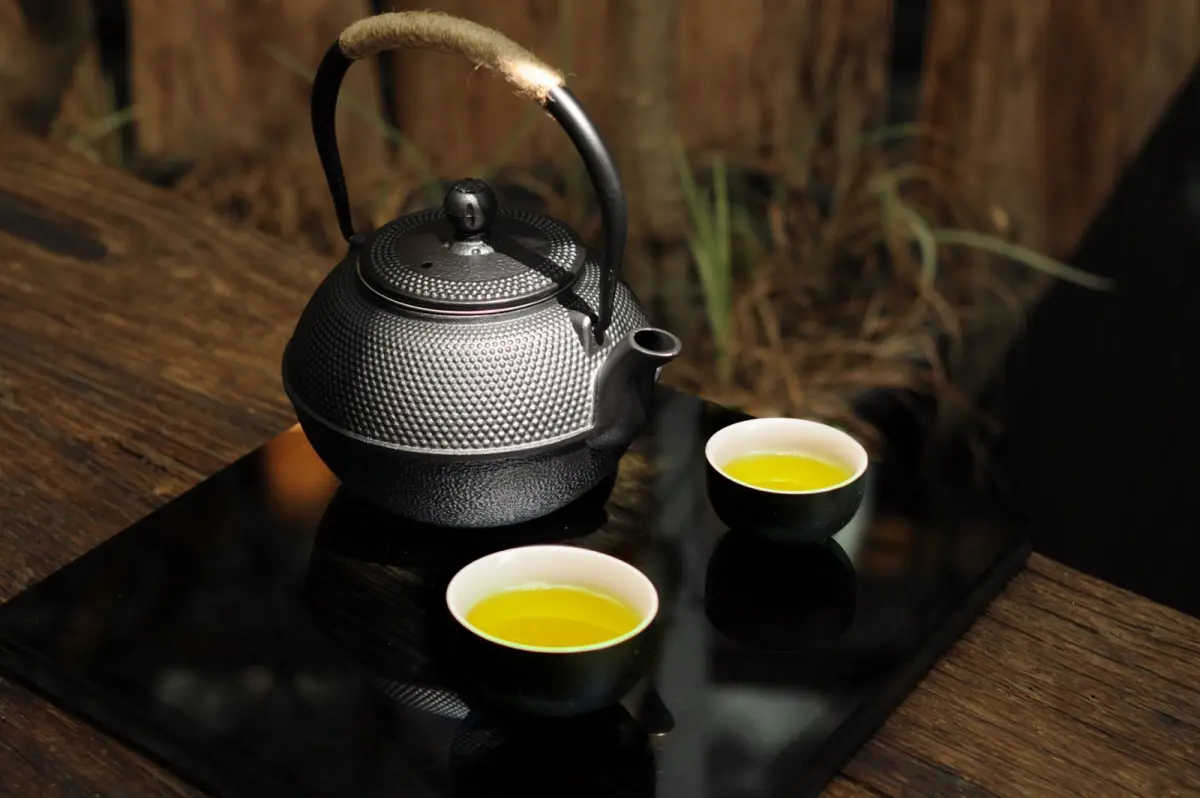
The scope of Yamagata casting expanded dramatically through the mid-Edo period. Foundries produced monumental works—tsurigane (temple bells) whose deep tones carried across valleys, stone lanterns for shrines, and large ceremonial vessels. Yet the same hands that cast bells weighing hundreds of kilograms also turned to smaller, more intimate forms. By the Meiji era, Yamagata casters had become celebrated for tetsubin (iron kettles) and tea-ceremony wares, objects that demanded not weight but whisper-thin walls and flawless surfaces. This duality—the monumental and the minute—became a hallmark of the tradition.

The Signature of Thinness
What distinguishes Yamagata ironwork is its surface: unusually thin, delicate, and precise. Where other casting traditions might favour heft or texture, Yamagata casters perfected a technique that allowed metal to be poured into moulds with extraordinary control, yielding walls that feel almost fragile yet remain structurally sound. The credit belongs partly to that original river sand, which packs fine and smooth, and partly to generations of incremental refinement. A Yamagata tetsubin or vase often surprises by its lightness in the hand, its skin taut and even, the cast details crisp as if drawn rather than poured.
The national designation as a Traditional Craft in 1975 recognised not only the age of the tradition but the technical mastery that sets Yamagata casting apart from its better-known cousins.
Living Tradition in a Modern Landscape
Today, Yamagata cast metalwork continues in workshops that balance heritage techniques with contemporary needs. Casters still use sand moulds, still pour iron and bronze with the care learned over centuries, but the objects themselves range from classical chagama (tea kettles) to sculptural vases and architectural fittings. The 1975 designation as a dentō kōgehin (traditional craft) helped secure the knowledge base, ensuring that the particular alchemy of Mamigasaki sand and Yamagata skill would not vanish into industrial homogeneity.
The river still flows, and the sand still waits—proof that some materials and the hands that shape them can outlast empires and eras alike.
Chaware curates authentic Japanese crafts — straight from the makers in Japan to your table.
Explore the Chaware collection →
Keep exploring


