Owari Cloisonné: Aichi's Wired Enamel
On this page
In the 1830s, a craftsman in Owari province held a foreign plate to the light, turned it over, studied the fused glass and metal—and set about cracking its secret. What followed would make this corner of Japan the world capital of cloisonné enamel for generations.
The Accidental Genesis of a Craft
Owari shippo (尾張七宝) began not with a master's tutelage but with reverse engineering. During the Tempo era (1830–44), Kaji Tsunekichi, a metalworker in what is now Aichi Prefecture, acquired a Dutch enamelled plate. Fascinated by its glassy surface and vivid colours, he took it apart in his mind, experimenting until he grasped the essentials: a metal base, powdered glass glazes, and intense heat. His success marked the birth of Japanese cloisonné as a distinct tradition, one that would soon surpass its European inspiration in technical refinement.
The Architecture of Jewelled Fire
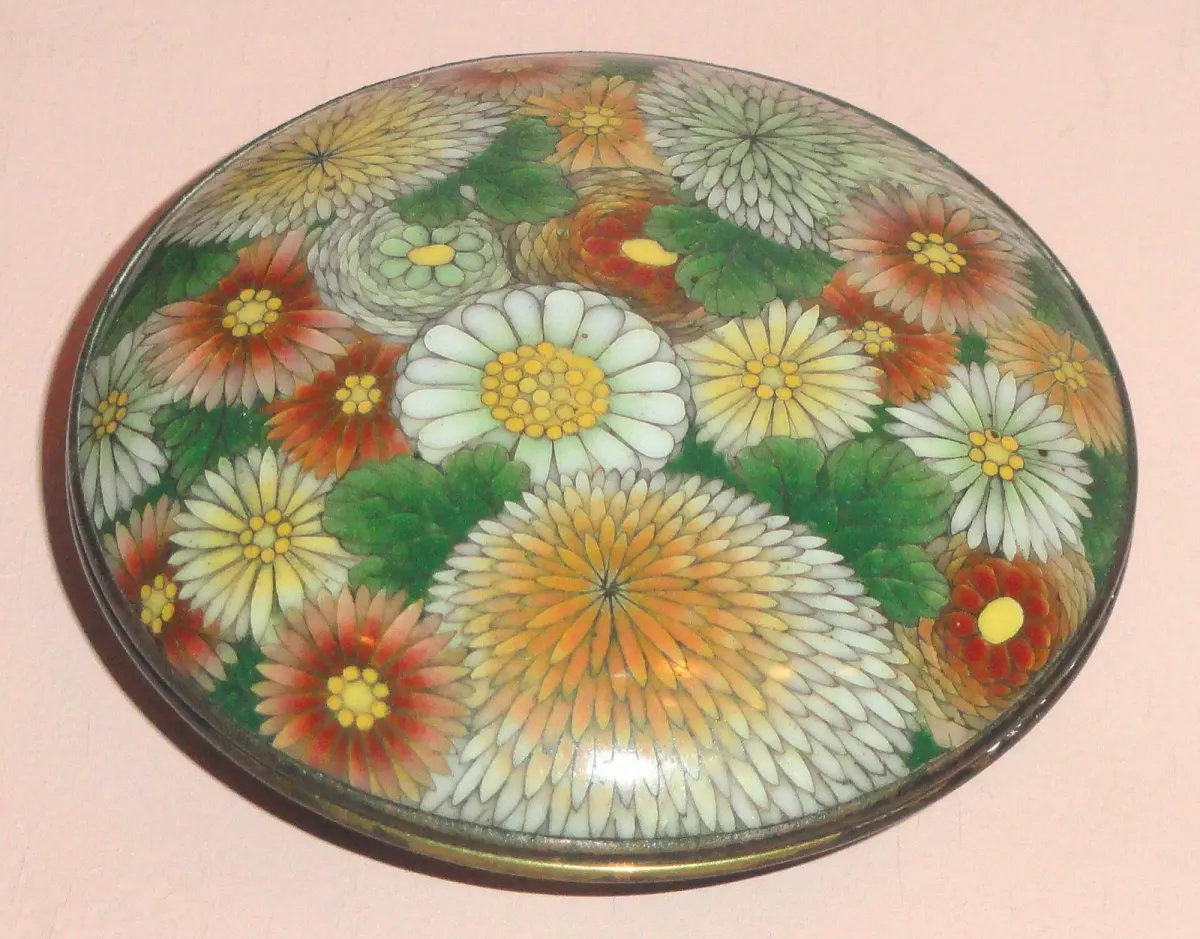
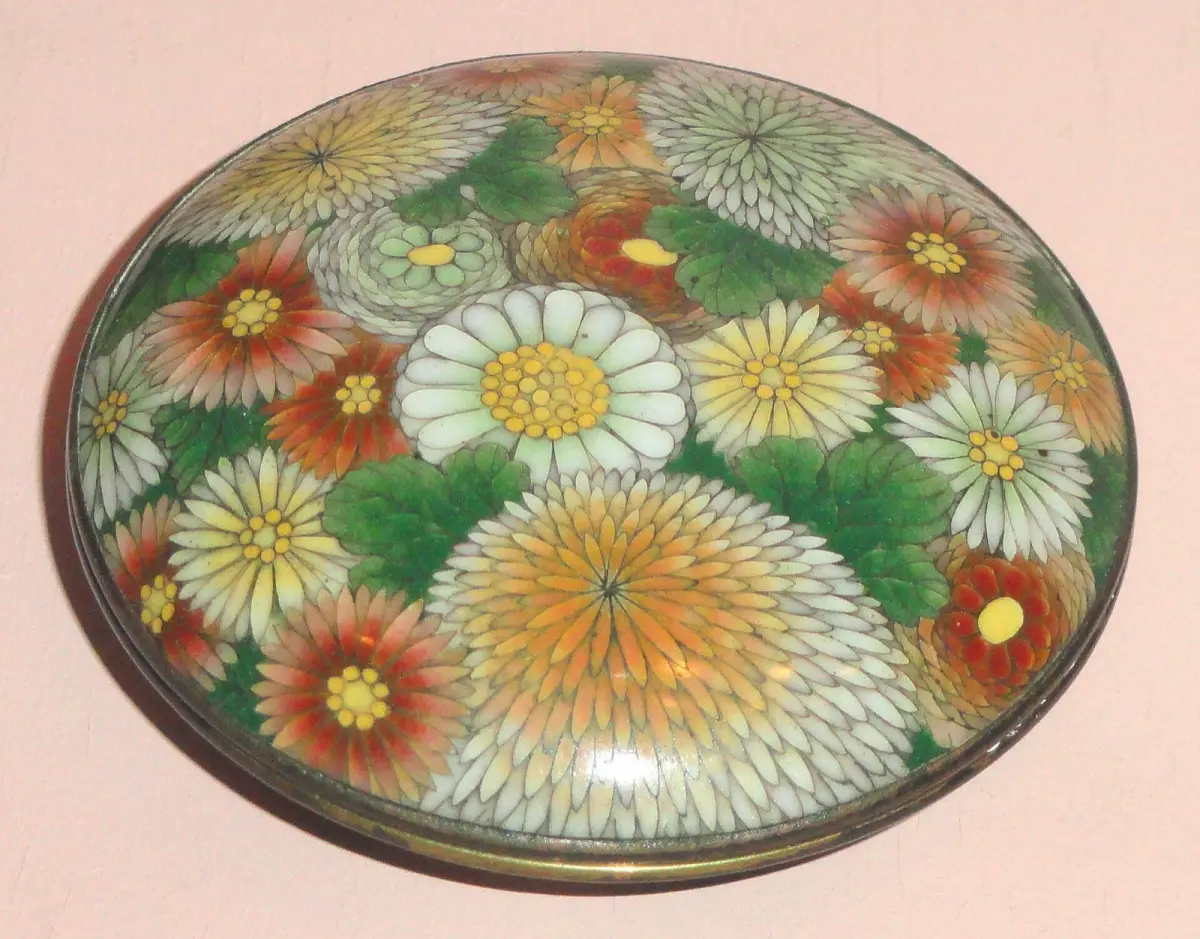
The term shippo means 'seven treasures', borrowed from Buddhist scripture to evoke the lustre of precious materials. The process begins with a base of copper or silver, shaped into a vessel, plate, or panel. For yusen-shippo (有線七宝)—wired cloisonné, the signature Owari technique—fine silver wires are painstakingly bent and affixed to the metal surface, outlining every petal, leaf, and cloud in the design. These raised lines create tiny cells, or cloisons, into which artisans apply coloured enamel pastes: ground glass mixed with metallic oxides. The piece is then fired in a kiln, fusing the glass into a smooth, glowing surface. Multiple firings build depth and brilliance.
Flowers, Birds, and the Floating World
Owari cloisonné found its visual language in nature and narrative. Designs often feature flowers and birds—peonies, chrysanthemums, cranes, phoenixes—rendered with an almost painterly delicacy. Landscapes unfold across vases and boxes: mist-wrapped mountains, moonlit waters, cherry blossoms drifting on a breeze. The enamel glazes, when fired, achieve colours of startling intensity and clarity:
- Deep cobalts and turquoises that seem to hold light
- Translucent greens layered over silver foil for a shimmering effect
- Opaque whites and golds that frame compositions with precision
This jewel-like quality made Owari pieces prized both domestically and abroad, especially after Japan opened to international trade in the late nineteenth century.

From Ama to the World
Today, the craft centres on Ama City and Nagoya in Aichi Prefecture. Ama, in particular, became synonymous with cloisonné production, its workshops exporting works to Europe and America during the Meiji era. The precision required—steady hands guiding silver wire fractions of a millimetre thick, eyes judging the exact moment to withdraw a piece from the kiln—meant that mastery took years. Even now, with some modern tools, the essential steps remain handwork. The craft earned designation as a national Traditional Craft (伝統的工芸品), recognition of both its historical importance and the rigorous skill it demands.
Holding Light in Metal and Glass
To see an Owari cloisonné vase up close is to understand why Kaji Tsunekichi's curiosity mattered. The enamel surface is smooth as still water, yet within it, colours glow with an inner fire. The silver wires, polished and proud, trace forms so intricate they seem drawn with a brush. It is a craft that asks for patience—from the maker, who may fire a single piece a dozen times, and from the viewer, who must lean in to catch the full play of light and line.
The Dutch plate that started it all is long gone, but its echo remains in every wire bent, every glaze ground, every kiln opened to reveal glass transformed into something like captured daylight.
Chaware curates authentic Japanese crafts — straight from the makers in Japan to your table.
Explore the Chaware collection →
Keep exploring


