The Crack in This Tea Bowl Was Repaired With Real Gold
On this page
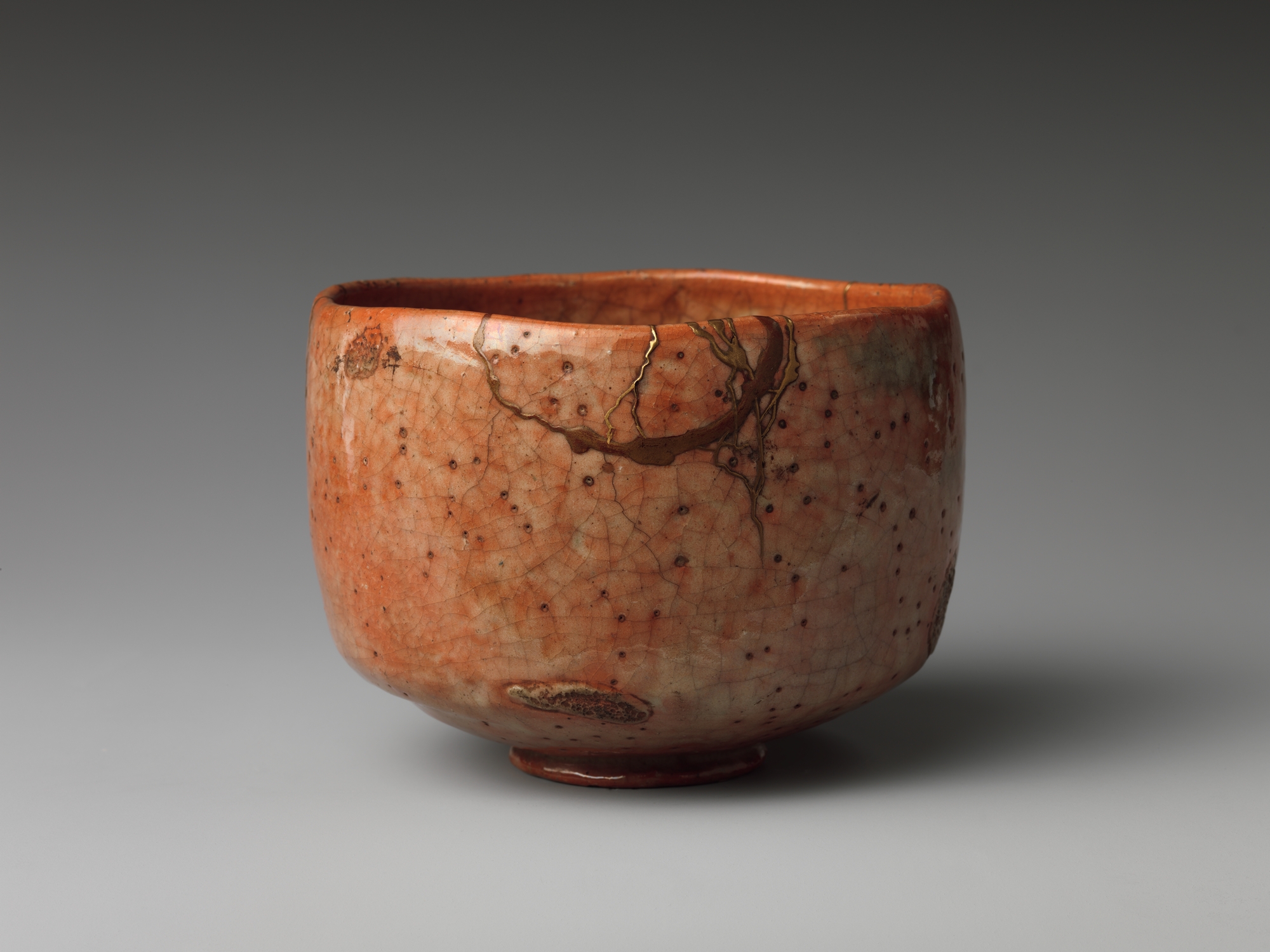
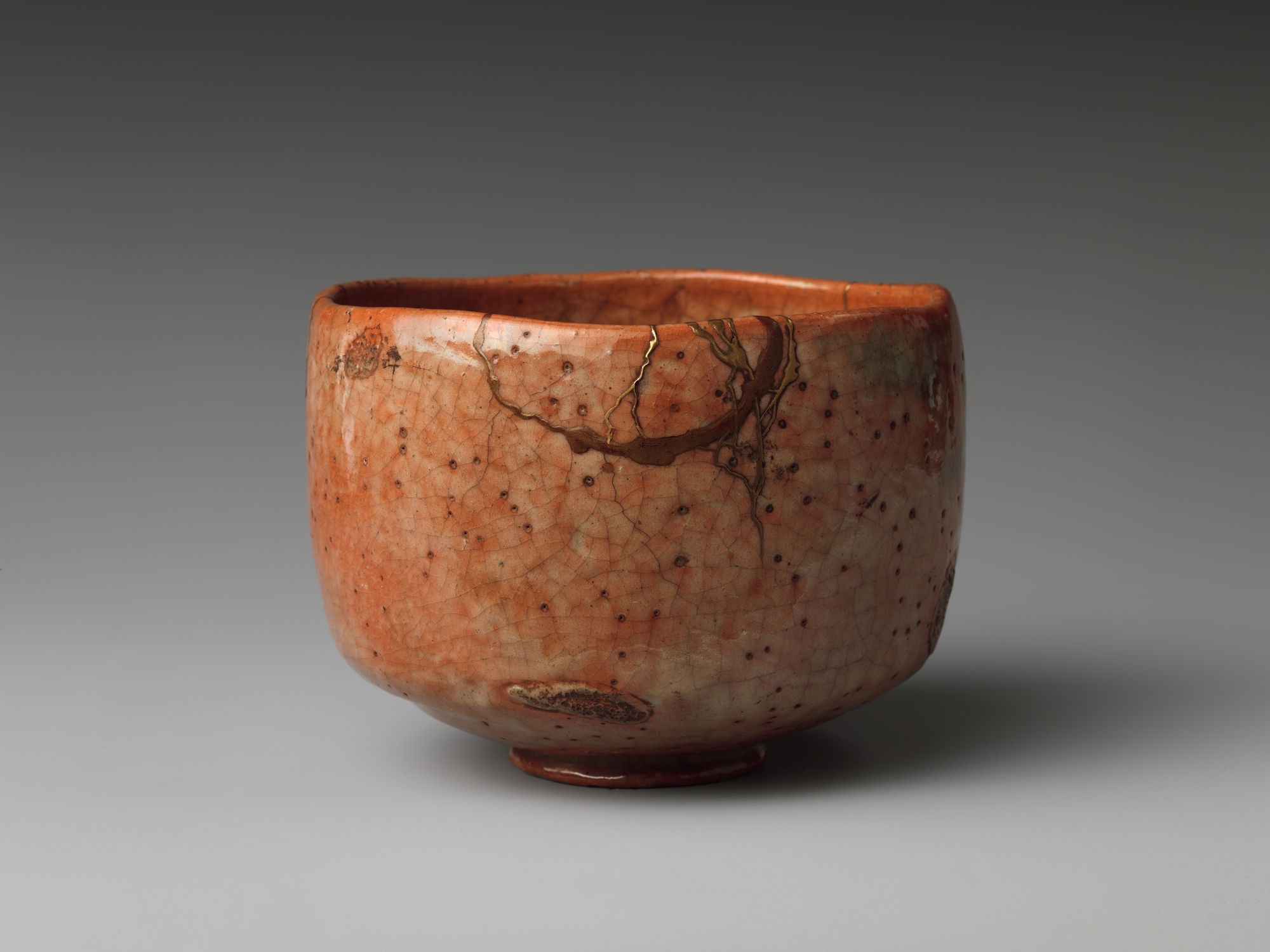
You see the crack before anything else. A thin gold line runs down the side of this 18th-century Raku tea bowl, cutting through the warm orange-red glaze like a vein of light.
A break, mended rather than hidden
This is kintsugi — the practice of repairing broken ceramics with lacquer dusted in gold. When this bowl cracked or broke at some point in its life, whoever repaired it didn't try to disguise the damage. They filled the break with lacquer, dusted it with gold powder, and left the result in plain sight.
It's a strange idea by most standards. A broken object is normally something to discard or, at best, repair invisibly. Kintsugi does the opposite: it treats the repair as worth seeing.
Raku ware's other kind of crack
Look past the gold line and you'll notice something else — a fine web of crazing spread across the glaze surface. This is unrelated to the kintsugi repair. It's a natural effect of Raku ware, fired at low temperature and pulled from the kiln while still hot, which causes the glaze to contract and craze into tiny, irregular lines.
So this bowl carries two kinds of fracture: one accidental and structural (the crack, now gold), and one built into the glaze itself (the crazing, left plain). Side by side, they make an interesting case for what counts as a flaw.
One crack was mended in gold. The other was never considered a problem at all.
Why gold, and why visible
Kintsugi isn't about returning a piece to how it looked before. The gold line is often more visually prominent than the surrounding glaze — the opposite of invisible mending. The philosophy behind it treats breakage as part of an object's history, not an interruption of it. A bowl that has been broken and carefully repaired carries more of a story than one that never cracked at all.
What's left to hold
This bowl has survived long enough to break, be repaired, and still be used or displayed — centuries after it was made. The gold line is the clearest evidence of that history, and the easiest part of the bowl to point to and say: something happened here, and it was worth fixing.
Chaware curates authentic Japanese crafts — straight from the makers in Japan to your table.
Explore the Chaware collection →
Keep exploring