Arimatsu Shibori: Aichi's Tie-Dye Town
On this page
Article Body
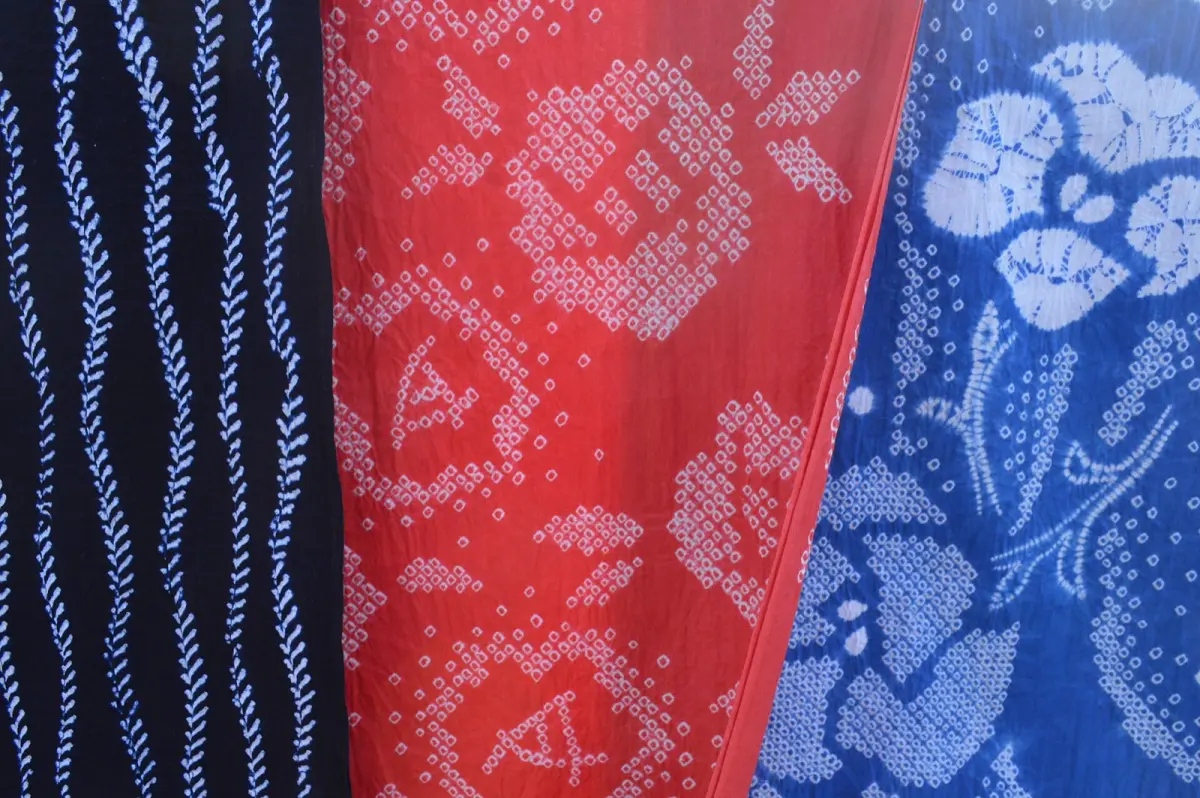
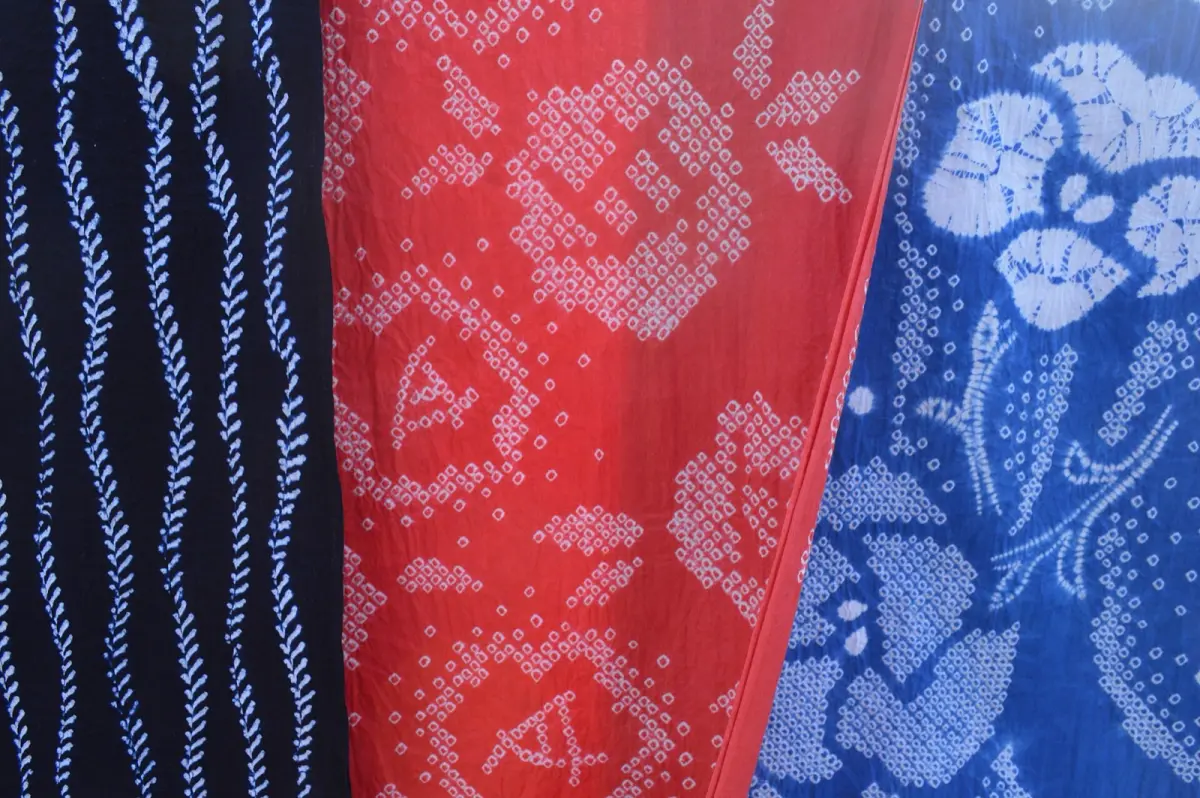
A summer yukata ripples with circles like raindrops on water, each white ring precisely placed against indigo. The cloth has passed through five pairs of hands, each binding, dyeing, and releasing a single pattern. This is the patient choreography of Arimatsu-Narumi shibori (有松鳴海絞り), where cotton becomes geometry through thread and time.
Born on the Highway
In 1608, a new village took shape along the Tōkaidō, the great road linking Edo and Kyoto. Arimatsu was a planned settlement in Owari domain, and among its first eight families was that of Takeda Shokurō. Within a few years, something caught his eye: labourers arriving from Kyushu to build Nagoya Castle wore tie-dyed work clothes, their fabric knotted and dyed into simple, striking patterns. Shokurō saw opportunity. He began dyeing local Mikawa cotton using the shibori technique, fashioning hand-towels as souvenirs for the steady stream of travellers passing his door. The experiment succeeded. By the mid-seventeenth century, Arimatsu and its neighbour Narumi had become synonymous with shibori, particularly the lightweight cotton yukata that offered relief in Japan's humid summers.
The Assembly Line of Hands
What distinguishes Arimatsu shibori is not a single master's vision but a relay of specialists. A length of cloth begins its journey at the stencil-carver's bench, where patterns are cut with exacting precision. The design is then traced onto white cotton, faint blue lines marking where thread must go. Next comes kukuri (括り), the binding: artisans gather tiny pinches of fabric and wrap them tightly with thread, creating resist points that will repel dye. One experienced binder might complete three thousand knots in a day. The bound cloth travels to the dyer's vat, emerges saturated in indigo or other hues, then returns to yet another specialist who unpicks every knot, releasing the pattern. Five stages, five sets of hands, one cloth.
A Hundred Techniques, One Tradition
Arimatsu's repertoire includes more than a hundred distinct shibori methods, each producing different effects:
- Kanoko shibori creates the classic fawn-spot pattern, tiny white circles scattered like stars
- Kumo shibori pulls fabric into radiating pleats, resembling spiderweb or cloud
- Miura shibori uses hooked needles to gather cloth into looped ridges
- Bōshi shibori caps each bound section with a small cover, yielding rings within rings
The technical vocabulary is vast, the visual results endlessly variable. Yet all share the fundamental principle: resist and reveal, constraint and release.

Recognition and Resilience
In 1975, Arimatsu-Narumi shibori received designation as a nationally recognised Traditional Craft, formal acknowledgment of four centuries of accumulated skill. The designation came at a crucial moment, as cheaper printed fabrics and changing dress habits threatened the labour-intensive craft. Today, roughly three hundred artisans continue the work in Arimatsu, many in family workshops where binding techniques pass from parent to child. The town itself has become a living museum; wooden merchant houses line the old Tōkaidō route, their latticed fronts opening onto rooms where thread and cotton still meet in the old configurations.
Wearing the Pattern
To wear Arimatsu shibori is to carry a small archive of decisions: the stencil-cutter's steady knife, the binder's ten thousand knots, the dyer's judgment of temperature and time. A single yukata might require weeks of distributed labour, its pattern emerging only when the final thread is pulled free. In an age of instant production, this remains defiantly slow cloth—not as statement but as structural necessity. The pattern cannot exist without the process. The circles, clouds, and constellations of white against indigo are not printed on but pulled from within, each one a small release, a breath held and let go.
Thread by thread, the highway village still binds its patterns into cloth.
Chaware curates authentic Japanese crafts — straight from the makers in Japan to your table.
Explore the Chaware collection →
Keep exploring


