Kamakura-bori: Carved Lacquer of the Samurai City
On this page
The blade bites into wood, and centuries later, lacquer glows in the grooves. In Kamakura, the old temple city south of Tokyo, craftsmen still carve shadows into devotion—a practice born when Buddhist sculptors turned their chisels from icons to everyday objects, eight hundred years ago.
When Zen Temples Wanted Chinese Splendour
Medieval Kamakura was a city of power and prayer. When Kenchoji was founded in 1253, followed by Engakuji in 1282, these great Zen temples sought to furnish their halls with the finest ritual objects. The prize was choshitsu (彫漆)—Chinese carved lacquer, in which artisans built up dozens of layers of lacquer, then carved intricate designs into the thick, coloured mass. Expensive, rare, and luminous, these imports set a standard the temple city yearned to meet.
The Sculptors' Shortcut
The solution came from an unexpected quarter: the busshi (仏師), Buddhist sculptors already fluent in the language of wood. These master carvers understood grain, shadow, and the way a blade could coax form from timber. Rather than emulate the laborious Chinese method—piling lacquer high, then carving it down—they inverted the process entirely. They carved the wood first, creating deep relief patterns of peonies, chrysanthemums, and scrolling vines. Only then did they apply layers of lacquer—black, red, blue, yellow—over the carved surface, building colour and depth in the valleys and peaks of the wood itself.
A Technique All Its Own
This reversal was revolutionary. Kamakura-bori (鎌倉彫) became something distinct from its Chinese inspiration:
The wood is carved, the lacquer is layered, and the final polish reveals a play of shadow and light that seems to breathe with the grain beneath.
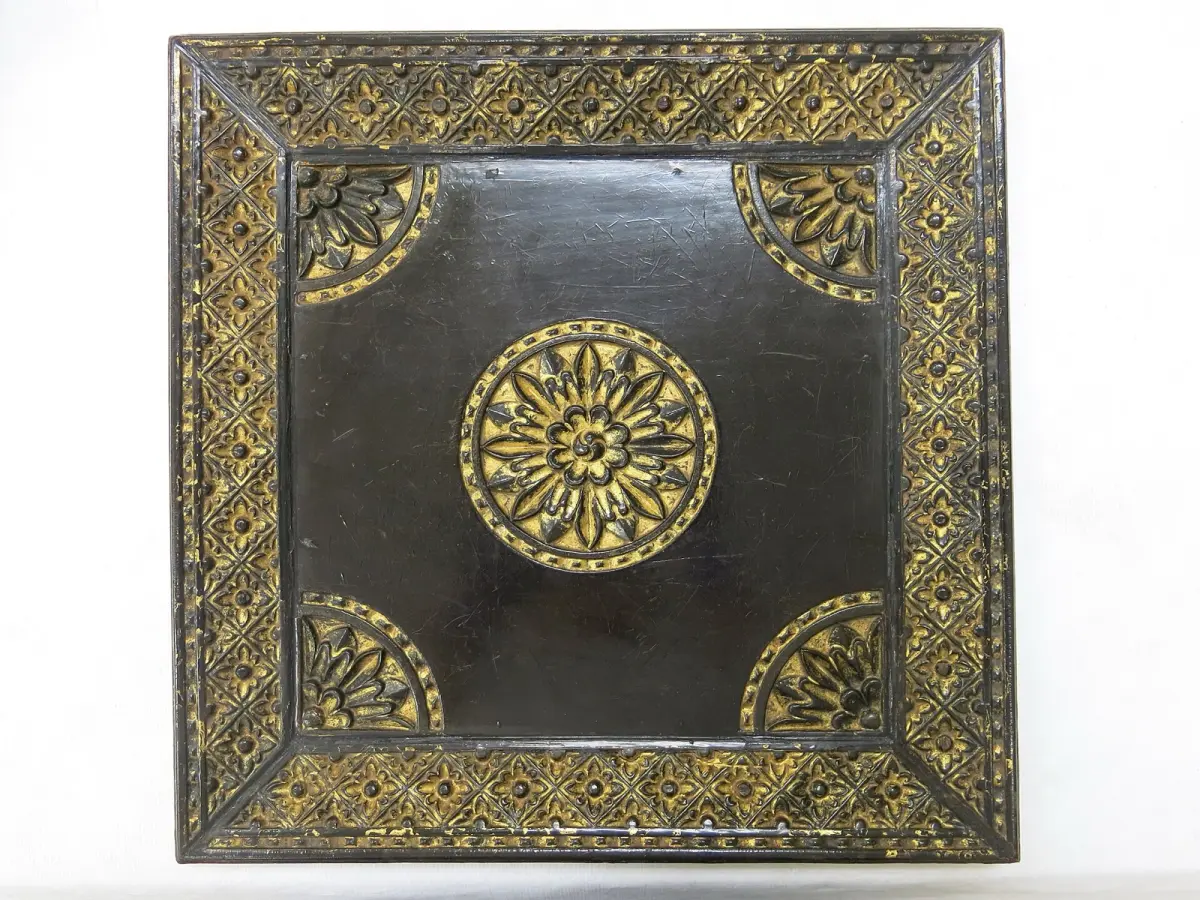
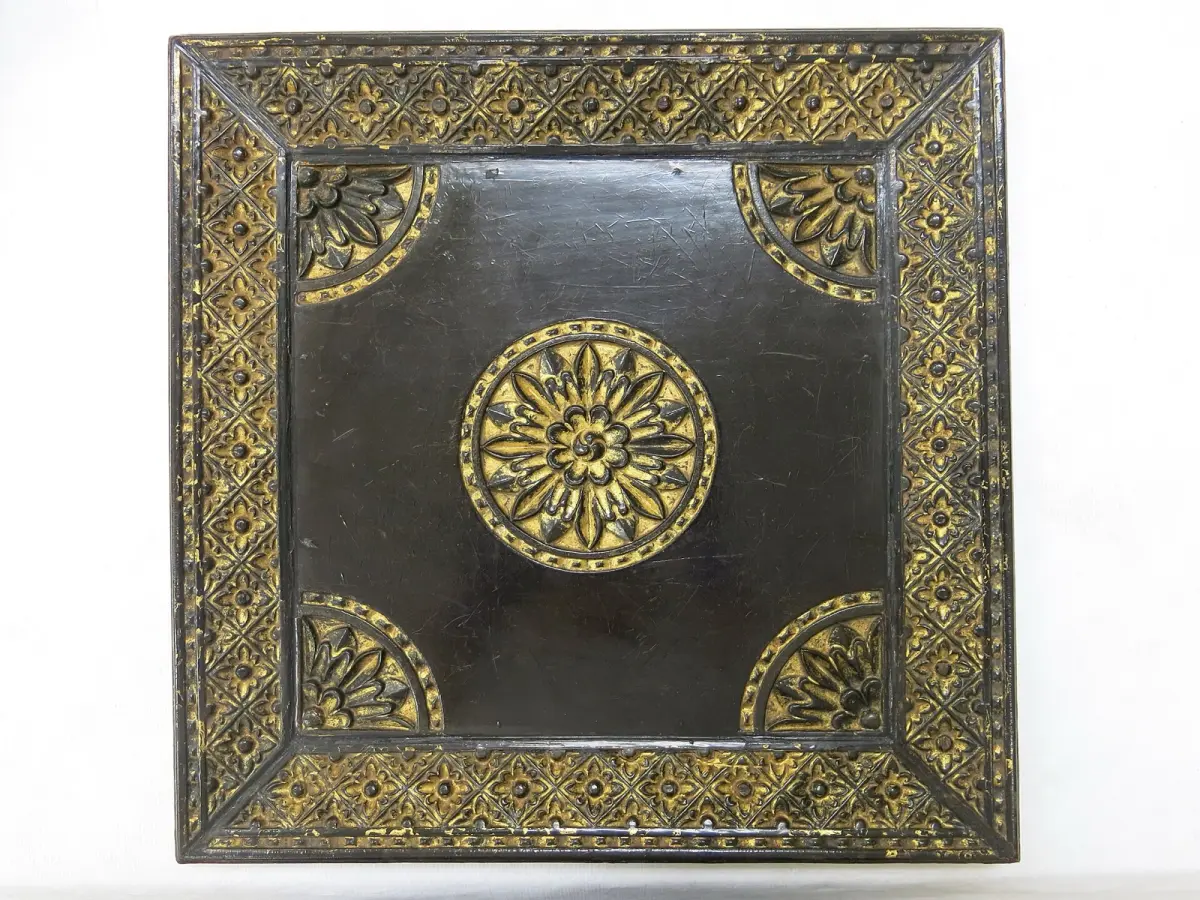
Where Chinese carved lacquer is monolithic and smooth, Kamakura-bori retains a textured, almost sculptural presence. The lacquer settles into the grooves, darkening them, while the raised surfaces catch light and wear, creating a subtle gradation of tone. Over time and handling, the colours deepen, the blacks grow richer, and the piece acquires a patina that speaks of use and care.

From Altar to Table
Initially, Kamakura-bori served the temples—incense boxes, sutra stands, offering trays. But as the centuries passed and the samurai class gave way to merchants and tea masters, the craft expanded. Trays, bowls, tea caddies, and small furniture entered the repertoire. The motifs remained rooted in nature and Buddhist symbolism, but the objects themselves became part of daily life. A tea ceremony host might present sweets on a Kamakura-bori tray, its carved peonies glowing under candlelight, a quiet echo of the temple halls where the craft was born.
Still Carved in the Temple City
Today, Kamakura-bori holds the designation of a national Traditional Craft, and workshops still operate in the city where it began. The process remains largely unchanged: seasoning the wood, carving by hand, applying lacquer in patient layers, polishing to reveal the interplay of colour and shadow. Apprenticeships are long, and the market is small, but the tradition endures. Visitors to Kamakura can still find studios near the old temple precincts, where the scent of lacquer mingles with incense and the sound of chisels continues a conversation eight centuries old.
In every piece, wood and lacquer meet—not as opposites, but as collaborators in a dance of depth and light.
Chaware curates authentic Japanese crafts — straight from the makers in Japan to your table.
Explore the Chaware collection →
Keep exploring


